
Wireless Actuator Control: RF, Bluetooth, Wi-Fi, and Industrial Options
Compare RF remote, Bluetooth, Wi-Fi and industrial wireless actuator control by pairing, infrastructure, range, link loss, channel behavior and safety boundaries.

Wireless actuator control changes how the motion command reaches the machine . It does not eliminate the need for a correctly matched power stage, motor wiring, limits, feedback, protection, and control logic.
A practical wireless command path looks like this:
Operator / phone / transmitter
        |
        v
Wireless link
        |
        v
Receiver / gateway
        |
        v
Control logic and motor-power stage
        |
        v
Actuator
The wireless layer adds useful flexibility, but it also adds new engineering questions: pairing, range, interference, command authority, link-loss behavior, channel grouping, local fallback, security, and regional radio requirements.
For OEM projects, the best option is therefore not simply the one with the longest advertised distance. It is the one whose failure behavior, infrastructure, and control interface match the application.
Table of Contents
Wireless control options compared
| Option | Infrastructure | Commissioning | Range / timing dependence | Link-loss design | Typical fit |
|---|---|---|---|---|---|
| Proprietary RF remote | usually self-contained transmitter + receiver | pair/enroll transmitter | antenna, enclosure, obstruction, battery and interference matter | define timeout and local fallback | local operator control |
| Bluetooth / BLE | phone, tablet or local gateway | discovery, pairing, app/device permissions | short-range; 2.4 GHz congestion and OS/app behavior can affect response | supervision timeout and reconnect logic | setup, nearby HMI, service |
| Wi-Fi / LAN gateway | access point and network | network enrollment + app authentication | coverage, roaming, shared traffic and outages matter | local autonomous behavior should survive network loss | plant HMI, fleet, diagnostics |
| Industrial wireless command | dedicated industrial radio or managed infrastructure | controlled device identity and configuration | engineered diagnostics and coexistence, but still installation-dependent | explicit watchdog/fault response | mobile machinery and demanding operator control |
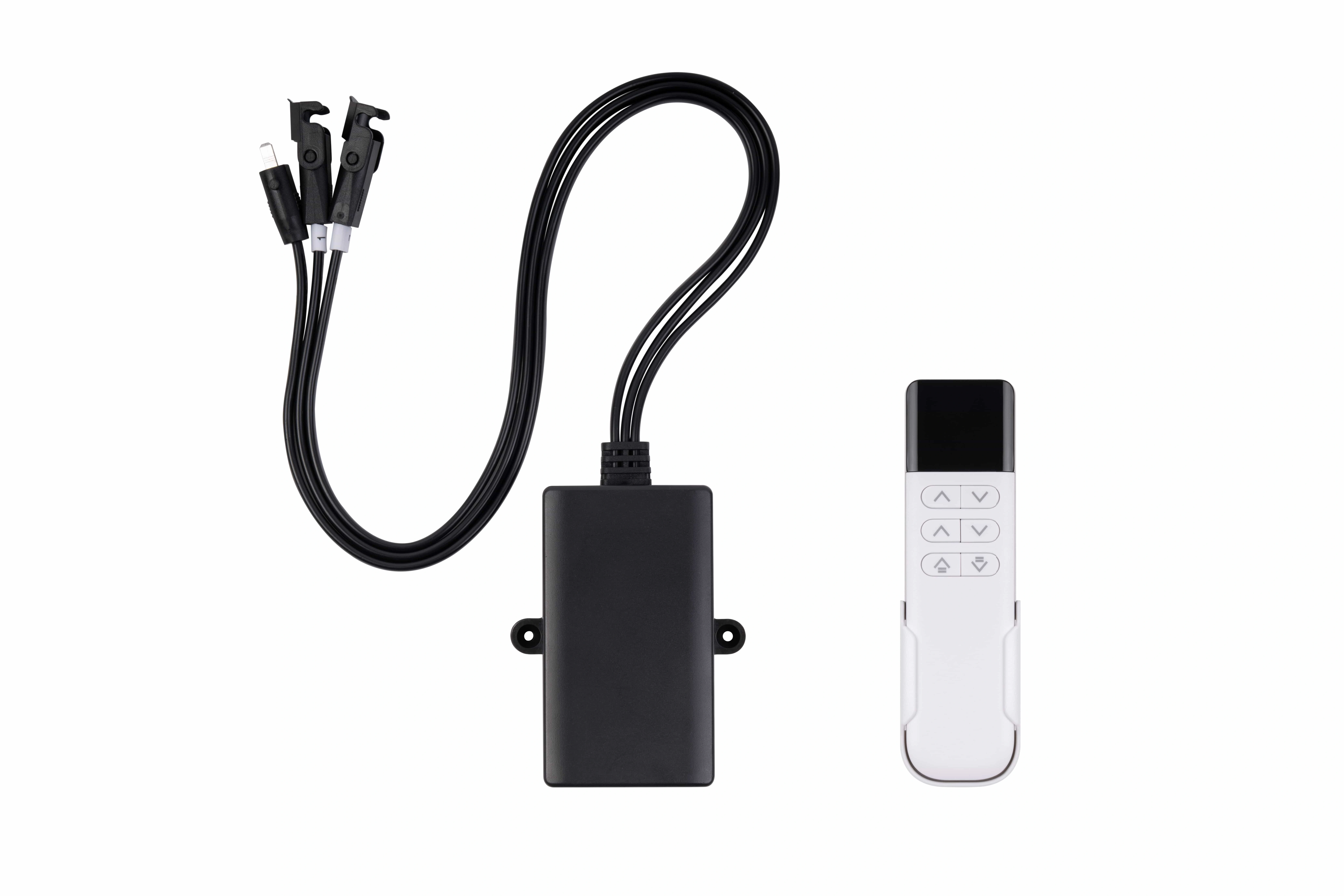
A wireless remote is one command-layer option; the receiver and downstream motor-control interfaces still need to be matched.
Option 1: RF remote control
A dedicated RF remote is often the simplest wireless architecture.
The transmitter sends a command to a receiver. The receiver then outputs a signal to the downstream control electronics, relay stage, or machine logic.
Typical benefits include:
- no plant Wi-Fi required;
- simple local operation;
- fast commissioning;
- compact handheld controls;
- easy extend/retract or grouped command functions.
The main engineering questions are:
- how the transmitter is paired;
- how many transmitters can be authorized;
- how the receiver outputs commands;
- whether commands are momentary or maintained;
- what happens when a button is released;
- what happens when the signal disappears;
- how multiple channels are addressed.
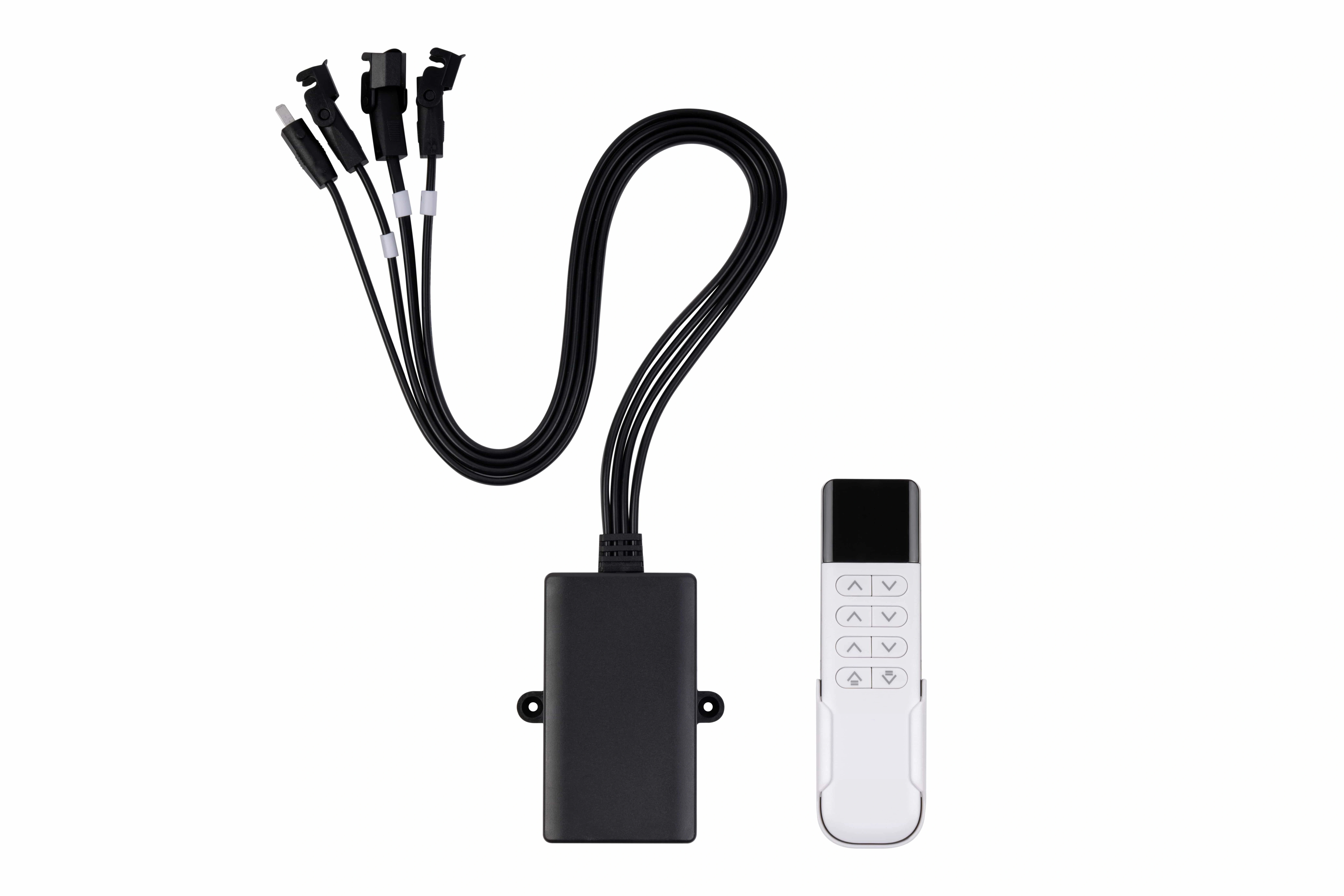
Remote form factor does not establish frequency, range, pairing method, or channel behavior; those remain project-specific requirements.
Do not assume a first-party remote image implies any specific frequency, range, pairing method, or regional radio approval. Those characteristics belong to the exact project configuration.
RF range is not an open-air number
Installed range can be reduced by:
- metal enclosures;
- frame geometry;
- antenna orientation;
- people or equipment between transmitter and receiver;
- nearby radios;
- low transmitter battery;
- electrical noise;
- receiver placement.
A useful acceptance test should therefore measure operation in the actual machine configuration, not only across an empty room.
Option 2: Bluetooth or BLE
Bluetooth is useful when a phone, tablet, or nearby computer is part of the operator experience.
The command path may be:
phone/app → Bluetooth module → machine control logic → motor-power stage
Bluetooth can support:
- commissioning;
- parameter setup;
- nearby operator commands;
- diagnostics;
- service access;
- simple app-based control.
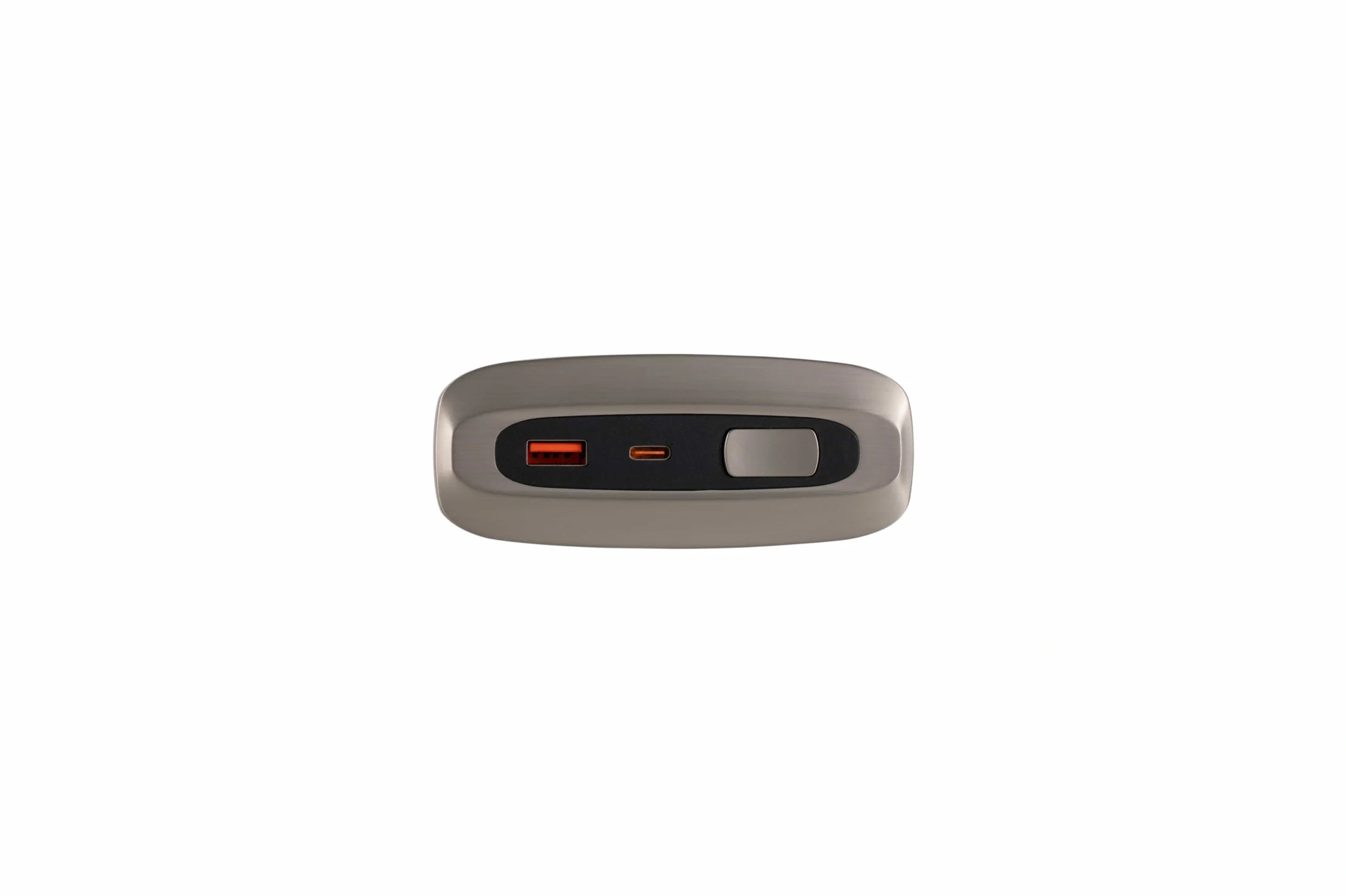
Connected user interfaces add command and power requirements that should be frozen with the control architecture.
It also introduces dependencies that a dedicated remote may not have:
- compatible phone or tablet;
- operating-system permissions;
- application lifecycle;
- pairing/bonding;
- reconnect behavior;
- app updates;
- user/device authorization.
If the app goes to sleep or the phone moves out of range, the machine needs a defined response.
Do not confuse pairing with motion safety
Successful Bluetooth pairing establishes a communication relationship. It does not prove that the entire motion system has a safety-rated stop function, bounded response time, or required diagnostic coverage.
Normal operational control and safety functions should be specified separately.
Option 3: Wi-Fi, LAN, or cloud-connected control
Wi-Fi is attractive when the motion system needs to connect with:
- a plant HMI;
- a browser or app;
- a local network;
- fleet management;
- diagnostics;
- remote service;
- supervisory software.
The advantage is integration. The cost is dependency.
The command path can now depend on:
- access points;
- network addressing;
- switches or gateways;
- authentication;
- software services;
- network availability;
- possibly the public internet or a cloud platform.
For non-time-critical supervisory functions this can be valuable. For motion that must respond predictably, the machine should not assume that a shared network always provides deterministic timing.
Prefer local motion logic
A robust architecture often keeps motion interlocks, limits, feedback, and immediate motor control local to the machine.
The network then sends higher-level commands such as:
- move;
- stop;
- select preset;
- enable mode;
- report status.
If the Wi-Fi or cloud connection disappears, local control logic can still move the system into the predefined state.
Option 4: Industrial wireless command
Industrial remote systems are designed for more demanding operator environments.
They may add:
- rugged transmitters;
- defined transmitter ownership;
- diagnostic feedback;
- managed channels;
- industrial receivers;
- machine I/O integration;
- stronger service and configuration controls.
That does not mean every industrial radio is automatically deterministic or safety-rated. The complete system still needs a documented response to interference, lost communication, power loss, receiver faults, and transmitter replacement.
How to specify link-loss behavior
Every wireless project should answer:
What should the machine do when a valid command can no longer be received?
Possible responses include:
- stop motor drive;
- hold current state;
- perform controlled deceleration;
- finish a safe local sequence;
- latch a fault;
- require operator reset;
- return control to a wired local interface.
The correct answer depends on the application.
What matters is that the state is intentional.
Useful link-supervision requirements
Specify:
- heartbeat or supervision interval;
- timeout;
- stale-command rejection;
- reconnect behavior;
- whether a reconnect restores command authority automatically;
- whether motion can restart automatically;
- what status is displayed to the operator.
For many machines, reconnecting should restore communication without automatically restarting motion.
Multi-channel wireless control
Wireless systems may operate:
- one channel;
- multiple independent channels;
- grouped channels;
- presets;
- synchronized motion through downstream feedback logic.
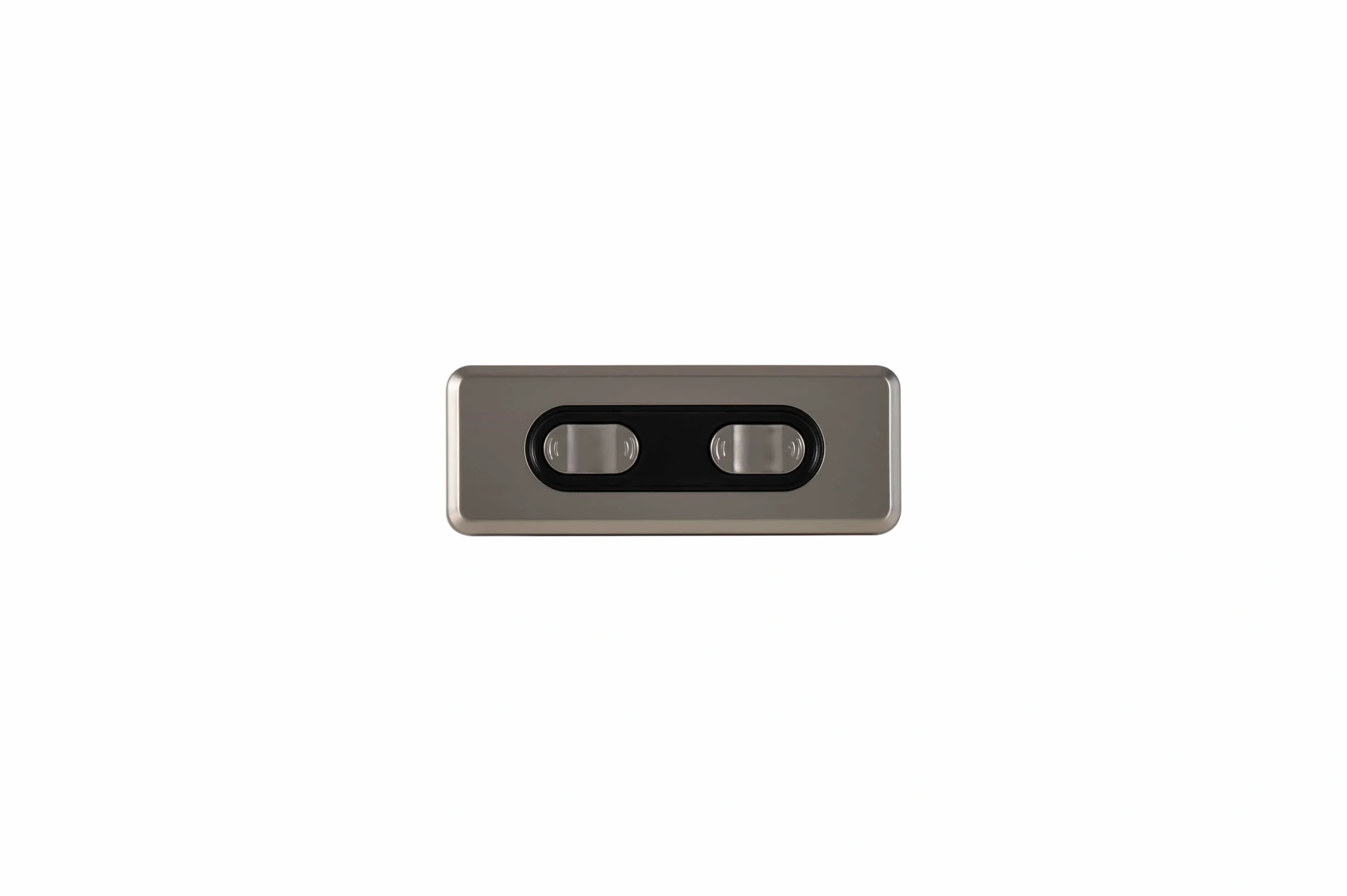
Multi-channel grouping, priority, and partial-failure behavior should be defined independently from the wireless transport.
The radio transport itself does not prove what the motor channels do.
A multi-channel specification should define:
- individual versus group commands;
- command priority;
- simultaneous-command behavior;
- acknowledgment;
- partial failure;
- what happens if one channel faults;
- whether grouped motion is merely simultaneous or actually feedback-coordinated.
If the application requires true multi-axis coordination, that is a separate motion-control requirement from the wireless link.
Power and electrical compatibility still apply
A receiver may output only a low-current command signal. It may also include relays or a motor-power stage.
Do not assume those architectures are interchangeable.
Verify:
- supply voltage;
- receiver power consumption;
- output type;
- output current capability;
- motor-drive current;
- connector/pinout;
- motor polarity;
- feedback interface;
- channel count;
- limit/protection behavior.
For mixed components, use the system compatibility resource before wiring by trial.
Security for connected wireless systems
The more connected the control path becomes, the more important it is to manage who can send a motion command.
Depending on the architecture, requirements may include:
- unique device identity;
- authenticated pairing;
- encrypted/integrity-protected communication;
- replay resistance;
- user or role authorization;
- controlled firmware updates;
- key replacement/revocation;
- disabled default credentials;
- logging;
- segmented plant networks.
A simple dedicated remote and a cloud-connected gateway have very different security surfaces. Treat them accordingly.
Wireless control and machine safety
Wireless command and a safety function are not the same thing.
A normal RF, Bluetooth, or Wi-Fi command may tell the control logic to stop, but that does not automatically make it equivalent to an emergency-stop circuit or another safety-related control function.
Safety depends on the complete architecture, including:
- fault detection;
- response time;
- safe-state definition;
- restart prevention;
- output monitoring;
- required performance level or integrity level;
- validation against the machine risk assessment.
If a project requires a wireless safety function, the complete cableless safety system must be specifically engineered and validated for that role.
OEM wireless integration checklist
Before selecting a wireless command method, freeze:
Command task
- extend/retract;
- jog;
- position preset;
- grouped command;
- mode select;
- stop;
- reset.
Operator and authority
- who owns the transmitter;
- how devices are paired;
- how lost transmitters are removed;
- local versus remote priority;
- service mode.
Radio environment
- target distance;
- enclosure material;
- antenna placement;
- obstructions;
- neighboring radios;
- destination market.
Failure behavior
- link timeout;
- lost-command state;
- reconnect state;
- local fallback;
- no unintended restart.
Channels
- number of channels;
- independent/grouped behavior;
- acknowledgment;
- partial-failure response;
- downstream synchronization requirement.
Electrical interface
- receiver supply;
- command-output type;
- drive-stage requirement;
- motor current;
- limits and feedback;
- connector/pinout.
Connected-system security
- device authentication;
- access roles;
- update process;
- key lifecycle;
- network segmentation where applicable.
Once those requirements are defined, commercial wireless options can be evaluated on the wireless motor controls page .
For an OEM architecture that needs project-specific command and interface integration, control-system OEM support is the next bridge.
FAQs
Which wireless option is best for actuator control?
There is no universal best option. RF is often simple and self-contained; Bluetooth works well for nearby app/service functions; Wi-Fi is useful for network integration; industrial radio is suited to more demanding operator environments. Choose by infrastructure, failure behavior, channel needs, security, and environment.
Is Bluetooth better than an RF remote?
Only if the application benefits from a phone/app workflow. Bluetooth adds pairing, app, operating-system, and device dependencies that a dedicated RF remote may avoid.
What should happen if the wireless link is lost?
The response should be defined in the machine requirements: stop, hold, controlled deceleration, fault, or another validated state. Do not leave it to unspecified receiver behavior.
Can advertised wireless range be used as the design distance?
Not by itself. Test the installed system with the real enclosure, antenna position, obstacles, interference, and operator locations.
Can wireless control replace an emergency stop?
Not automatically. A normal wireless command link is not a safety function unless the complete architecture is specifically designed and validated for the required safety role.
What should be specified for multi-channel wireless control?
Define individual/group commands, command priority, channel count, acknowledgment, partial-failure behavior, and whether downstream feedback-based coordination is required.