
Ball Screw vs Acme vs Roller Screw for Linear Motion
Compare Acme, ball and roller screw designs by efficiency, load density, speed, precision, backdriving, life, maintenance and total system cost.

Acme, ball, and roller screws all convert rotary motion into linear motion, but they transfer load in different ways. Acme designs rely mainly on sliding contact between the screw and nut. Ball screws replace much of that sliding with recirculating balls. Roller screws distribute load through multiple threaded rollers. Those contact mechanisms shape the tradeoffs in efficiency, force density, speed, positioning, holding behavior, service life, maintenance, and cost.
There is no single winner for every machine. A low-cycle mechanism that must resist backdriving can favor a sliding screw. A fast positioning axis often benefits from a ball screw. A compact, high-force, high-cycle axis may justify a roller screw. The correct choice starts with the operating point, not the technology label.
Table of Contents
Quick Comparison: Acme vs Ball vs Roller Screw
| Decision factor | Acme / trapezoidal screw | Ball screw | Roller screw |
|---|---|---|---|
| Load transfer | Sliding thread contact | Recirculating balls | Multiple threaded rollers |
| Friction and efficiency | Higher friction; generally lower efficiency | Low rolling friction; generally high efficiency | High efficiency, with more contact than a ball screw |
| Force density | Good for many moderate-force tasks | Medium to high, depending on size and geometry | Very high potential for a given package size |
| Speed and duty | Best suited to modest speed and duty when friction is acceptable | Strong fit for high speed and frequent cycling | Strong fit for high force, high cycle rate, and demanding acceleration |
| Backlash control | Wear and nut design matter; anti-backlash arrangements are available | Preload can reduce axial play | High stiffness and preload options are common |
| Backdriving | Often less prone to backdriving; must still be verified | More likely to backdrive because friction is low | Can backdrive; holding strategy must be verified |
| Life behavior | Sliding wear can make life less predictable | Rolling-contact fatigue life is more predictable | High contact density can support long life under demanding loads |
| Noise | Can be quiet with suitable nut materials | Ball circulation can add noise | Product design, preload, speed, and roller engagement determine noise |
| Maintenance | Nut material and lubrication strategy vary widely | Lubrication and contamination control are important | Lubrication, alignment, and contamination control are important |
| Initial price | Usually lowest | Usually higher than a simple sliding screw | Usually highest |
| Typical starting point | Simple, lower-cycle motion where cost or holding matters | General-purpose precision motion with speed and duty demands | Compact high-force or very high-cycle motion |
The table shows selection tendencies , not universal ratings. Diameter, lead, preload, support bearings, stroke, lubrication, alignment, load spectrum, and environment can change the practical result.
First, Acme Is Not the Same as Every Lead Screw
A lead screw is a broad term for a screw-and-nut mechanism that converts rotation into linear travel. Acme is one common lead-screw form with a trapezoidal thread profile. Metric trapezoidal screws are closely related, but the terminology and thread geometry should not be treated as perfectly interchangeable.
That distinction matters when comparing a ball screw vs lead screw. A polymer-nut precision lead screw, a bronze-nut Acme assembly, and another sliding screw design can have very different friction, wear, lubrication, and positioning behavior.
Thomson's lead screw vs ball screw overview makes the same basic mechanical distinction: ball screws use recirculating rolling elements, while lead screws rely on sliding surfaces.
What Changes Mechanically: Sliding Surfaces, Balls, or Threaded Rollers
Acme screw: sliding contact
In an Acme assembly, the screw flank pushes directly against the matching nut surface. The design is mechanically simple and can work with metal or engineered-polymer nuts. The same sliding friction that reduces efficiency can also make a load less willing to drive the screw backward.
The tradeoff is that sliding contact creates wear. Nut material, lubrication, lead, load, duty, contamination, and temperature all influence how quickly axial play changes over time.
Ball screw: rolling balls
A ball screw uses balls between the screw raceway and ball nut. The balls circulate through return paths as the screw or nut rotates. Rolling contact cuts friction substantially compared with a typical sliding screw, so less input torque is lost to friction.
The ball return system, preload, seals, support bearings, lead, and lubrication all influence the final performance. High efficiency is valuable, but it also means a loaded axis may be easier to backdrive.
Roller screw: multiple threaded rollers
A planetary roller screw uses several threaded rollers between the screw and nut. The large number of contact points distributes load across more rolling interfaces than a ball nut can normally provide in the same space.
That geometry is the main reason roller technology is considered for high force density, high stiffness, shock-heavy duty, and long service-life targets. It also adds manufacturing and assembly complexity.
Machine Design's three-way screw comparison provides a useful mechanism-level overview of these three contact approaches.
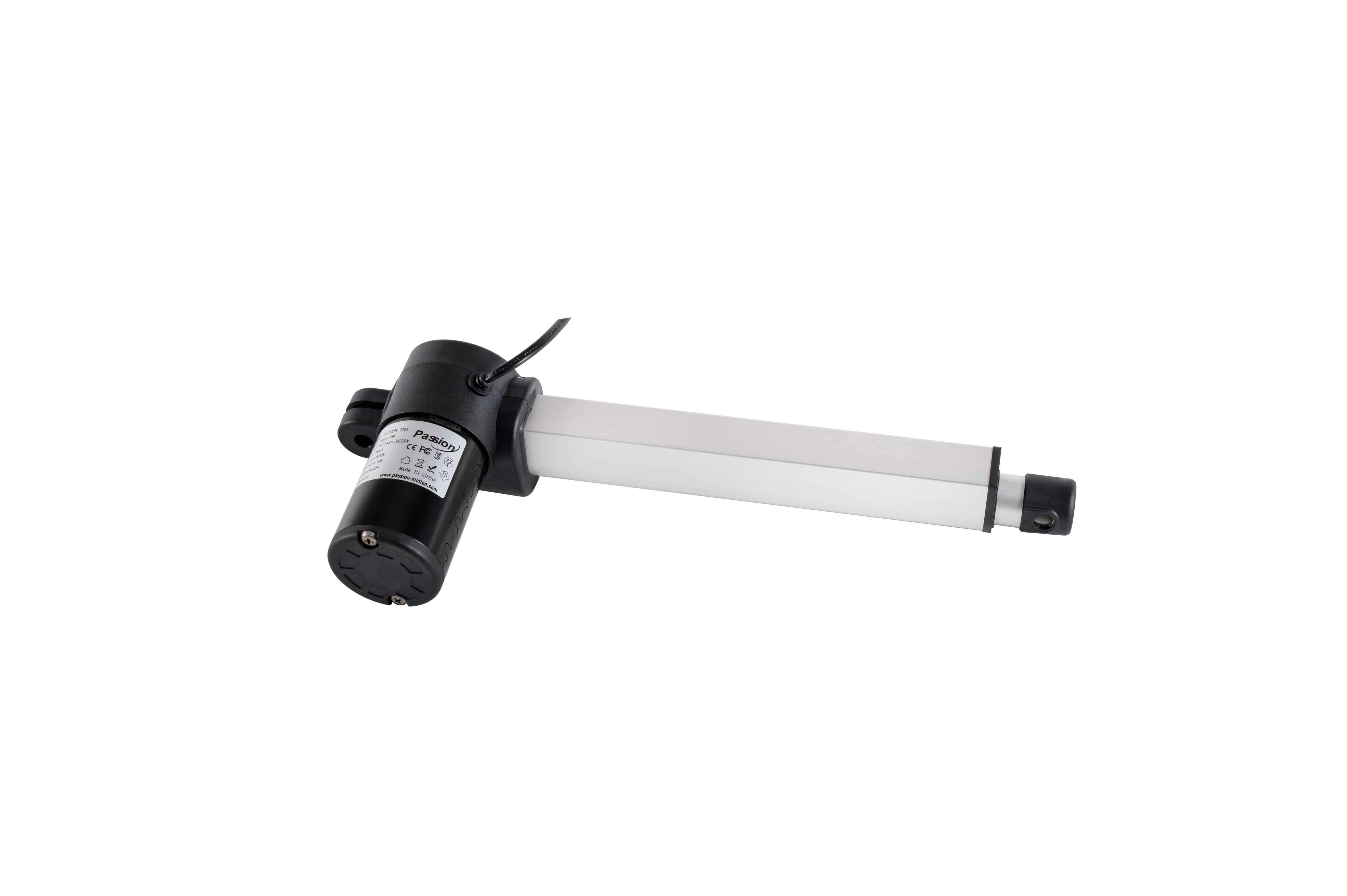
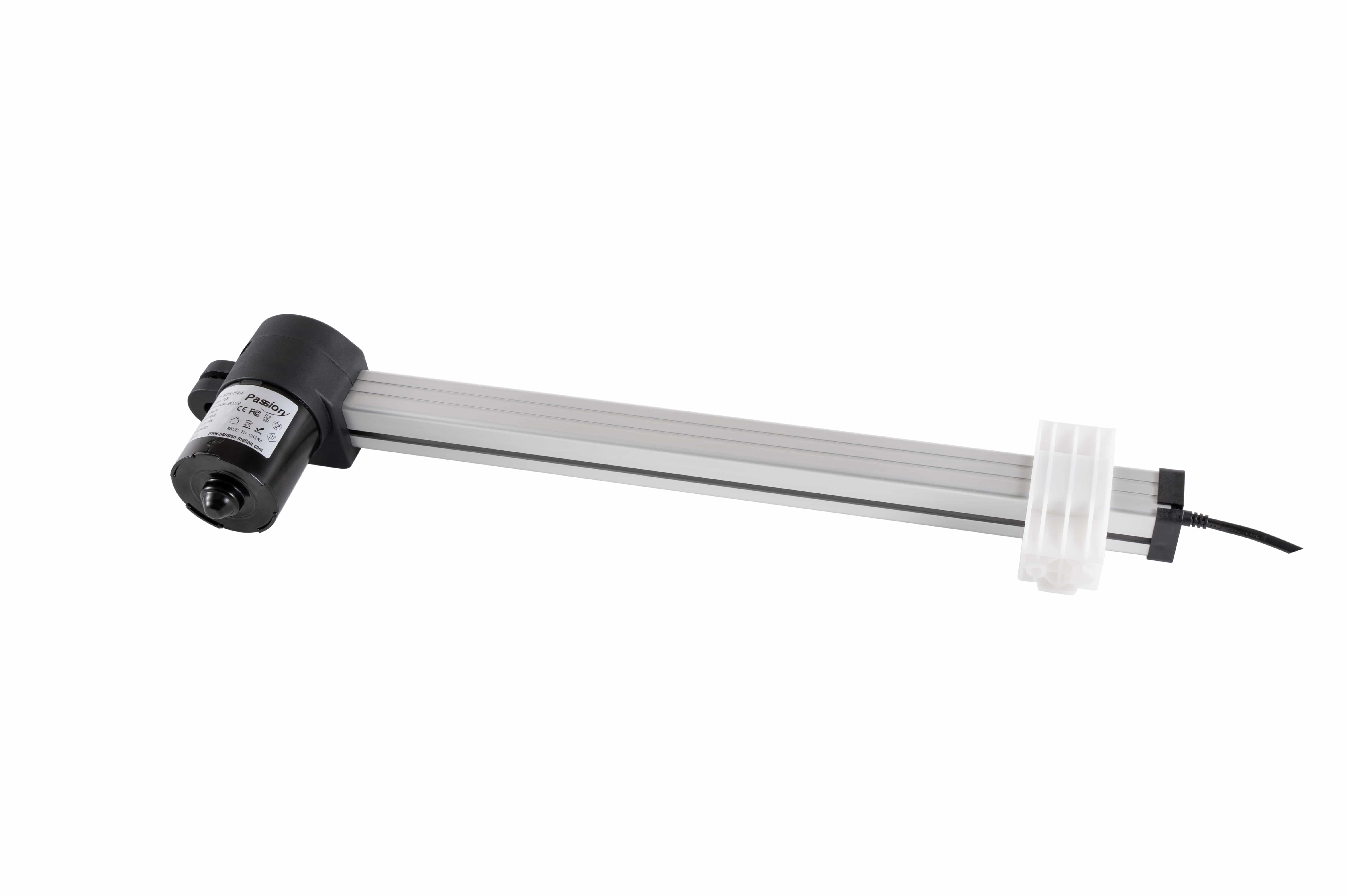
The screw mechanism works inside a complete motion assembly; the exterior form alone does not identify the internal screw technology.
Efficiency Changes Motor Torque, Heat, and Holding Behavior
Efficiency is not just an energy number. It changes the torque required from the motor, the heat generated in the screw-and-nut interface, and the tendency of an external load to rotate the screw backward.
A simplified screw-force relationship can be written as:
T ≈ F × L / (2π × η)
where:
- T is input torque,
- F is axial force,
- L is screw lead, and
- η is mechanical efficiency.
This expression is useful for seeing the tradeoff: for the same axial force and lead, lower efficiency requires more input torque. It is not a complete sizing equation because bearing drag, preload, acceleration, gravity, seals, coupling losses, gearbox losses, and breakaway friction can add demand.
For Acme designs, efficiency can vary widely with nut material, lead, lubrication, and load. For ball screws, rolling contact generally produces much higher efficiency. Roller screws also operate with rolling elements, but their larger contact area and internal motion mean they should not automatically be assumed to exceed ball-screw efficiency.
Tolomatic's screw selection guide shows why application variables have to stay attached to any efficiency comparison.
Force Density, Stiffness, and Service Life
A screw can fail a design review for several different reasons: not enough static strength, inadequate dynamic life, too much elastic deflection, excessive contact stress, thermal limits, or an oversized package.
When Acme is enough
A sliding screw can be a sound choice when the required force and duty are moderate, the speed is modest, and gradual nut wear is acceptable. Its simple nut design can also make replacement straightforward.
The important limitation is that sliding wear does not give the same predictable rolling-contact fatigue model used for ball and roller systems. Environment, lubrication, nut material, load, and duty can have a large effect on how backlash changes over time.
Why ball screws are a strong general-purpose choice
Ball screws combine relatively low friction with good load capability, speed, repeatability, and predictable fatigue-life methods. That makes them a common starting point for automation axes that reverse frequently or need controlled positioning.
A ball screw should still be sized from the actual load spectrum. Peak force alone does not describe life, and a very short high load can have a different effect from a lower load repeated through most of the cycle.
Where roller screws justify more complexity
Roller screws put more load-sharing contacts inside a similar diameter. That can raise axial stiffness, dynamic load capability, and usable life in a compact package.
But "more contact" is not a reason to select roller technology by default. Moog's ball-vs-roller technology discussion points out that a different ball-screw size or configuration can sometimes meet the same application target. The useful comparison is therefore required performance per installed package and life target , not the technology label.
Speed, Duty Cycle, and Long-Stroke Limits
High linear speed depends on more than the nut design. Screw lead determines travel per revolution, while screw diameter, unsupported length, and support arrangement influence the safe rotational speed.
For a long screw, two checks become especially important:
- Critical speed: a rotating screw can reach a resonant condition and begin to whip before the nut reaches its load limit.
- Column buckling: a long screw in compression can become unstable before the material or nut reaches its nominal force rating.
A design can therefore have ample nut capacity and still be unsuitable because the screw is too long, too slender, or rotating too fast for its support condition.
Duty cycle adds a thermal layer. Repeated acceleration, preload, bearing drag, seals, and screw friction all create heat. A high-cycle axis should be reviewed using the complete motion profile: move distance, speed, acceleration, dwell, reversals, force during each segment, and cycles per hour.
Use the actuator sizing resource to organize force, travel, speed, and duty before comparing detailed configurations.
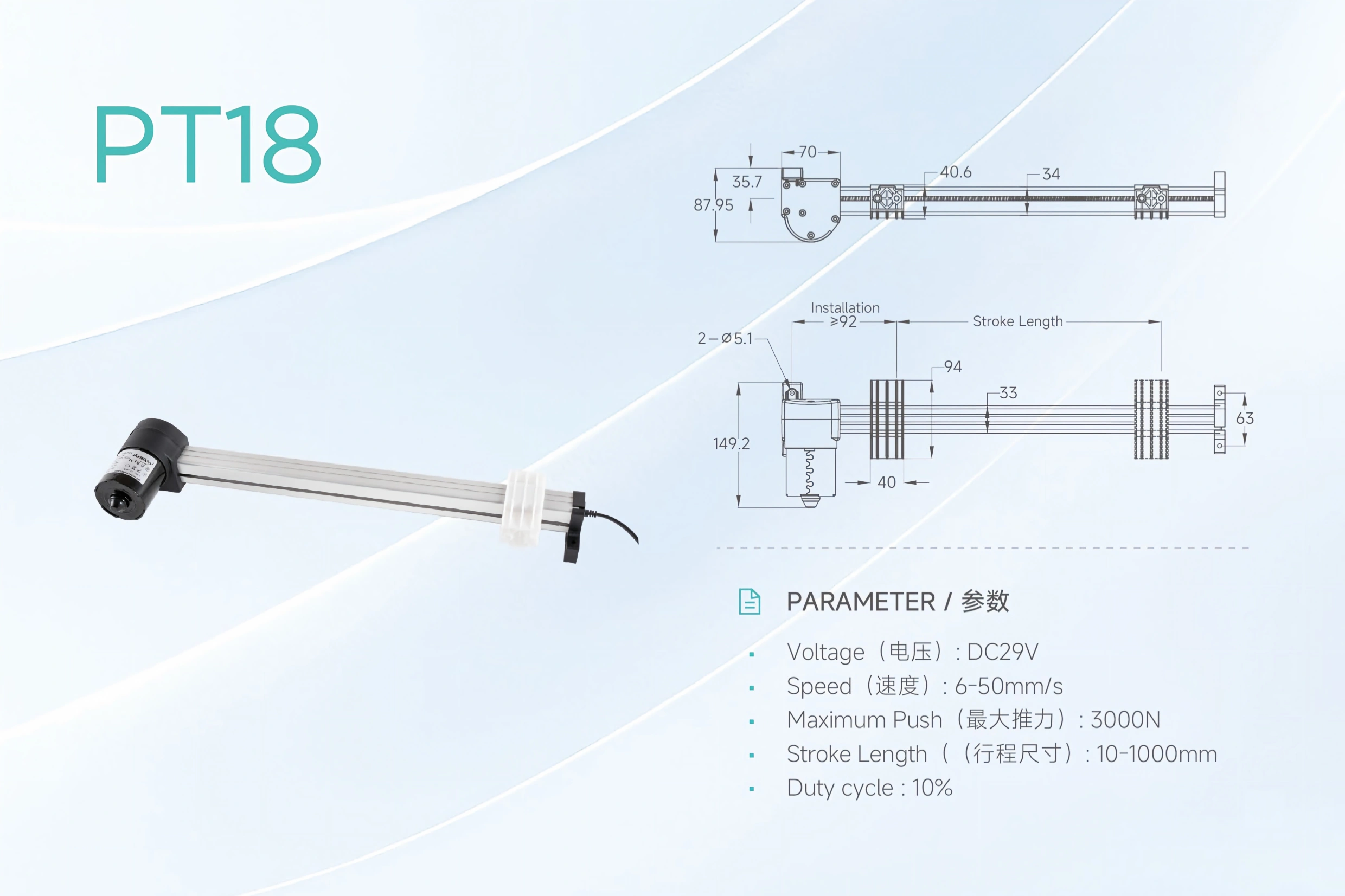
Screw selection has to be checked together with travel, guidance, support conditions, and the rest of the motion axis.
Backlash, Preload, Accuracy, and Repeatability Are Different Questions
These terms are often mixed together, but they describe different behavior.
- Backlash or axial play is lost motion when direction reverses.
- Preload intentionally removes clearance by creating internal contact force.
- Lead accuracy describes how closely linear travel follows the intended travel per revolution over distance.
- Repeatability describes how consistently the axis returns to a position.
- Stiffness describes how much the system deflects as axial load changes.
A low-backlash mechanism is not automatically highly accurate over a long stroke, and a high lead-accuracy screw can still have poor system repeatability if bearings, couplings, guides, mounting surfaces, or feedback introduce error.
Preload is also not free. It can reduce axial play and increase stiffness, but the added internal load raises friction, torque, heat, and bearing or raceway demand. Select preload from the application's real reversal and stiffness requirements rather than specifying the maximum available preload by default.
Backdriving and Vertical Holding Need Their Own Review
Backdriving occurs when an external axial load produces enough torque to rotate the screw. The tendency is strongly tied to efficiency, lead, friction, and load.
A sliding screw often has more resistance to backdriving than a ball or roller screw, which can be useful in a lifting or holding mechanism. That does not mean every Acme configuration is self-locking.
For a vertical axis, ask a separate set of questions:
- What happens if motor torque is removed?
- Can gravity or the process load move the axis?
- Is controlled lowering acceptable?
- Is a brake required to hold position?
- Is there a separate mechanical restraint for a safety-critical state?
- What happens after wear, lubrication changes, or temperature changes friction?
If unintended motion could harm people, tooling, or the machine, do not rely on a general screw-type assumption. Verify the actual holding method and failure response.
Lubrication, Contamination, Noise, and Maintenance
The lowest-maintenance choice depends on the operating environment.
An Acme screw with a suitable polymer nut can run quietly and, in some designs, with little or no added lubricant. A metal sliding nut may need lubrication and can create more wear debris as it ages.
Ball and roller screws normally depend more heavily on controlled lubrication and protection of precision rolling contacts. Seals, covers, lubricant selection, relubrication interval, contamination level, and alignment all become part of the service plan.
Noise also resists simple ranking. Ball return paths can create audible recirculation noise. A polymer sliding nut can be very quiet. Roller systems may run smoothly, but roller engagement, preload, gears, bearings, lubrication, and speed still influence the result. Compare actual product data when noise is a requirement rather than assuming one technology is always quietest.
Initial Price vs Total System Cost
Initial price usually rises with mechanical complexity: a basic sliding screw tends to cost less than a precision ball screw, while a roller screw generally carries the highest component price.
Machine-level economics can differ. Compare:
- motor torque and motor size;
- any gearbox requirement;
- holding-brake hardware;
- lubrication and protection;
- installation and alignment effort;
- expected nut or screw replacement;
- planned maintenance;
- downtime cost;
- required service life;
- package size and machine-space value.
A lower-price sliding screw can be the best economic choice for intermittent motion. A ball screw can reduce motor and cycle-time penalties in a faster axis. A roller screw can justify its premium when long life or compact high-force capability prevents costly downtime or a larger machine structure.
Choose from the Requirement, Not from the Screw Name
Before choosing a screw technology, fix the operating point that all candidates must meet.
Final selection should be based on one operating point that combines force, travel, speed, duty, positioning, holding behavior, environment, and installation constraints.
1. Define the load
Record continuous force, peak process force, acceleration force, gravity, shock events, and the load spectrum across the cycle.
2. Define travel and installed geometry
Specify usable travel, total stroke, retracted and extended space, unsupported screw length, mounting points, and external guidance.
3. Define motion
Set maximum and typical linear speed, acceleration, deceleration, move time, dwell time, reversal frequency, and cycles per hour.
4. Define positioning
Separate allowable backlash, repeatability, lead accuracy, stiffness, and settling requirements.
5. Define power-off behavior
State whether the axis may move when drive torque is removed and whether a brake or mechanical restraint is required.
6. Define environment and service
Record temperature, dust, moisture, washdown, lubricant restrictions, contamination sensitivity, maintenance access, and planned service intervals.
7. Define life and economics
Set the required cycles or travel life, acceptable maintenance windows, replacement strategy, machine-space constraints, and total-cost target.
Once these inputs are fixed, compare only configurations that can meet them at the same operating point . If the requirement is still incomplete, the product selection tool can help organize the next step before you review linear motion products .
Which Screw Type Is the Best Starting Point?
Choose Acme or another sliding lead screw as the first option when motion is relatively slow or intermittent, simplicity and lower initial price matter, and some resistance to backdriving is useful. Verify wear, backlash growth, lubrication, and holding behavior in the real configuration.
Choose a ball screw as the first option when the application needs efficient motion, higher speed, frequent reversals, predictable fatigue life, and controlled positioning without the force-density demands that would justify a more complex mechanism.
Choose a roller screw as the first option when high force, axial stiffness, shock tolerance, compact load density, or very high cycle life is the dominant constraint and the application can support the added component and integration cost.
Then size the actual screw, nut, supports, motor, brake, guides, and structure. The technology choice narrows the field; final sizing still has to verify the complete configuration.
Frequently Asked Questions
Is an Acme screw the same as a lead screw?
No. Lead screw is the broader category. Acme is a common trapezoidal-thread lead-screw form. A ball screw is also a screw-driven linear mechanism, but it uses rolling balls rather than direct sliding contact between the nut and screw.
Ball screw vs lead screw: what is the biggest difference?
The first difference to check is the load-transfer mechanism. A typical sliding lead screw has direct screw-to-nut contact, while a ball screw uses recirculating balls. That changes friction, efficiency, wear, backdriving behavior, lubrication needs, and practical speed.
Which is more efficient: Acme, ball, or roller screw?
Ball and roller screws generally have higher mechanical efficiency than an Acme sliding screw because they rely on rolling elements. Exact efficiency depends on lead, diameter, preload, lubrication, load, seals, and product design, so use configuration data for motor sizing.
Is a roller screw always better than a ball screw?
No. Roller screws can provide very high load density, stiffness, and life, but they are more complex and usually cost more. If a properly sized ball screw meets force, speed, life, stiffness, and package requirements, roller technology may add little system value.
Are Acme screws self-locking?
Some Acme configurations resist backdriving, but self-locking should never be assumed from the thread name alone. Lead, friction, nut material, lubrication, load, wear, and orientation all affect holding behavior.
Does preload remove all backlash?
Preload can reduce axial play and increase stiffness, but it also adds internal load, friction, torque, and heat. The correct preload is the amount needed to meet the positioning and stiffness requirement without creating unnecessary losses.
Which screw type is best for high duty cycle?
Ball and roller screws are usually stronger starting points for frequent cycling because rolling contact reduces friction and supports predictable fatigue-life analysis. The final choice still depends on force, speed, heat, lubrication, stroke, supports, and the required life.
What should I specify before asking for a screw recommendation?
At minimum, specify force, stroke, speed, acceleration, duty cycle, orientation, positioning requirements, holding behavior, environment, required life, mounting/support conditions, and available space. Without that operating point, a screw recommendation is mostly a technology preference rather than an engineering selection.
Turn the Comparison into a Real Motion Requirement
Once force, travel, speed, duty, positioning, holding, environment, and life are defined, use the product selection tool to move from a technology comparison to a configuration review.
References
- Machine Design — A Critical Look at Acme, Ball, and Roller Screws for Linear Motion
- Tolomatic — Selecting the Optimal Screw Technology
- Thomson — Lead Screws vs Ball Screws
- Moog — Selection of Ball Screw versus Roller Screw Technologies
- Linear Motion Tips — How Roller-Screw and Ball-Screw Actuators Compare in High-Force Applications