
Static Load vs Dynamic Load: Definitions & Examples
Understand static load vs dynamic load, what dynamic loading means, and how motion, impact, vibration, and rating definitions affect actuator applications.

Static load vs dynamic load describes how a force behaves over time and through motion. A static load is steady enough for the mechanism to remain in equilibrium. A dynamic load changes with motion, time, acceleration, direction, impact, or vibration and can create forces that are not present in a simple stationary load check.
For a packaged linear actuator, the terms are often used more specifically: static load describes what the actuator must support while stopped, while dynamic load describes the force present during powered extension or retraction. That distinction is useful, but it should not be transferred blindly to every bearing, guide, or ball screw specification because those components can use different rating conventions.
Table of Contents
What Is Static Loading?
Static loading means a force is applied slowly enough, or remains steady enough, that significant acceleration is absent. The mechanism reaches an equilibrium condition instead of continuously responding to a changing force.
In a linear actuator application, a typical static condition is a platform, hatch, or fixture being held at a fixed position after movement stops. The load may still be substantial. “Static” does not mean “no load”; it means the defined load condition is stationary or slowly changing relative to the mechanical response.
Actuator manufacturers commonly describe static or holding capacity in terms of the load a unit can support while stopped. The exact definition, test basis, and back-driving conditions should still be checked in the product documentation.
A stopped actuator can still carry a significant load; the holding condition should be checked separately from powered motion.
A static load can still be the critical case
A mechanism may spend only seconds moving and hours holding position. The stationary condition therefore deserves its own review:
- What load remains on the actuator after motion stops?
- Is the load pushing or pulling along the intended axis?
- Can an external force act while the mechanism is parked?
- What happens when power is removed?
- Is position held by screw behavior, a brake, powered torque, or a separate mechanical restraint?
These questions are different from asking whether the actuator can move the load.
What Does Dynamic Loading Mean?
Dynamic loading means the applied force or the system response changes significantly with time. Motion is the obvious example, but acceleration, deceleration, vibration, impact, and repeated cycling can all create dynamic effects.
For a packaged electric actuator, the dynamic condition normally covers the force present while the unit is powered and extending or retracting. The mechanism may need to overcome the steady external load plus friction, process forces, and force associated with acceleration.
The core physics is Newton’s second law:
F = m × a
where m is moving mass and a is acceleration.
This is not a complete actuator-sizing equation. It simply shows why the same payload can create a different force condition when it starts, stops, reverses, or experiences an impact.
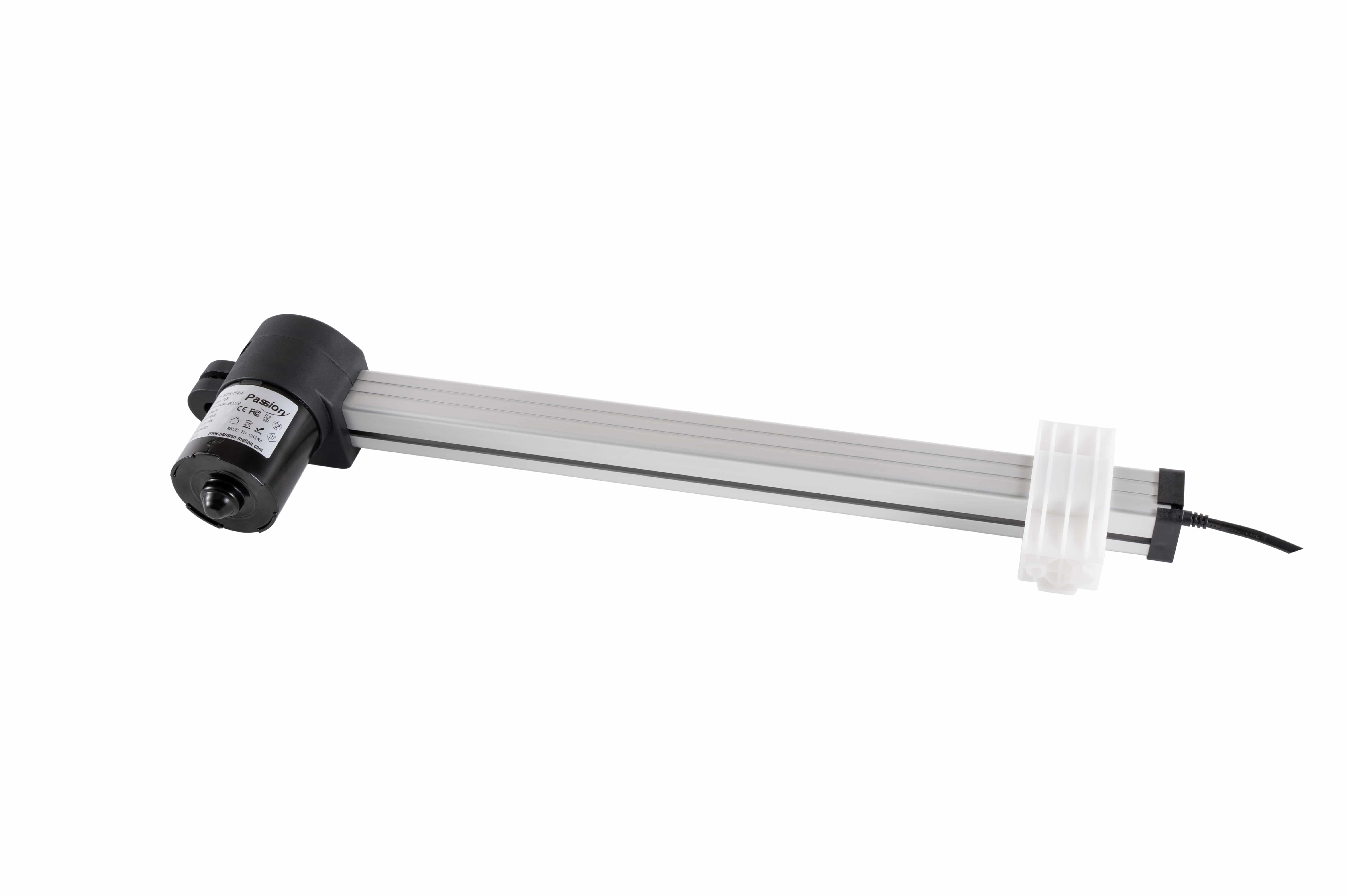
Dynamic loading is defined by the operating motion profile, not by payload weight alone.
Static vs Dynamic Load: Engineering Comparison
| Comparison point | Static load | Dynamic load |
|---|---|---|
| Basic condition | Stationary, steady, or slowly applied | Moving, rapidly applied, cyclic, or changing with time |
| Acceleration | Negligible for the defined load case | Can be significant |
| Inertial effects | Usually negligible | Can add to the applied force |
| Typical actuator example | Holding a platform at a fixed position | Extending or retracting the platform |
| Common concern | Holding behavior, back-driving, structural deformation | Starts, stops, reversals, impact, vibration |
| What may govern | Mechanical strength, holding behavior, deformation, load path | Powered force, motion profile, transient peaks, fatigue or life |
| Rating interpretation | Must follow the product or component definition | Must follow the product or component definition |
| Engineering question | What must remain supported while stopped? | What forces occur while the system moves or changes state? |
“Moving versus stationary” is a useful first distinction, but it is not the whole story. A stationary mechanism exposed to a sudden impact or strong vibration is no longer experiencing a purely steady load case, even if its average position does not change.
When the Same Payload Becomes a Dynamic Load Case
A payload does not need to change weight for the mechanical load case to change. The transition from static to dynamic can happen because of the way the system moves.
Acceleration and deceleration
At constant speed, acceleration is zero. During startup or braking, acceleration is not zero, so an inertial force appears. Faster changes in speed generally create larger inertial effects for the same moving mass.
This is why a mechanism that holds a payload successfully may still experience a more demanding condition during a fast start, abrupt stop, or rapid reversal.
Impact and hard stops
Impact is a short-duration dynamic event. A dropped load, collision, jam, hard end stop, or sudden external contact can create a peak force far above the steady force present immediately before the event.
Useful questions include:
- How fast is the mass moving before contact?
- Over what distance or time does it stop?
- Is there compliance or cushioning?
- Which actuator, bracket, guide, fastener, or frame member receives the peak?
An impact that happens while a mechanism is nominally stopped should not be treated as a harmless static condition.
Vibration and repeated cycles
Vibration is also time-varying loading. It can come from the machine, the surrounding structure, a motor, repeated starts and stops, or the process itself.
Repeated loading matters because fatigue and service life are different questions from one-time static strength. A component can remain below a static deformation limit yet still accumulate fatigue damage over many cycles.
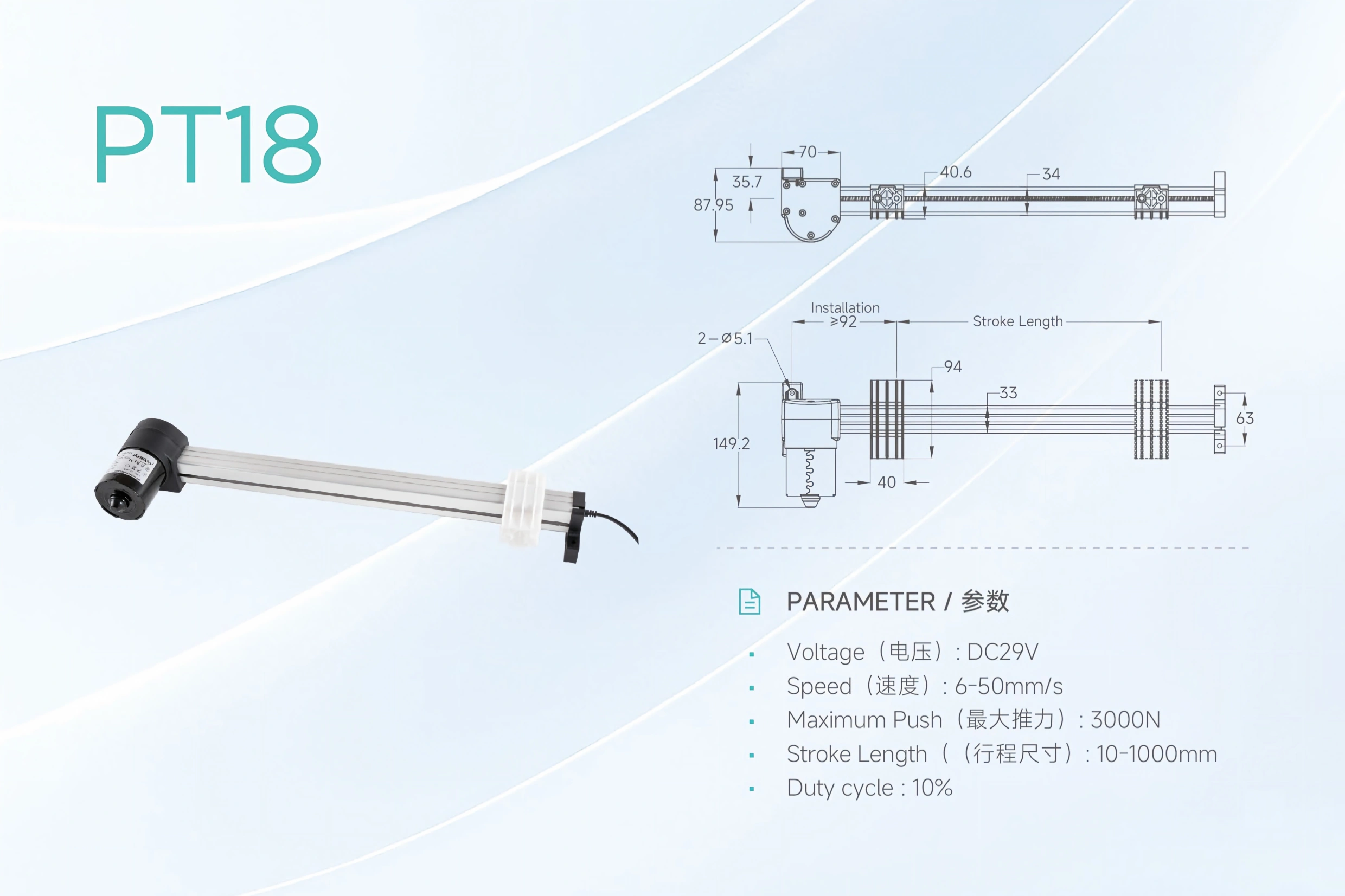
Starts, stops, vibration, and impact should be reviewed across the complete mechanical load path rather than at the actuator alone.
Why Static and Dynamic Load Ratings Are Not Interchangeable
One of the most important engineering cautions is that static load and dynamic load do not have one universal catalog meaning across all linear-motion products.
Packaged actuator convention
For a complete actuator, manufacturers commonly use:
- static or holding load for a stopped condition; and
- dynamic, working, or lifting load for powered push/pull motion.
That convention maps directly to the two operating states of the actuator.
Rolling-element component convention
For rolling linear bearings, guides, and ball screws, the rating logic can be different.
Linear-motion references commonly distinguish:
- basic static load capacity , often identified as C0 , which is associated with contact deformation or static damage criteria; and
- basic dynamic load capacity , often identified as C , which is used in rated-life or fatigue-life calculations under defined conditions.
For linear rolling bearings, ISO 14728-1 is one of the standards used for dynamic load-rating and life conventions.
A value labeled “dynamic load capacity” on a linear guide is therefore not automatically the same kind of number as an actuator manufacturer’s maximum powered push/pull force.
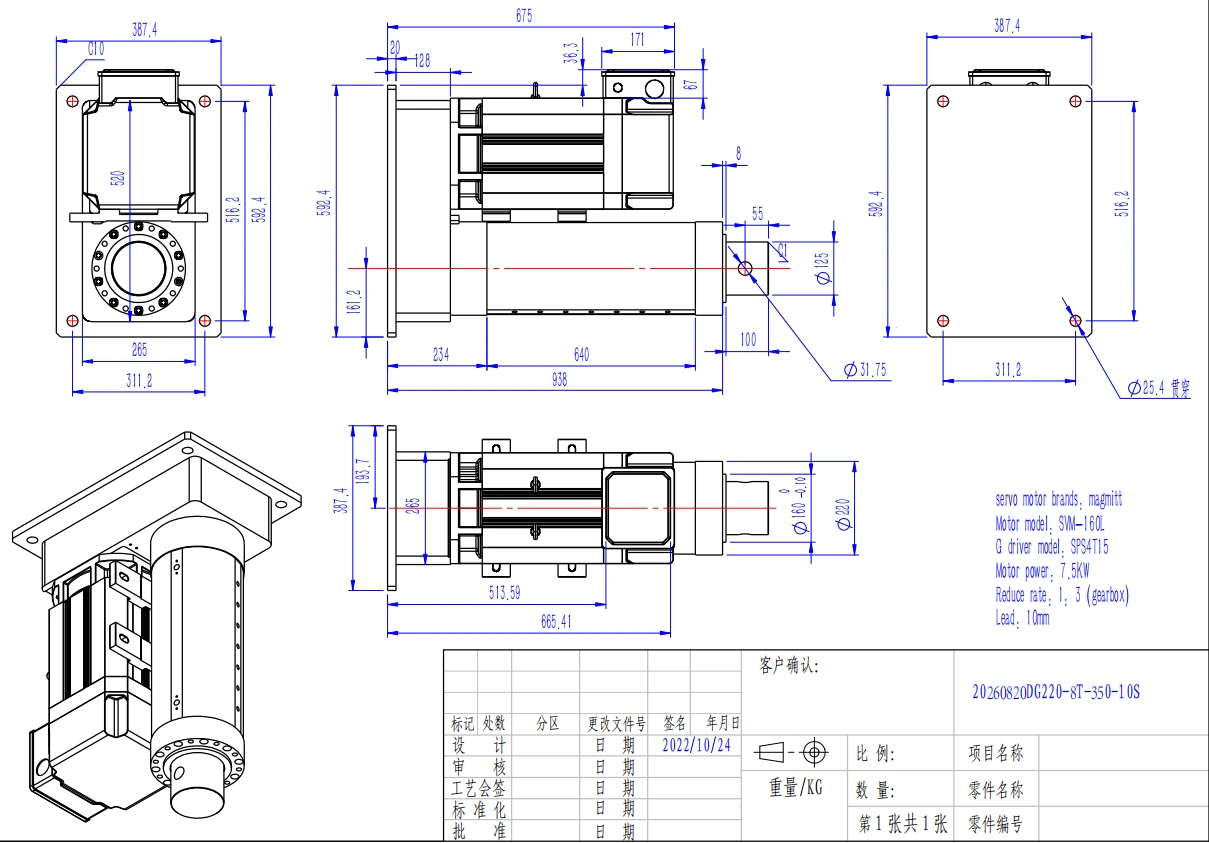
Static and dynamic ratings are meaningful only with the manufacturer's definitions, test basis, and operating conditions.
Compare the definition before the number
Before comparing catalog values, check:
- What exactly does the manufacturer mean by static or dynamic?
- Is the rating a maximum force, holding limit, deformation criterion, or life-calculation parameter?
- What speed, travel, cycle, temperature, lubrication, or mounting assumptions apply?
- Are shock, vibration, side load, or moment load included, limited, or excluded?
- Does the rating change with configuration or operating condition?
A large number is useful only when the rating basis matches the real application.
Where Safety Factors Fit—and Where They Do Not
A safety factor or design margin is applied after the load case and failure mode are defined correctly . It should not be used to hide uncertainty about whether the problem is static, dynamic, impact-driven, fatigue-driven, or dominated by mounting geometry.
Published guidance varies by component type and operating condition. Smooth operation, impact, vibration, and high-cycle motion can require different treatment. That is why one universal multiplier is not appropriate for every actuator application.
A practical sequence is:
- Define the stationary holding condition.
- Define the powered-motion condition.
- Identify acceleration, deceleration, and reversal events.
- Identify shock, vibration, and cyclic conditions.
- Determine which rating or failure mode applies to each case.
- Apply the product- or standard-specific margin required for that case.
- Verify the complete mechanism rather than the actuator alone.
The margin does not replace the load model. It protects a correctly defined design against uncertainty.
Load-Definition Checklist for an Actuator Application
Before comparing actuator specifications, document the following.
1. Stationary condition
- What load must be held after motion stops?
- How long is the dwell?
- What must happen during power loss?
- Are there external loads such as process force, wind, or human interaction?
2. Motion condition
- What mass moves?
- What direction does it move?
- What speed and motion profile are required?
- Where do acceleration and deceleration occur?
3. Transient events
- Are there hard stops, jams, collisions, or emergency stops?
- Can the load be dropped, slammed, or struck?
- Is cushioning available?
4. Repeated loading
- How often does the mechanism cycle?
- Are there frequent reversals?
- Is vibration present while moving or while stopped?
- What service life is required?
5. Mechanical load path
- Is the actuator mainly loaded axially?
- Do guides or the surrounding structure carry side loads and moments?
- Does linkage geometry change force through the stroke?
- Which position creates the worst condition?
6. Rating basis
- How does the manufacturer define static and dynamic capacity?
- What test or standard underlies the rating?
- What operating conditions or exclusions apply?
Once this load profile is clear, compare it with the specifications of available linear actuators without mixing unlike rating definitions.
Common Mistakes When Comparing Static and Dynamic Loads
Using payload weight as the entire load case. Weight may be only one part of the force present during movement.
Assuming a static rating proves dynamic performance. A stopped holding limit does not establish powered force, speed, thermal behavior, or fatigue life.
Assuming a dynamic rating proves safe holding. A moving-force rating does not automatically establish unpowered load retention or a safety function.
Treating every stationary event as static. A hard impact or vibration can be dynamic even when the mechanism does not travel appreciably.
Assuming static capacity is always a fixed multiple of dynamic capacity. The relationship depends on product design and, more importantly, on how each rating is defined.
Using one safety factor for every failure mode. Static deformation, dynamic performance, shock, fatigue, mounting strength, and safety retention are different checks.
Comparing catalog numbers before reading the test basis. A fair comparison starts with definitions, conditions, and exclusions.
When controlled drawings, test records, or other evidence are needed to resolve a rating question, review the available technical documentation rather than filling gaps with assumptions.
Frequently Asked Questions
What is static loading?
Static loading is a condition where a force is steady or applied slowly enough that significant acceleration is absent. In a packaged actuator application, it commonly describes the load the actuator supports while stopped.
What does dynamic loading mean?
Dynamic loading means the load or system response changes with time. Motion, acceleration, deceleration, impact, vibration, and repeated cycling can all create dynamic effects.
Can the same payload create a larger force during motion?
Yes. The payload mass may be unchanged, but acceleration or deceleration creates inertial force. Impact and other transient events can create even higher short-duration forces.
Is dynamic load just the weight being moved?
No. Weight is one input. Depending on the mechanism, the dynamic condition can also include inertia, friction, process forces, changing geometry, vibration, and transient events.
Is static load capacity always higher than dynamic load capacity?
Do not assume that as a universal rule. Some rolling components often show a higher static capacity, but actuator and component rating conventions differ. Compare the definition and test basis for the specific product.
Why does dynamic load capacity mean something different for a linear guide or ball screw?
For rolling-element components, basic dynamic load capacity is commonly a parameter used for fatigue or rated-life calculations under specified conditions. A packaged actuator may instead use dynamic load to describe powered push/pull force.
Are shock and vibration dynamic loads if the mechanism is stopped?
They are time-varying or transient effects and should be reviewed separately from a steady static condition. A component can be stationary in position while still experiencing vibration or impact.
Can one safety factor be used for every load case?
No universal factor fits every product and failure mode. The appropriate margin depends on the rating definition, operating conditions, shock or vibration severity, required life, and manufacturer or standard guidance.
Define the Load Case Before Selecting the Actuator
The most useful distinction is not simply “static equals stopped” and “dynamic equals moving.” The engineering task is to define the entire load profile: steady holding, powered motion, acceleration and stopping, shock, vibration, cyclic life, and the manufacturer’s rating basis.
Once those conditions are documented, use the ServoCylMotion Product Selector to compare actuator options against a clearly defined application requirement.