
Synchronous vs Independent Motor Control for Multi-Actuator Systems
Compare synchronous and independent motor control by wiring, feedback, load balance, channel behavior, fault response, commissioning, and multi-actuator use cases.

When a machine uses two or more electric actuators, the first control question is not simply how many motor outputs are available. It is whether each axis should be allowed to move independently, or whether the axes must maintain a defined relationship while moving .
That choice changes the required wiring, feedback, controller logic, commissioning, fault response, and mechanical risk.
The most important distinction is this:
Independent control gives each axis its own motion authority. Synchronized control measures the relationship between axes and corrects mismatch. Sending the same command to two motors is only grouped or ganged operation; it is not proof of synchronization.
This matters for lifting platforms, wide frames, doors, hatches, machine guards, adjustable structures, and other mechanisms where two lift points can affect the same load.
Table of Contents
Comparison: independent vs synchronized control
| Engineering question | Independent channels | Same-command / ganged motion | Feedback-synchronized motion |
|---|---|---|---|
| Command source | separate per axis | one command may drive several axes | shared motion target plus feedback loop |
| Position feedback required | optional, depending on task | optional | normally required |
| Can axes move to different positions? | yes | usually no during grouped command | normally no during synchronized move |
| Does same voltage guarantee same travel? | not applicable | no | no; mismatch is measured and corrected |
| Load imbalance sensitivity | handled per axis | can create drift | controller can compensate within system limits |
| Fault containment | can be axis-specific | often affects the group | must define whether all axes stop together |
| Commissioning complexity | lower to moderate | moderate | higher because feedback and matching must be verified |
| Best fit | separate functions or adjustable geometry | non-critical grouped motion | shared rigid loads, level lifting, coordinated travel |
Multiple outputs do not by themselves define whether axes operate independently or with feedback-based synchronization.
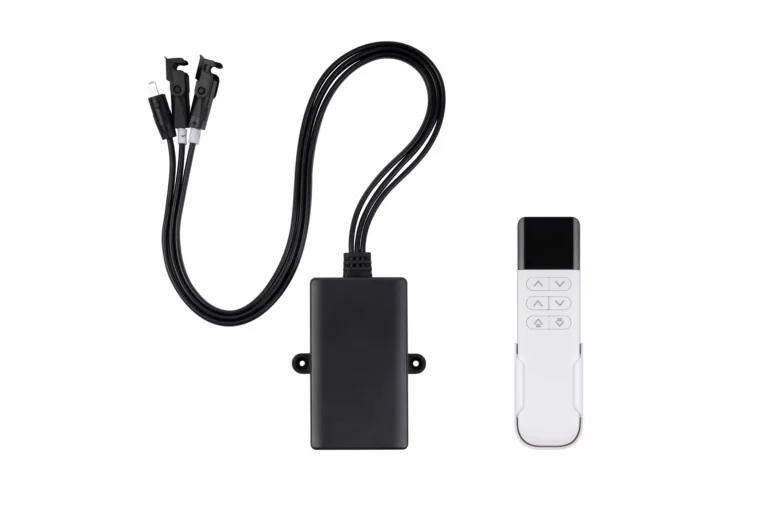
A multi-channel device can support any of these behaviors depending on its architecture. Channel count only tells you how many outputs are available; it does not tell you whether the channels are independent, grouped, or position-coupled.
Four useful multi-axis control topologies
1. Independent channels
Each actuator has its own command and its own stop conditions. Axis A may extend while Axis B remains still, or the two axes may move to different positions.
Independent control is useful when:
- each actuator performs a different mechanical function;
- the load does not require the axes to remain level;
- operators need separate adjustment;
- one axis may continue operating while another is stopped;
- maintenance or service requires individual jogging.
The control requirements should still define motor current, limits, feedback, command priority, and fault behavior for each channel.
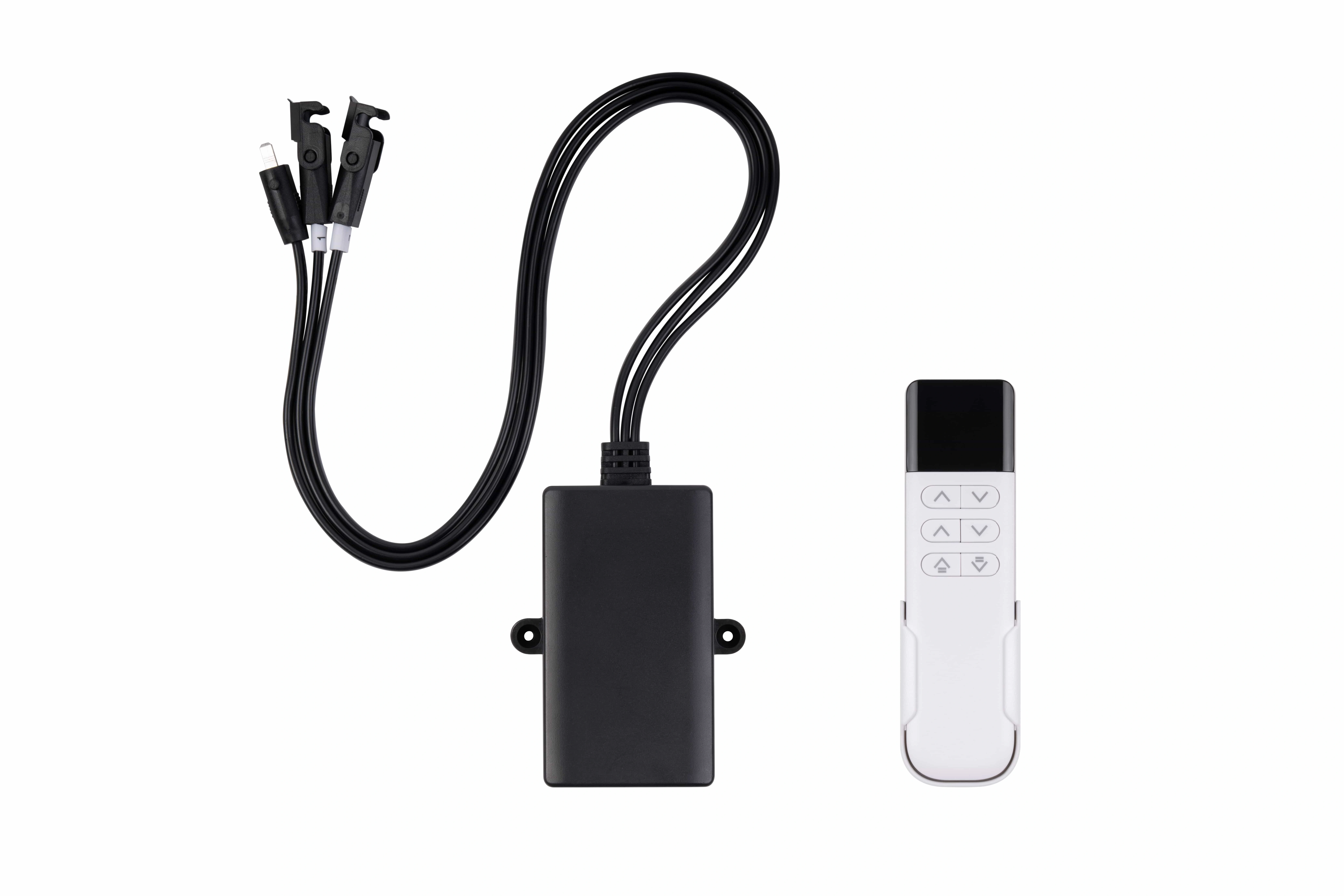
A shared command source can request motion on multiple channels without guaranteeing synchronized position.
A shared remote or HMI does not change this principle. One interface can still send separate commands to separate channels.
2. Same-command or ganged operation
In ganged operation, several motors receive the same extend/retract command at approximately the same time.
This is simpler than synchronization, but it has an important limitation: the controller may not know whether the axes are actually staying together .
Two nominally identical actuators can travel differently because of:
- manufacturing tolerance;
- unequal loading;
- different friction;
- mechanical alignment;
- cable voltage drop;
- supply variation;
- temperature;
- wear;
- small speed differences.
If the mechanism can tolerate that difference, ganged control may be acceptable. If a wide rigid load must remain level, it can be risky.
Why same commands do not guarantee synchronized motion
Imagine two lift points supporting one rigid platform. Both motors receive the same command and the same nominal voltage.
One side has slightly more load and more guide friction. That motor slows. The other side moves farther. The platform begins to tilt.
As the angle increases, the mechanical structure can impose more side load on guides, brackets, screws, or actuator mounts. The result can be:
- skew;
- binding;
- increased current;
- accelerated wear;
- nuisance faulting;
- structural stress;
- uneven end-position arrival.
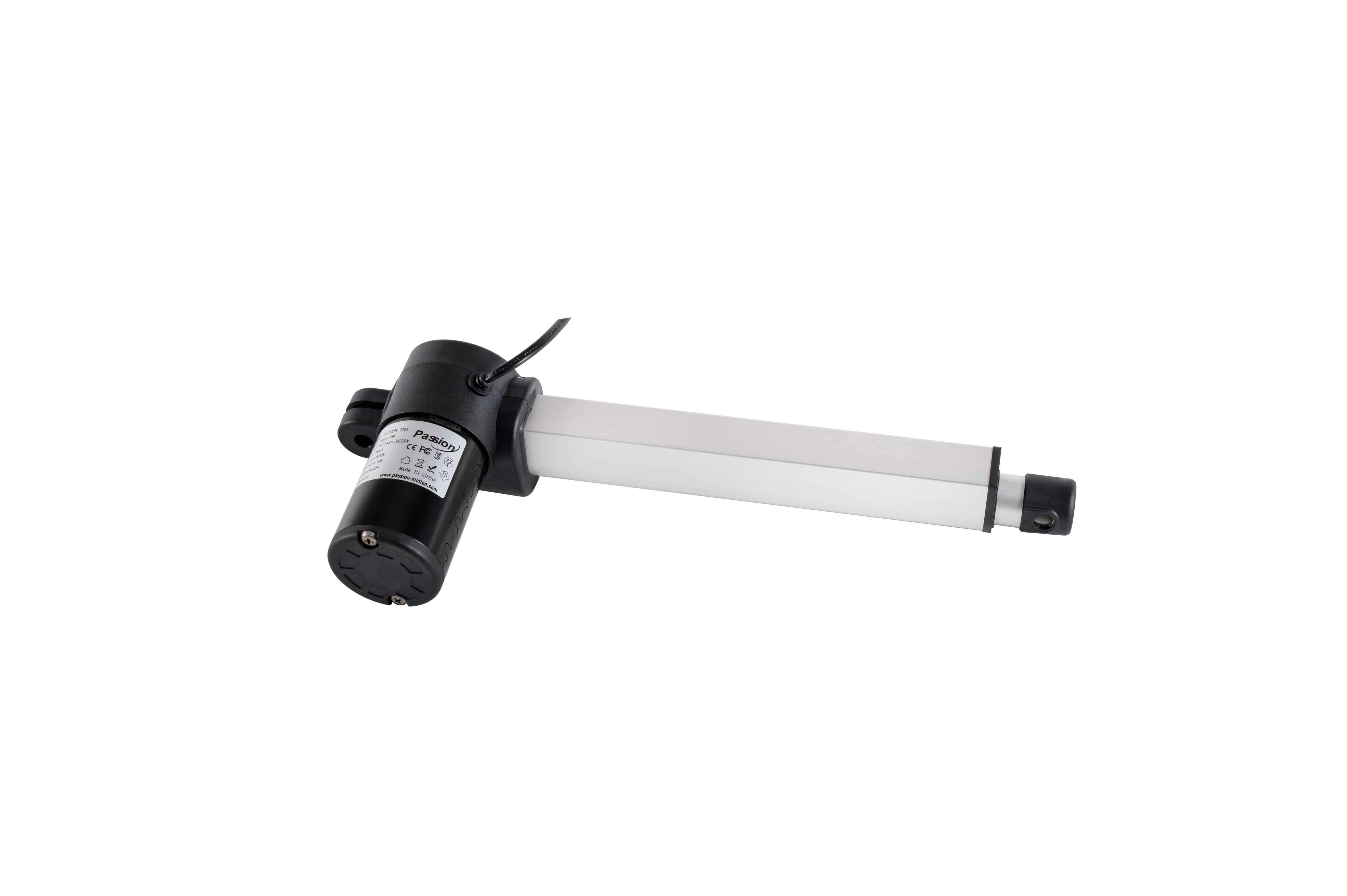
Each axis can respond differently to load, friction, voltage drop, and mechanical alignment.
This is why synchronization is a closed-loop coordination problem , not merely a wiring problem.
3. Master/follower control
In a master/follower arrangement, one axis acts as the reference. The second axis follows the master’s position or speed.
The controller compares feedback and adjusts the follower when it begins to lag or lead.
This can be useful when the mechanism naturally has one reference side or when the system architecture is organized around one primary axis.
The specification should define:
- which axis is master;
- what feedback is compared;
- the allowed position difference;
- correction behavior;
- what happens if the master faults;
- what happens if the follower reaches a limit first.
4. Cross-coupled synchronization
Cross-coupled control treats axis mismatch itself as a controlled variable.
Instead of only asking “did each axis reach its own target?”, the control logic also asks “how far apart are the axes right now?”
The controller can then reduce the difference by changing motor command, speed, or current within the available control architecture.
This is the more useful model for a rigid shared load where level travel matters throughout the stroke.
Feedback is what makes true synchronization practical
Synchronization requires the system to know how each axis is moving.
Common feedback methods include:
- Hall-effect pulse feedback;
- incremental encoders;
- potentiometer position signals;
- other position or speed sensors.
The important requirement is not the sensor name alone. The controller must understand:
- the electrical signal;
- scaling or pulse relationship;
- direction convention;
- sensor supply;
- reference state;
- loss-of-feedback behavior.
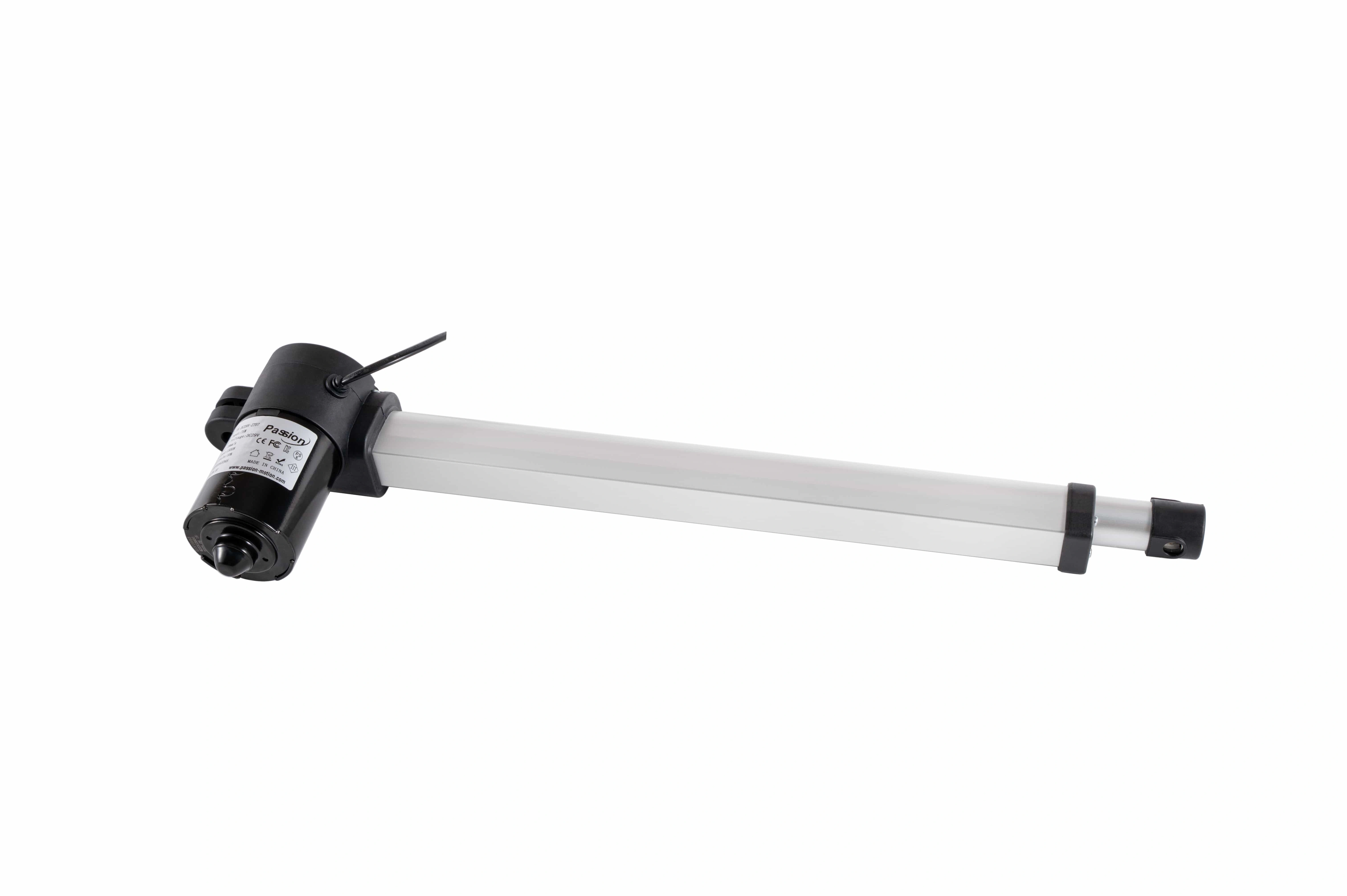
True synchronization depends on measured motion and correction logic, not only nominally matched hardware.
TiMOTION, Firgelli, Progressive Automations, and Actuonix all illustrate the same broader engineering point: multi-axis coordination becomes more controllable when actual motion is measured rather than assumed.
For an OEM design, the feedback interface should therefore be frozen together with the motor and control topology.
Load balance and mechanical design still matter
Feedback does not eliminate mechanical constraints.
A synchronized system still needs:
- aligned mounting;
- adequate guide stiffness;
- suitable actuator spacing;
- compatible stroke;
- sufficient force margin;
- acceptable structural deflection;
- cable routing that does not create unequal voltage drop or mechanical drag.
A controller can correct modest mismatch, but it should not be expected to compensate for a fundamentally misaligned frame or one actuator carrying most of the load.
When independent control is the better choice
Choose independent channels when the mechanical functions are intentionally separate.
Examples include:
- two adjustable sections that must reach different positions;
- a machine with separate clamps or gates;
- service positioning where each axis must be jogged individually;
- mechanisms where one axis fault should not automatically disable unrelated motion.
When synchronization is the better choice
Use feedback-based coordination when differential motion would create a problem.
Typical cases include:
- wide platforms;
- rigid frames lifted at two or more points;
- large hatches;
- linked lifting columns;
- mechanisms where skew could jam guides;
- applications with a strict axis-to-axis position relationship.
Fault handling is part of the topology decision
Before selecting the control method, define what should happen if:
- one axis reaches a limit first;
- one motor stalls;
- one feedback signal disappears;
- one cable is disconnected;
- one axis exceeds the allowed mismatch;
- supply voltage drops;
- a communication link fails.
For a synchronized shared load, continuing to drive only one side can make the mechanical problem worse. Many designs therefore stop the group when one axis faults.
Independent machinery may use a different policy and allow unaffected axes to remain available.
The correct behavior depends on the machine risk assessment and functional requirements; it should be specified before controller selection.
Commissioning requirements
A synchronized system usually needs more commissioning information than an independent one.
The OEM release package should define:
- channel-to-actuator mapping;
- feedback direction;
- sensor scaling;
- reference or homing state;
- allowed mismatch;
- initialization sequence;
- travel limits;
- correction behavior;
- fault thresholds;
- recovery procedure.
Do not assume two channels are interchangeable unless the control architecture explicitly allows reassignment.
OEM selection checklist
Before deciding between independent and synchronized control, answer these questions:
Mechanical relationship
- Do the actuators move the same rigid load?
- Can differential travel rack or bind the mechanism?
- Is there a guide system that constrains alignment?
Motion requirement
- Must the axes reach the same position?
- Must they remain aligned during acceleration and stopping?
- Do any axes need separate targets?
Feedback
- Is position or speed feedback available on every coordinated axis?
- Does the controller support that feedback type?
- What happens if feedback is lost?
Control topology
- independent;
- grouped same-command;
- master/follower;
- cross-coupled synchronization.
Fault behavior
- stop only the affected axis;
- stop all coordinated axes;
- allow manual recovery;
- require re-homing or reset.
Power
- how many motors can move simultaneously;
- total continuous and peak current;
- voltage drop through each branch;
- cable and connector ratings.
Acceptance criteria
- allowed axis-to-axis mismatch;
- expected load range;
- required commissioning test;
- fault and recovery validation.
If the project requires coordinated motion, ServoCylMotion’s multi-motor synchronization capability is the appropriate commercial bridge after these requirements are defined.
For mixed components or uncertain electrical/feedback interfaces, use the system compatibility resource before assuming that a controller, feedback device, and actuator can operate together.
FAQs
Is sending the same command to two motors the same as synchronization?
No. Same-command operation only requests the same action. Differences in load, friction, voltage drop, and motor tolerance can still make the axes travel at different speeds or positions.
When should actuators remain independent?
Independent control is appropriate when each axis has a separate mechanical task, different target positions, or a fault-containment requirement that allows one axis to stop while others continue.
What feedback is needed for synchronized motion?
The system needs a feedback method the control logic can measure and compare for every coordinated axis. Hall pulses, encoders, potentiometers, or other position/speed signals may be used depending on the architecture.
Does a multi-channel control unit automatically synchronize axes?
No. Multiple outputs can simply be independent channels. Synchronization requires compatible feedback and coordination logic.
Why does load imbalance matter?
A more heavily loaded or higher-friction axis may move differently from another axis under the same command. On a rigid shared load, that difference can create skew, binding, and additional mechanical stress.
What should happen if one synchronized axis faults?
The required behavior should be defined in the machine specification. For a shared rigid load, stopping all coordinated axes is often safer than allowing only one side to continue, but the actual design must follow the application’s risk assessment.
References
- Firgelli — How to Synchronize up to 4 Electric Linear Actuators
- TiMOTION — Electric Linear Actuators with Position Feedback
- Control Engineering — Actuators Explained
- Actuonix — How To Control Multiple Actuators Together
- Progressive Automations — Linear Actuator Synchronization
- Thomson — Linear Actuator Control Options Training