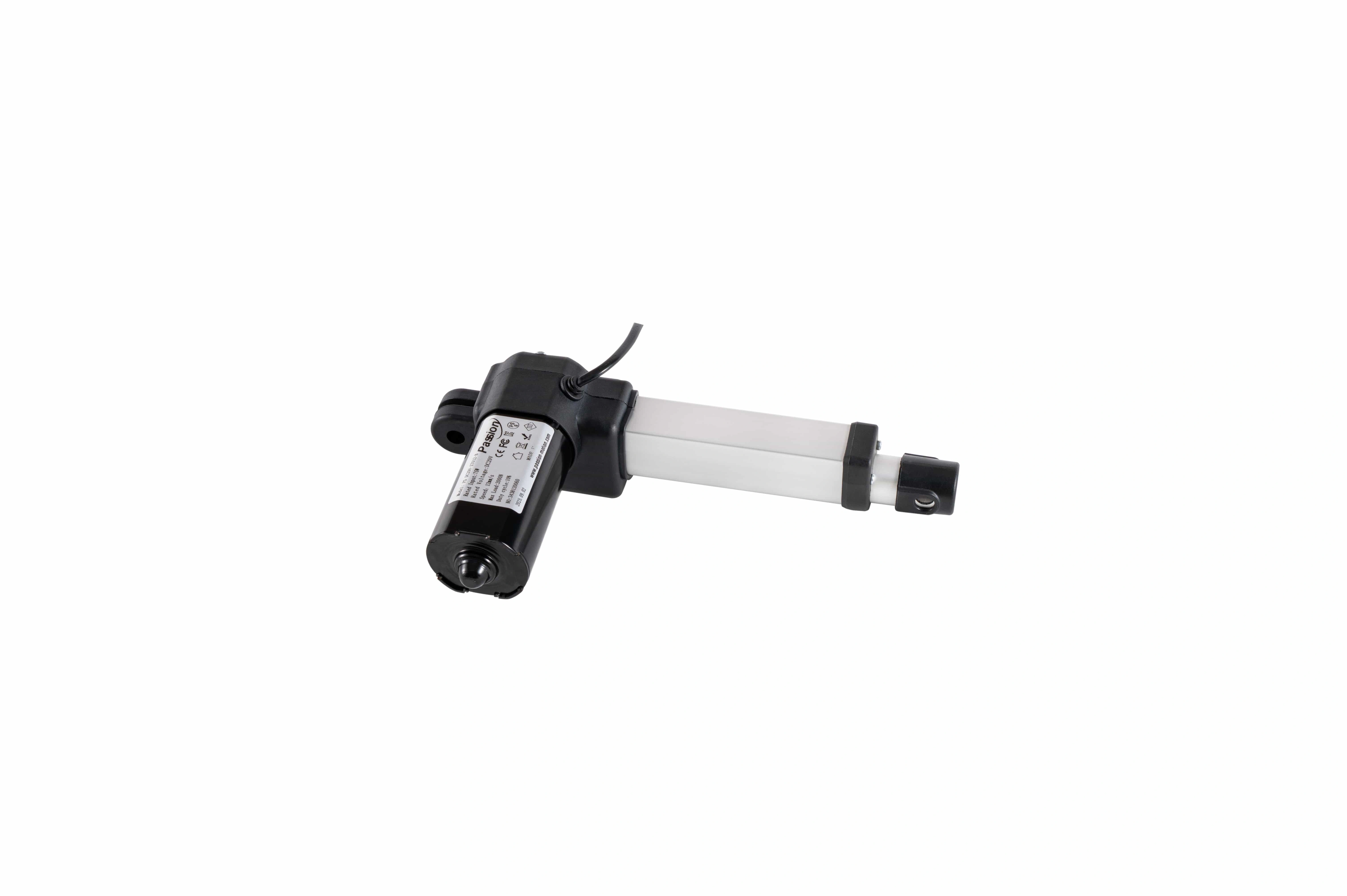

ZT11 Linear Actuator: 2000N, 30mm/s Speed
Review ZT11 specifications for DC29V operation, up to 2000N push, 5–30mm/s speed, 10–500mm stroke and compact mounting references.
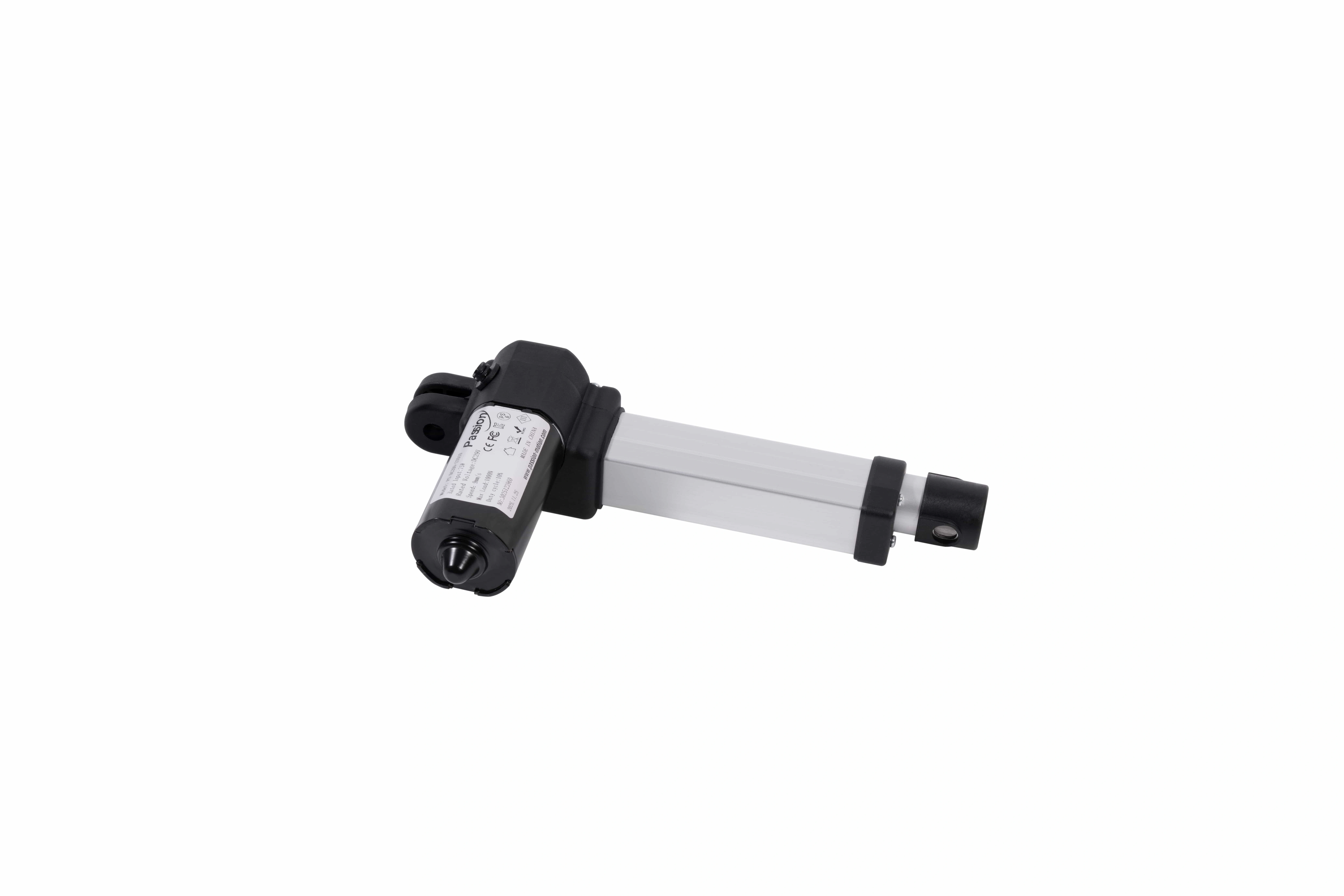
ZT11 Linear Actuator
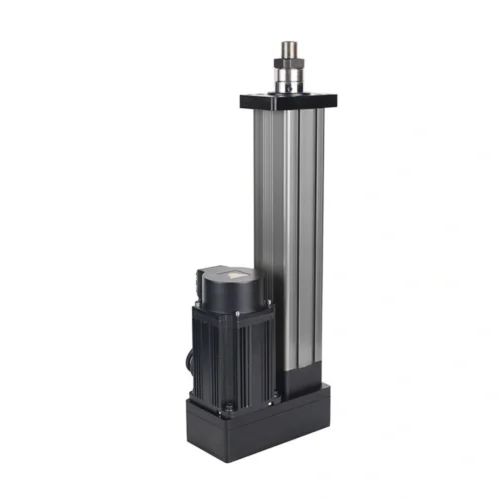
A DC 29 V push-rod actuator with up to 2,000 N maximum push , a published 5–30 mm/s speed range and 10–500 mm stroke options. Its compact packaging reference begins at a ≥130 mm installation dimension.
Use the ZT11 values as limits, then verify the real operating point.
The source publishes force, speed, stroke and duty independently. It does not prove 2,000 N at 30 mm/s or every endpoint in one build.
| Parameter | Published value | Selection note |
|---|---|---|
| Input voltage | DC 29 V | Confirm power, current capacity, connector and control arrangement for the selected configuration. |
| Maximum push | Up to 2,000 N | Push rating only; a separate pull rating is not established in the locked source. |
| Speed | 5–30 mm/s | Published range. State the required loaded speed when requesting configuration review. |
| Stroke | 10–500 mm | Confirm travel together with load, speed and endpoint clearance. |
| Duty cycle | 10% | The time basis and test conditions are not stated in the available record. |
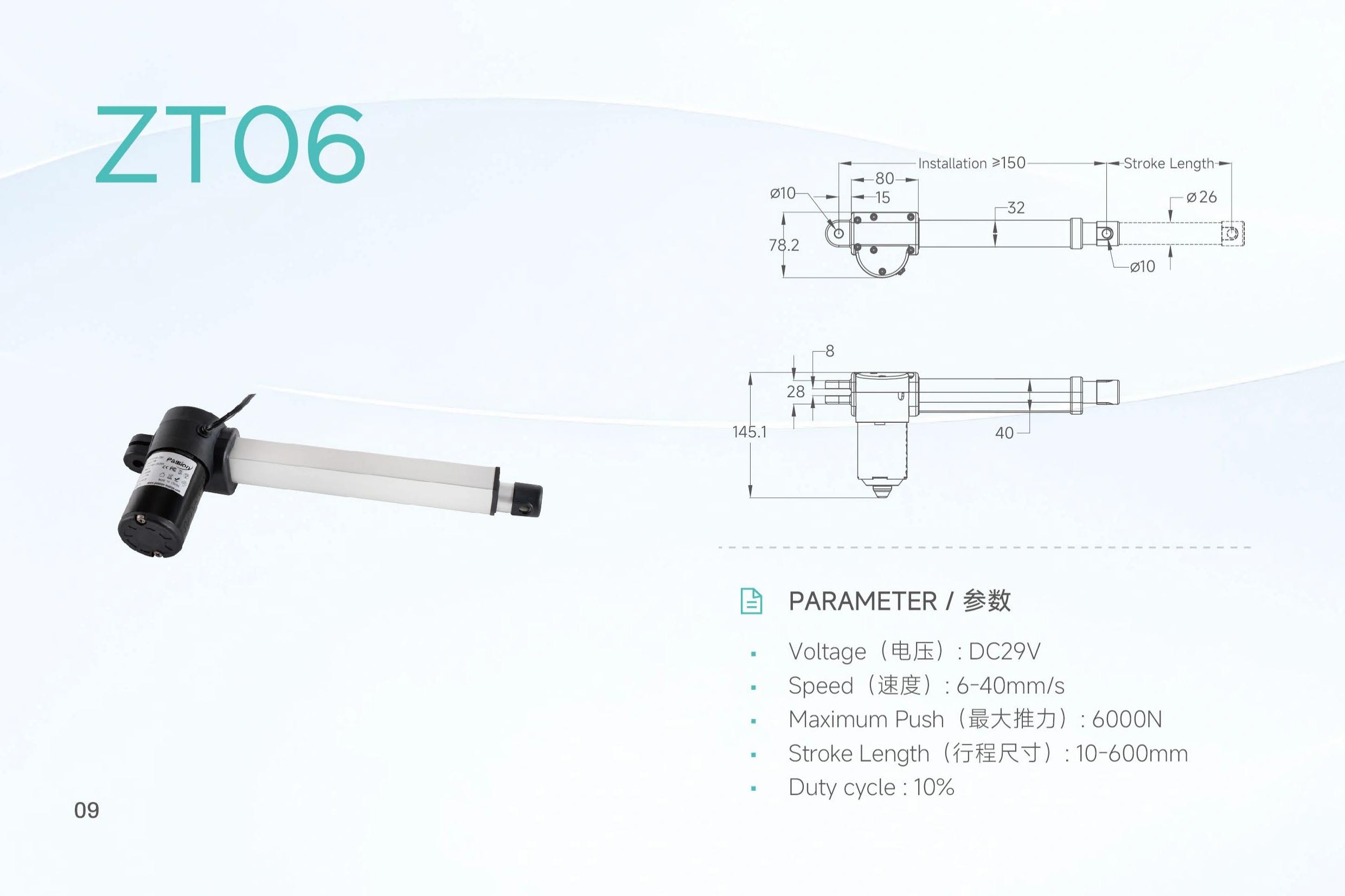
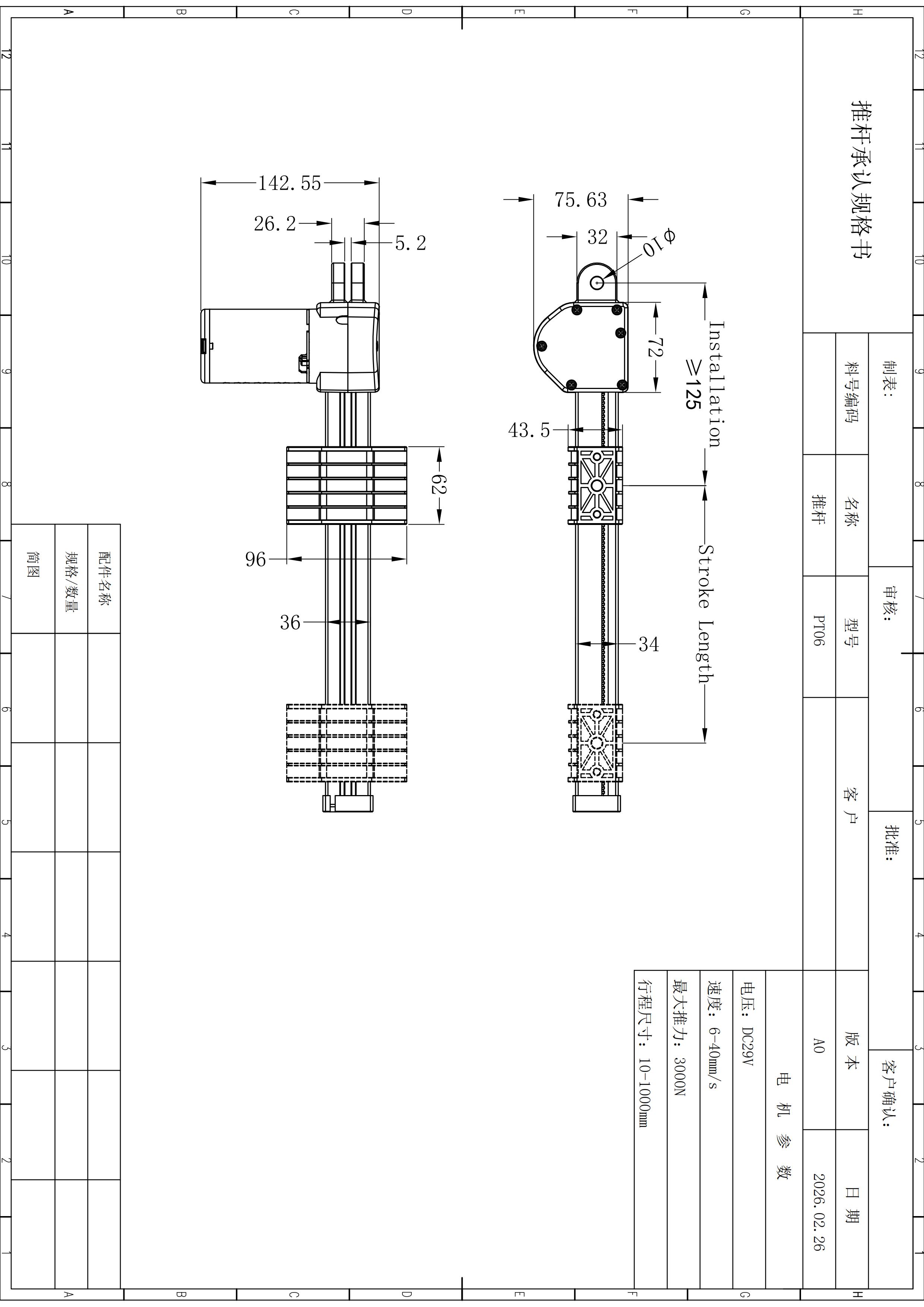
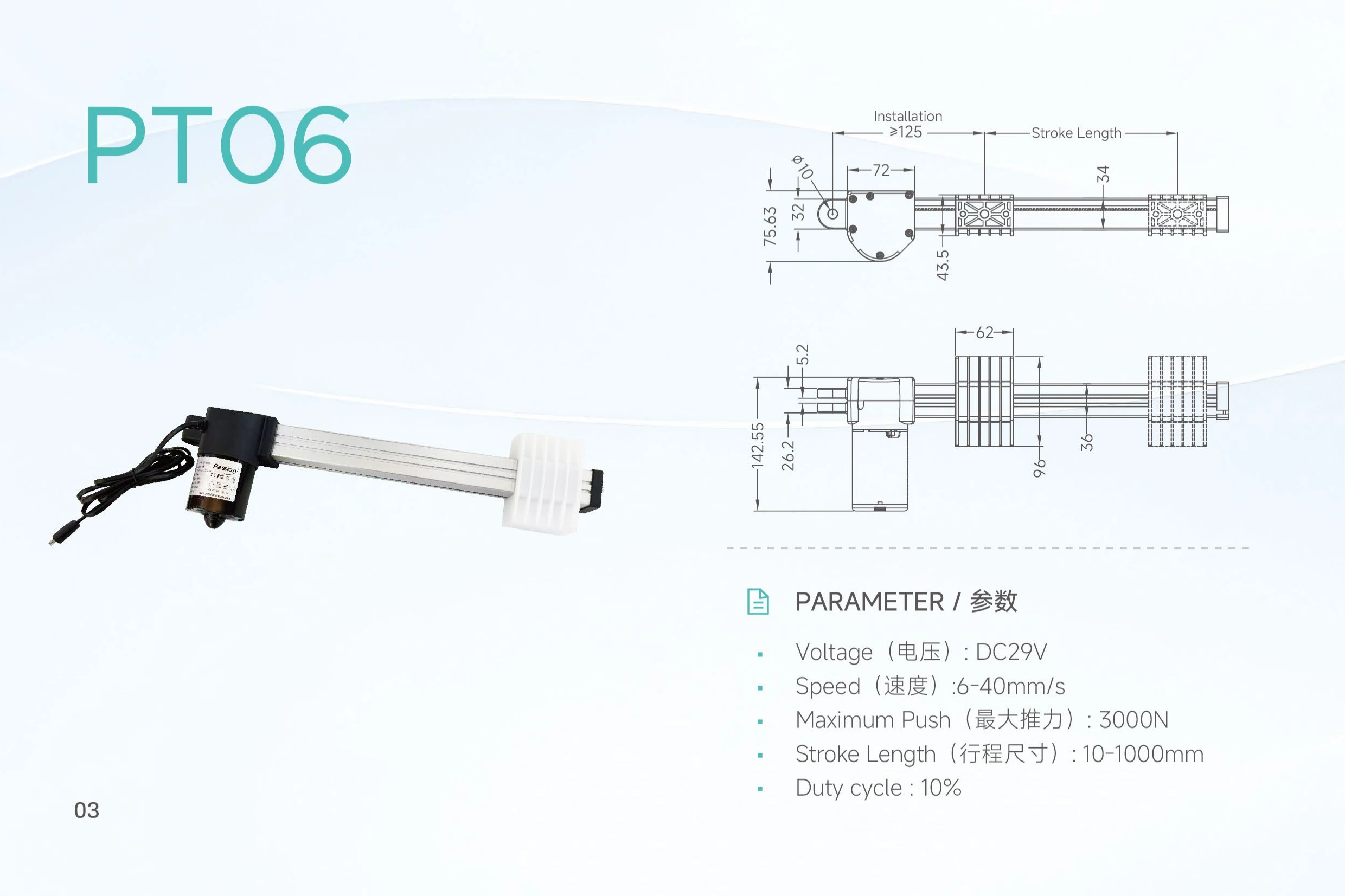
| Installation dimension | ≥130 mm | Preliminary packaging reference; verify against the released drawing. |
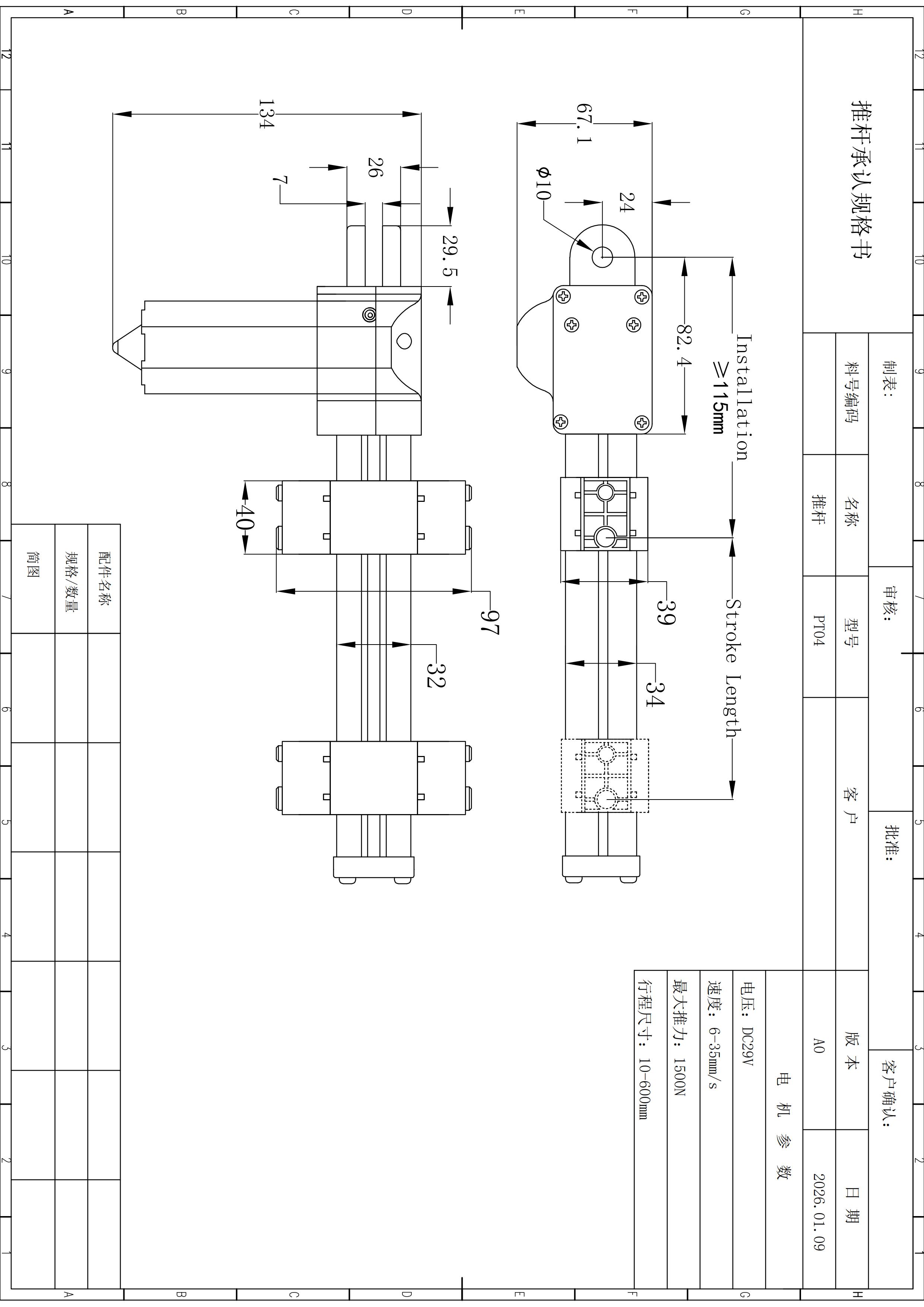
| Pin hole diameter | Ø10 mm | Confirm mating pin and bracket fit. |
| Shaft outer diameter | Ø24 mm | Use for early packaging only. |
| Motor length | 63.4 mm | Preliminary package reference. |
| Motor width | 40 mm | Preliminary package reference. |
| Total height | 132.8 mm | Verify final clearance on the current drawing. |
Inspect the compact envelope before locking brackets and nearby structure.
The interactive schematic is illustrative and not to scale. It helps separate the installation, motor, shaft and pin references that must be confirmed on a released drawing.
Start with retracted packaging.
Treat ≥130 mm as a preliminary installation reference, then confirm the selected stroke and final pin-to-pin geometry on the current drawing.
Reserve motor and cable clearance.
The record lists 63.4 mm motor length and 40 mm motor width. Keep nearby structure clear and verify the real orientation before release.
Check moving-shaft clearance.
Use Ø24 mm only for early packaging. Alignment, guide path and final tolerances belong to the released drawing.
Match the bracket interface.
Confirm mating pin diameter, fit, bracket width, front/rear datums and pivot freedom before machining surrounding parts.
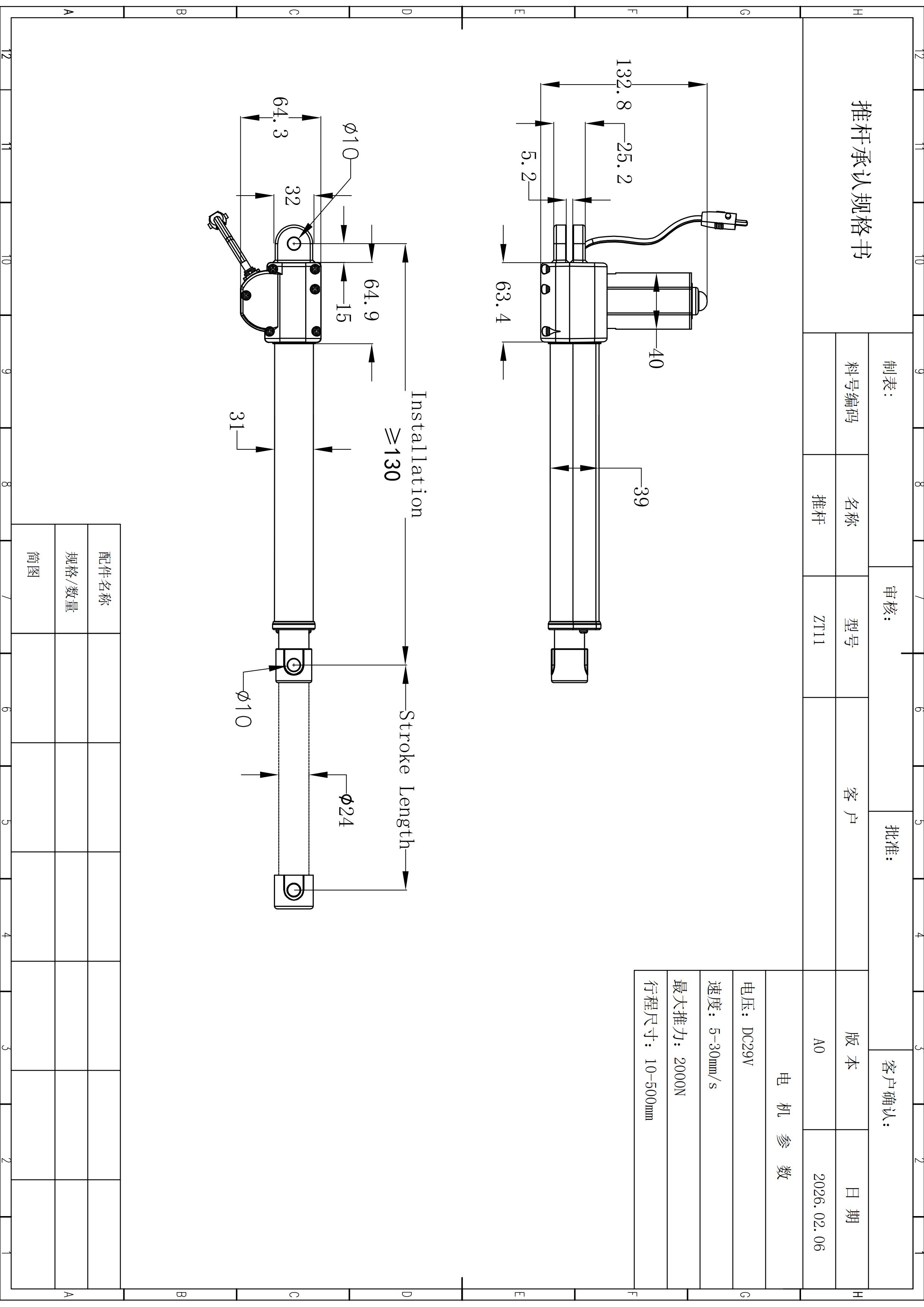
Use dimensions for concept layout, not final release.
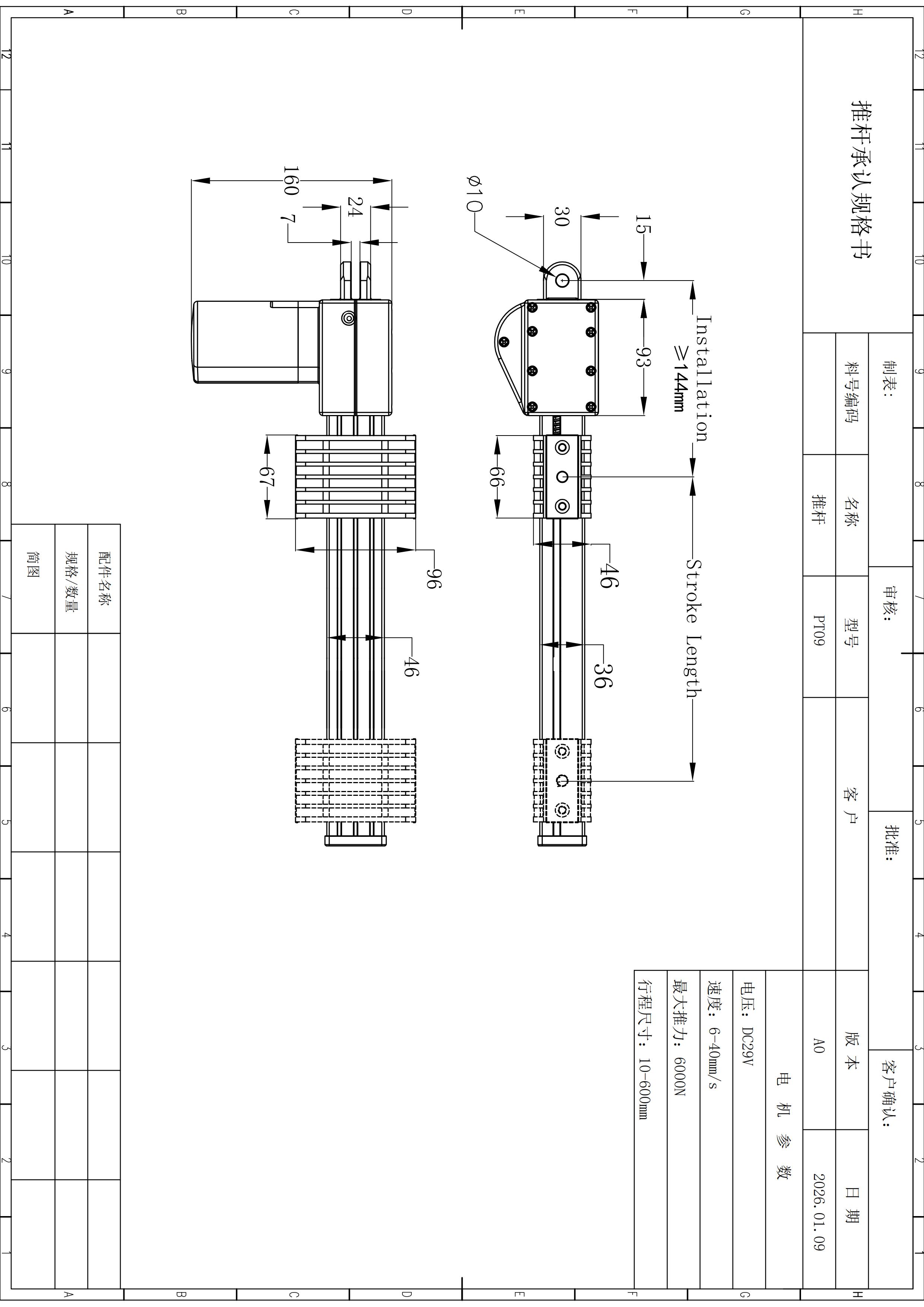
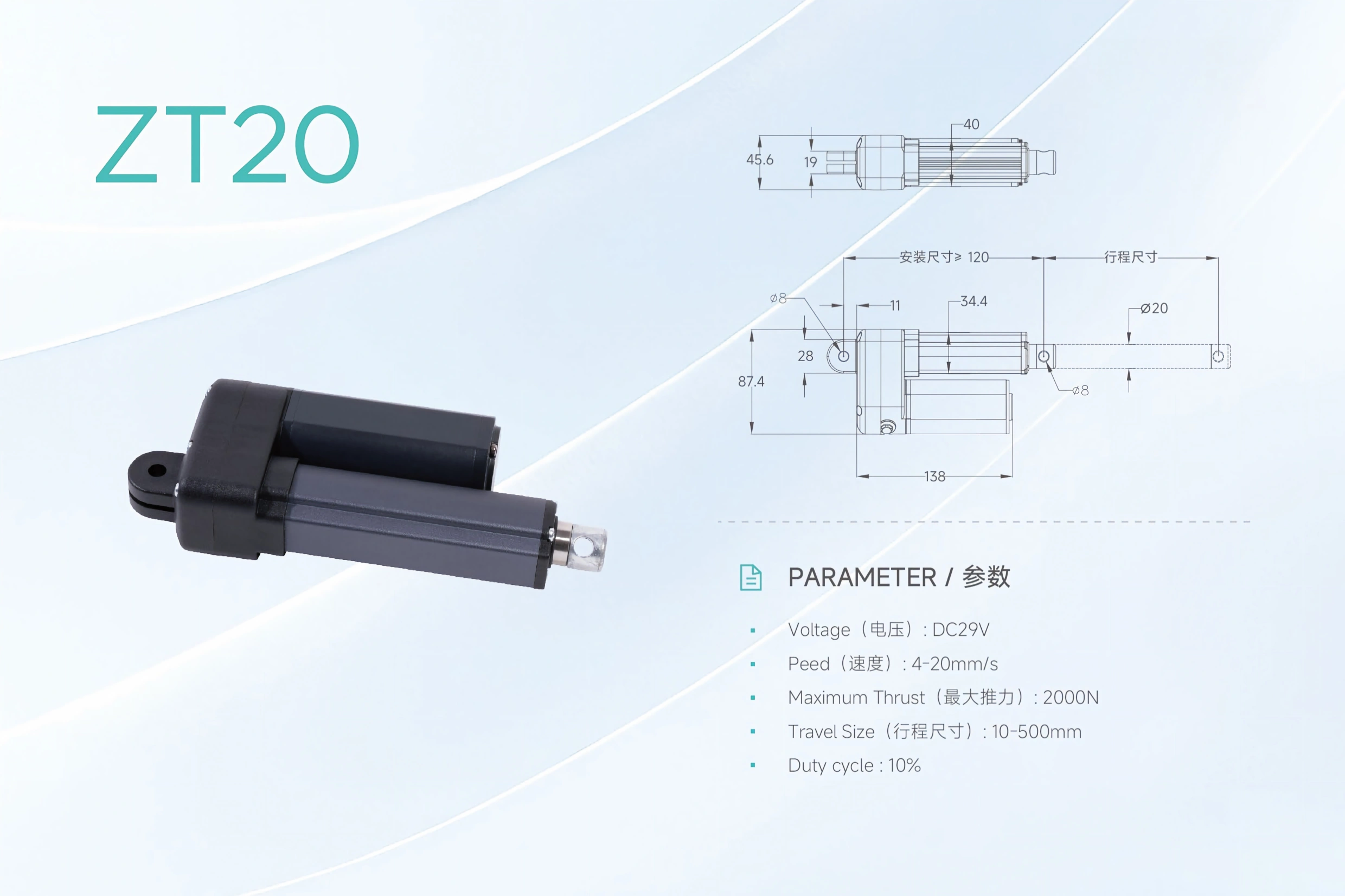
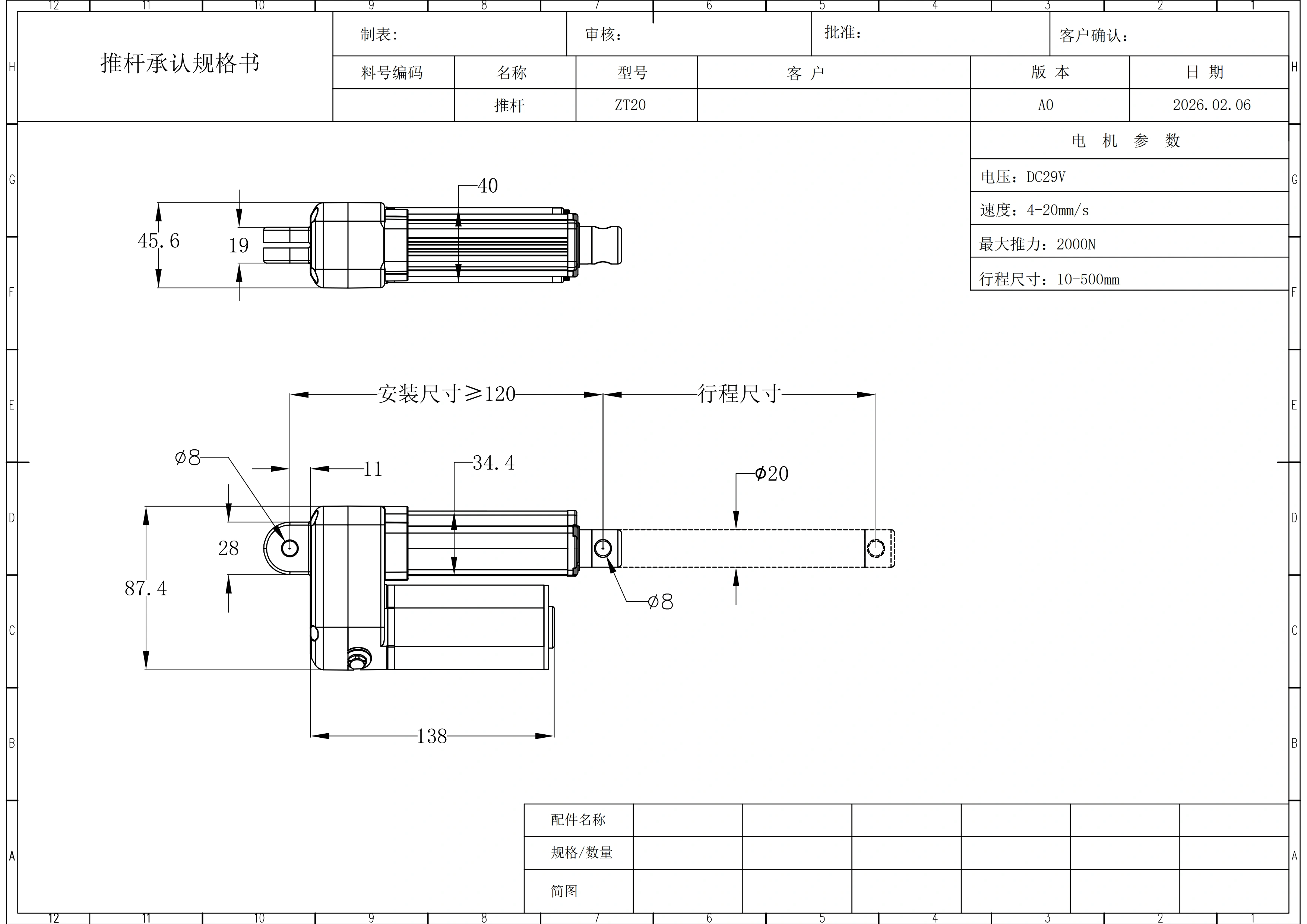
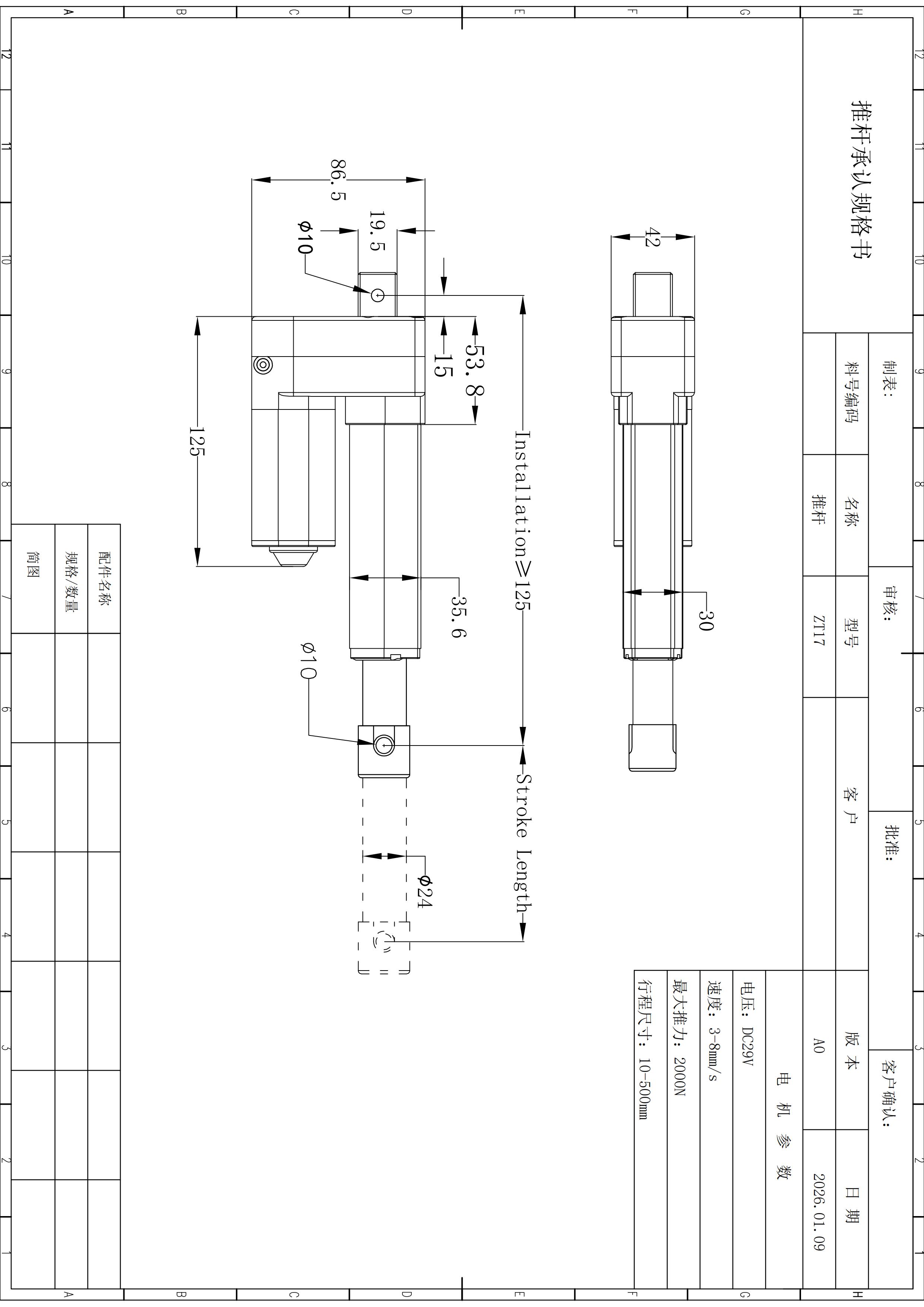
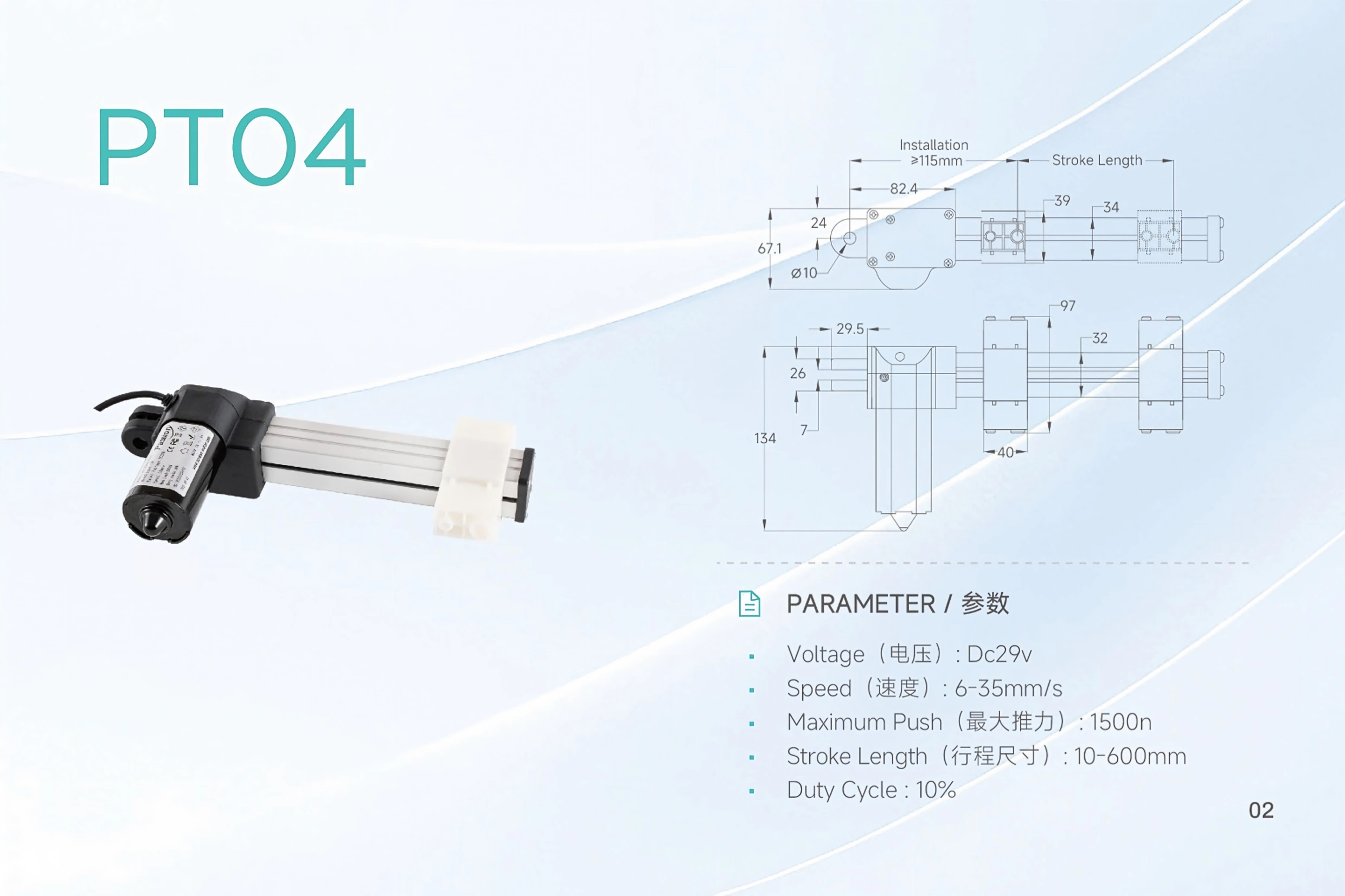
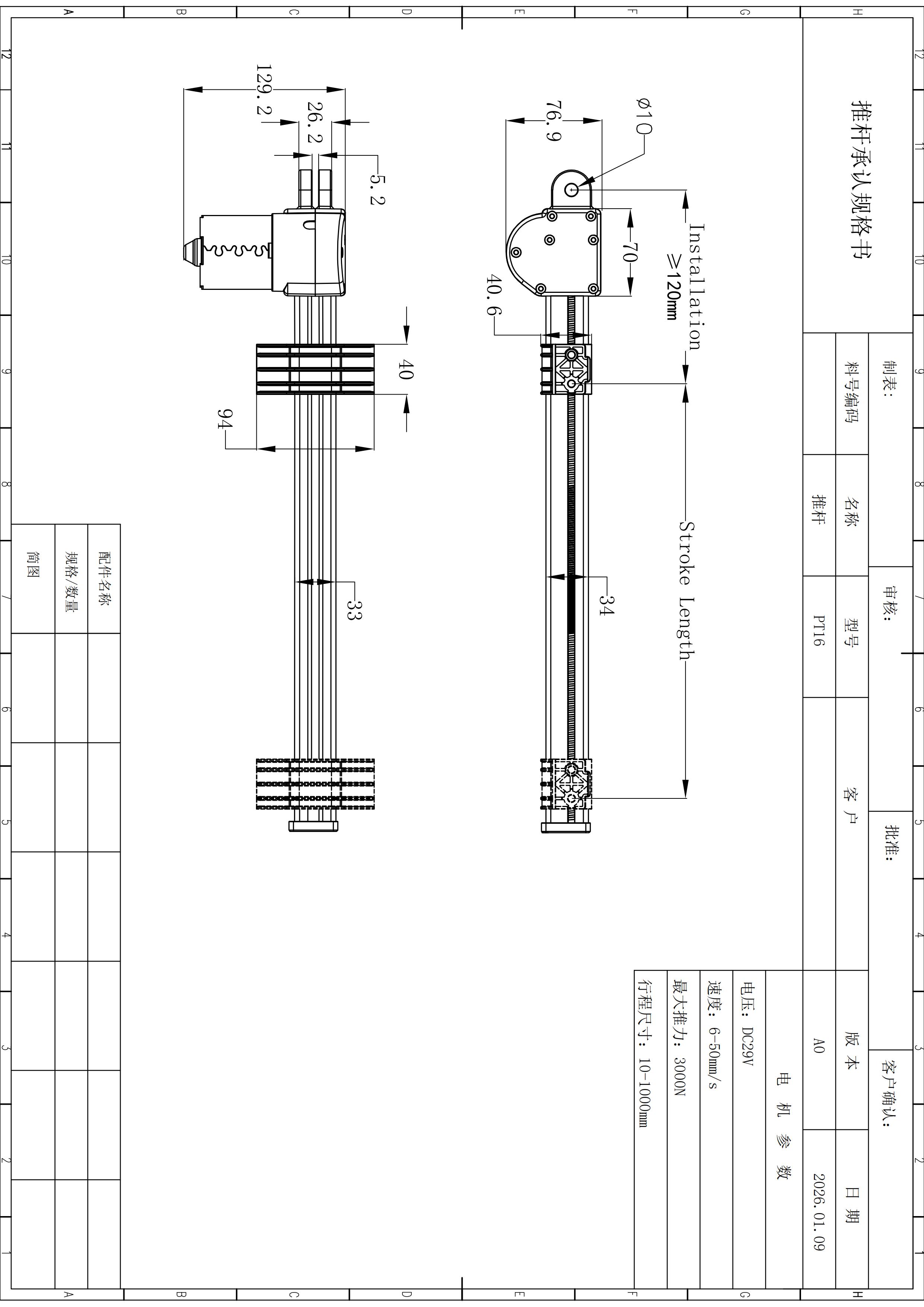
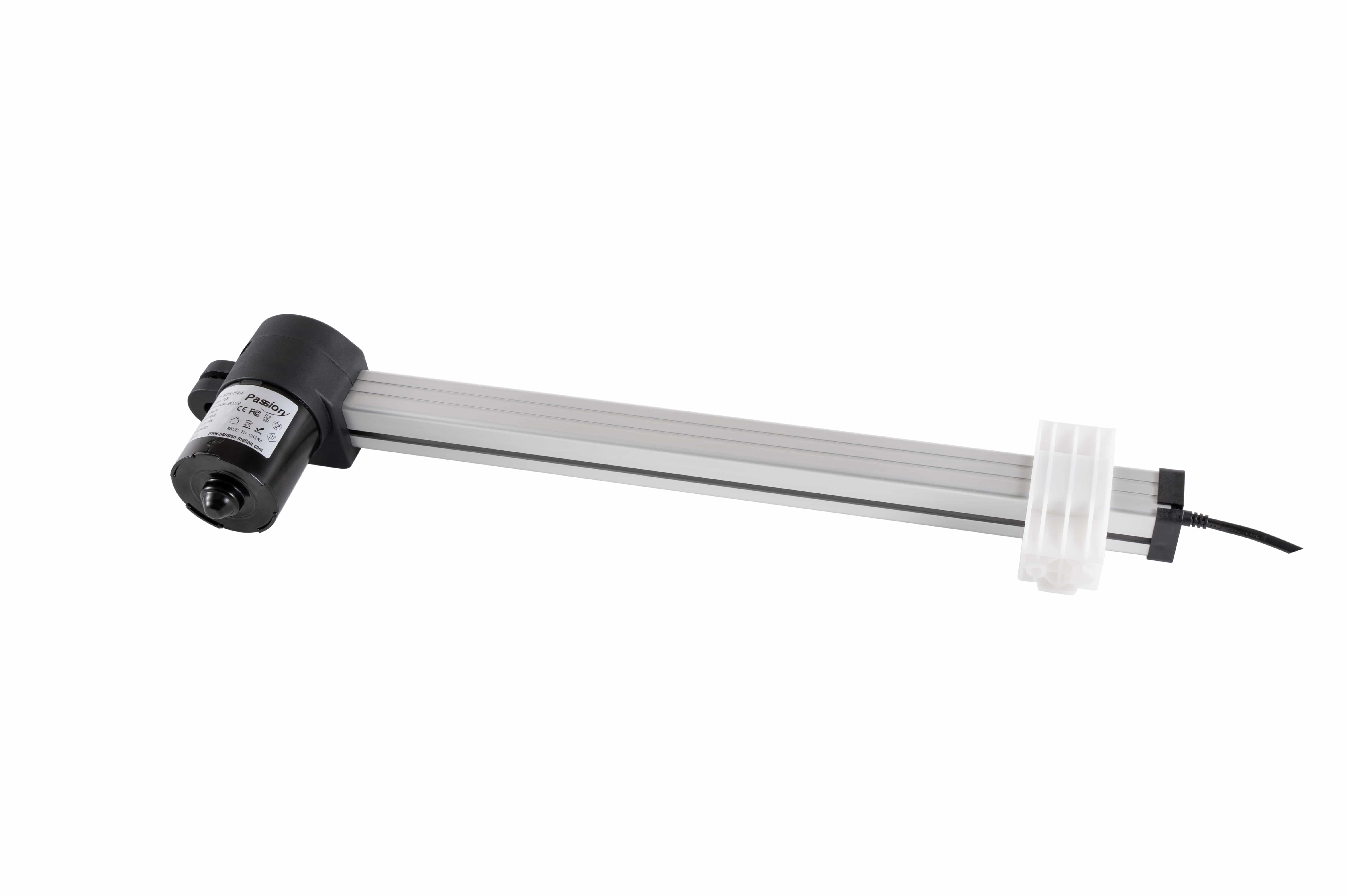
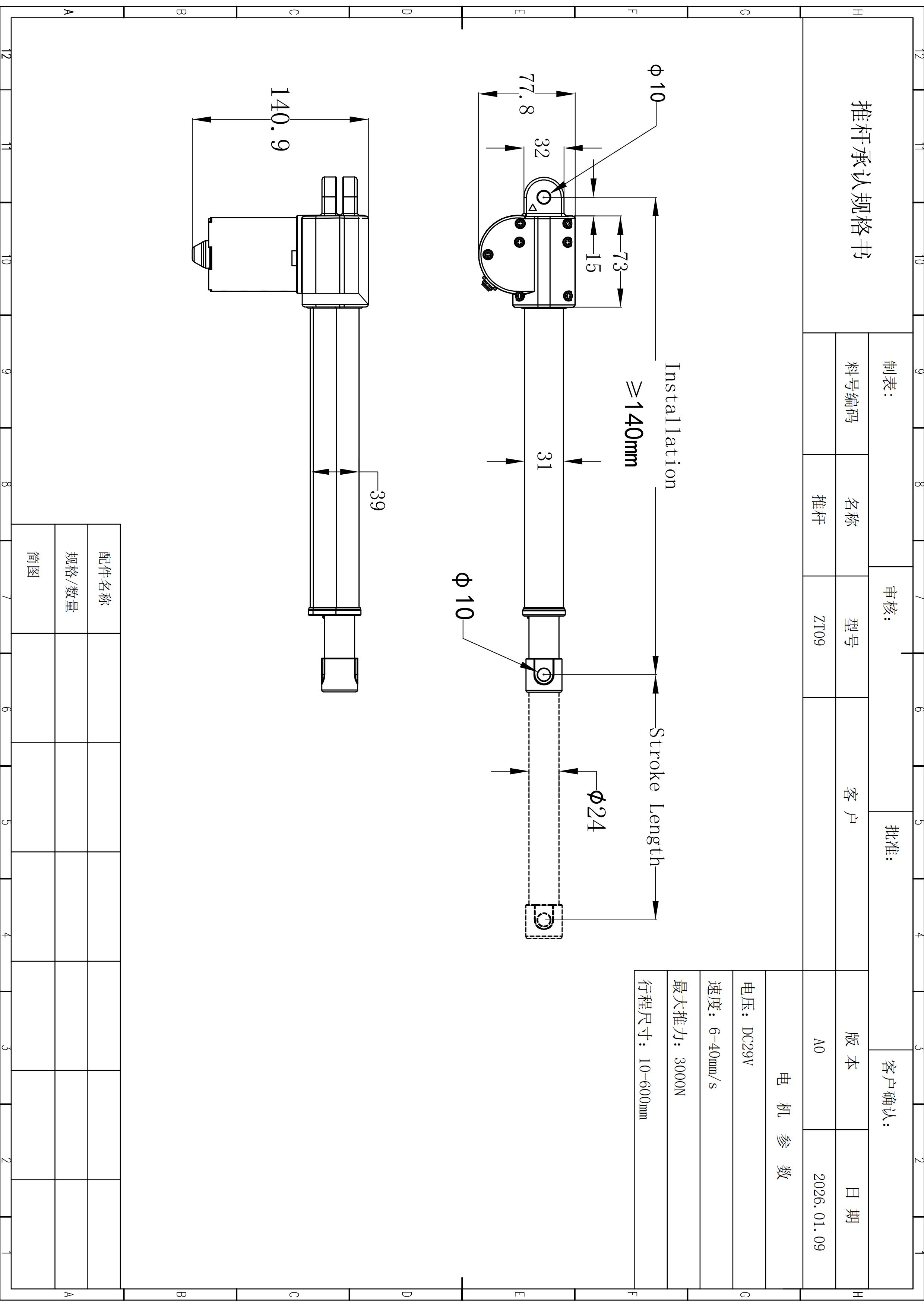
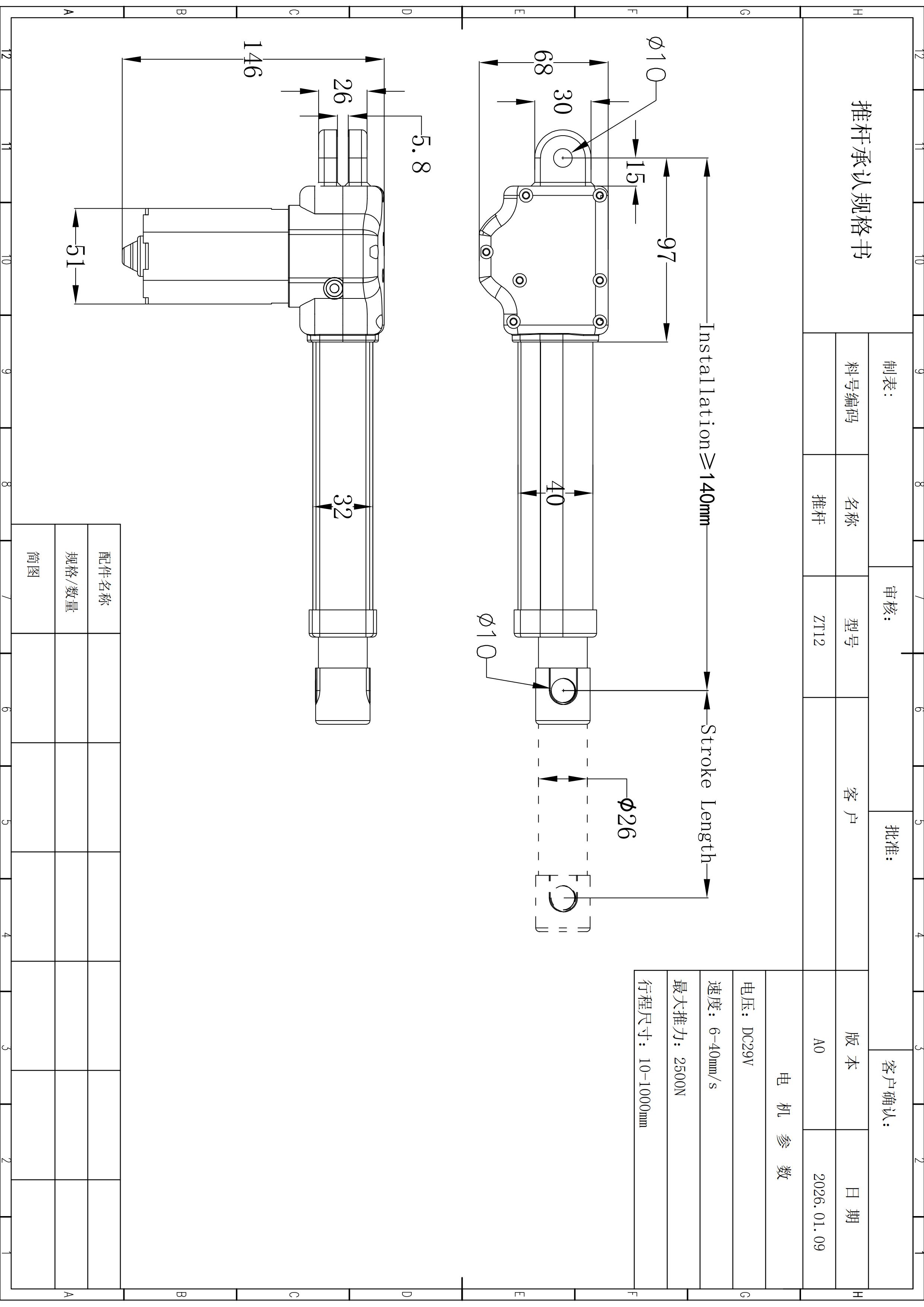
The drawing image is useful for checking the published package references, but final tolerances and selected-stroke geometry still require the released technical drawing.
Send one real ZT11 operating point, not independent maximums.
A useful fit review combines working load, direction, loaded speed, stroke, package space, cycle, environment, power/control and required documents.
Needs confirmation before release
2,000 N at 30 mm/s, pull force, current draw, startup current, feedback, endpoint behavior, environmental rating, positioning accuracy and model-specific compliance evidence are not established in the locked ZT11 record.
Define the ZT11 requirement in one line.
Send working load + direction + required loaded speed + stroke + available retracted space + duty pattern + power/control needs + quantity .
Keep the compact package useful without turning assumptions into specifications.
The verified source supports DC29V, up to 2,000 N push, 5–30 mm/s, 10–500 mm stroke, a 10% duty figure and the listed preliminary package dimensions.
Can ZT11 deliver 2,000 N at 30 mm/s?
That operating point is not established. The source lists maximum push and speed range separately and provides no force-speed pairing table.
What stroke lengths are published?
The local record lists 10–500 mm. Final installation length and endpoint clearance still depend on the selected build.
What mounting space should I reserve?
Start from the ≥130 mm installation reference plus the published motor, shaft and pin dimensions, then verify the released drawing.
What does the 10% duty cycle mean in minutes?
The source does not state a time basis or test conditions, so do not convert the percentage into a fixed run/rest schedule without review.
Are feedback and environmental ratings confirmed?
No model-specific feedback method or environmental protection rating is established in the available ZT11 evidence.