


DG220 80 kN Servo Electric Cylinder
Review DG220-8T-350-10S specifications including 80 kN thrust, 350 mm stroke, 10 mm lead, 1:3 planetary reduction and 7.5 kW servo drive architecture.
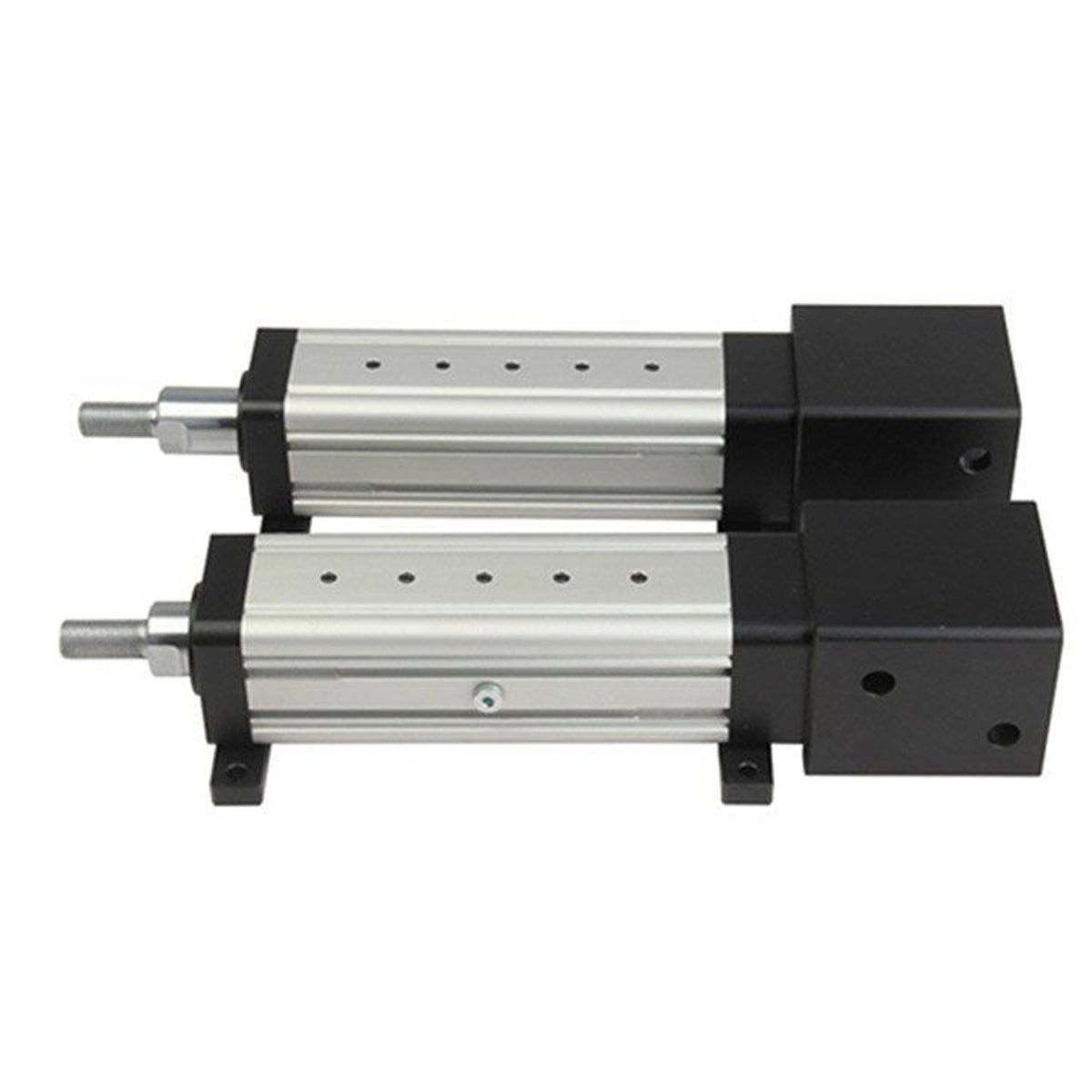
DG220 · 80 kN across 350 mm of controlled travel.
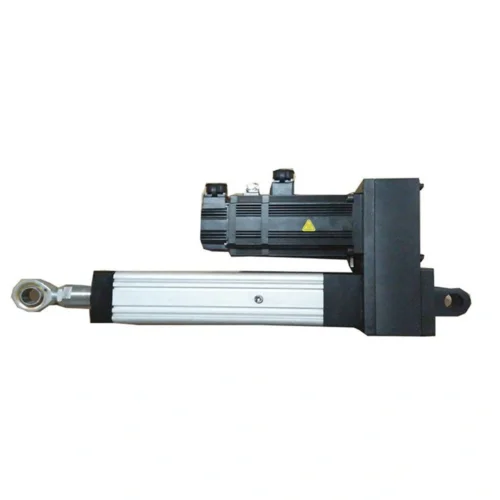
DG220-8T-350-10SThe documented configuration combines an 80 kN / 8 T thrust class , 350 mm effective stroke , a 10 mm ball-screw lead , 1:3 planetary reduction and a 7.5 kW Megmeet SVM-160L servo motor in a parallel drive arrangement.
Loaded speed, force-speed curve, duty capability, environment, lifecycle and numerical positioning performance remain project-specific confirmation items.
Make the 350 mm travel visible before you freeze the machine envelope.
The interaction below changes only the illustrated rod position. It is an engineering communication aid—not a force, speed, thermal or lifecycle calculator.
Start from the retracted package.
The local product record lists an approximate 938 mm main-body retracted reference and an additional approximate 1,038 mm total-length reference. Confirm how those references apply to the current drawing before fixture release.
Separate what is documented from what still needs project release.
DG220 has strong fixed mechanical data, but the local record does not publish a complete force-speed-duty envelope. The page keeps those evidence states deliberately separate.
Known architecture
documentedConfirm before selection
project-specificReview the complete DG220 configuration without losing interface context.
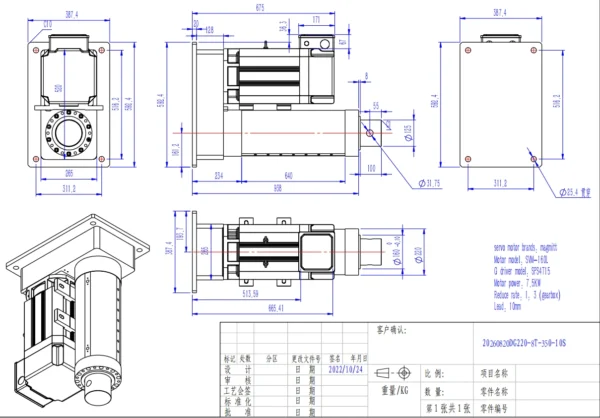
These values come from the local DG220-8T-350-10S record. Approximate length references remain planning inputs until the current controlled drawing is released.
| Parameter | DG220-8T-350-10S value / engineering note |
|---|---|
| Rated thrust / load capacity | 80 kN / 8 T |
| Effective stroke | 350 mm |
| Transmission | Ball screw |
| Screw lead | 10 mm |
| Gear reduction | 1:3 planetary |
| Servo motor | Megmeet SVM-160L |
| Motor rated power | 7.5 kW |
| Drive model / reference | SPS4T15 |
| Motor arrangement | Parallel with reduction gearbox |
| Main barrel diameter | Ø220 mm |
| Piston rod diameter | Ø125 mm |
| Rod-end pilot diameter | Ø160 mm, documented −0.10 reference |
| Rod-end pin hole | Ø31.75 mm |
| Front interface extension | 100 mm |
| Pin-center offset | 55 mm |
| Mounting style | Type A front flange |
| Flange outline | 387.4 × 592.4 mm |
| Flange thickness | 20 mm |
| Mounting centers | 311.2 × 516.2 mm |
| Mounting holes | Ø25.4 mm through |
| Main-body retracted reference | Approx. 938 mm |
| Additional total-length reference | Approx. 1,038 mm in the local record — verify interpretation against the current drawing. |
The 350 mm stroke is only useful when the whole structure stays aligned.
Confirm the front-flange load path, rod-end connection, external guidance, retracted/extended clearance, cable routing and structural stiffness through the complete working travel.
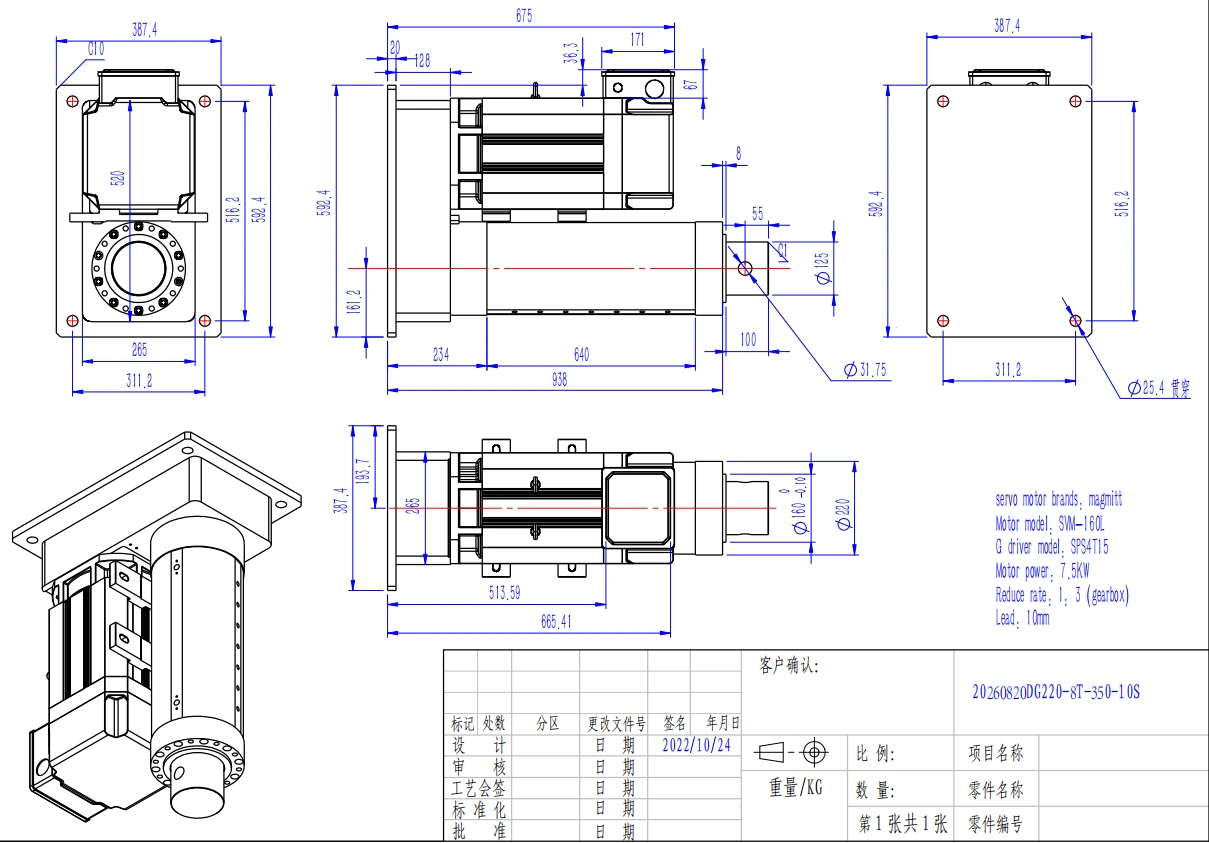
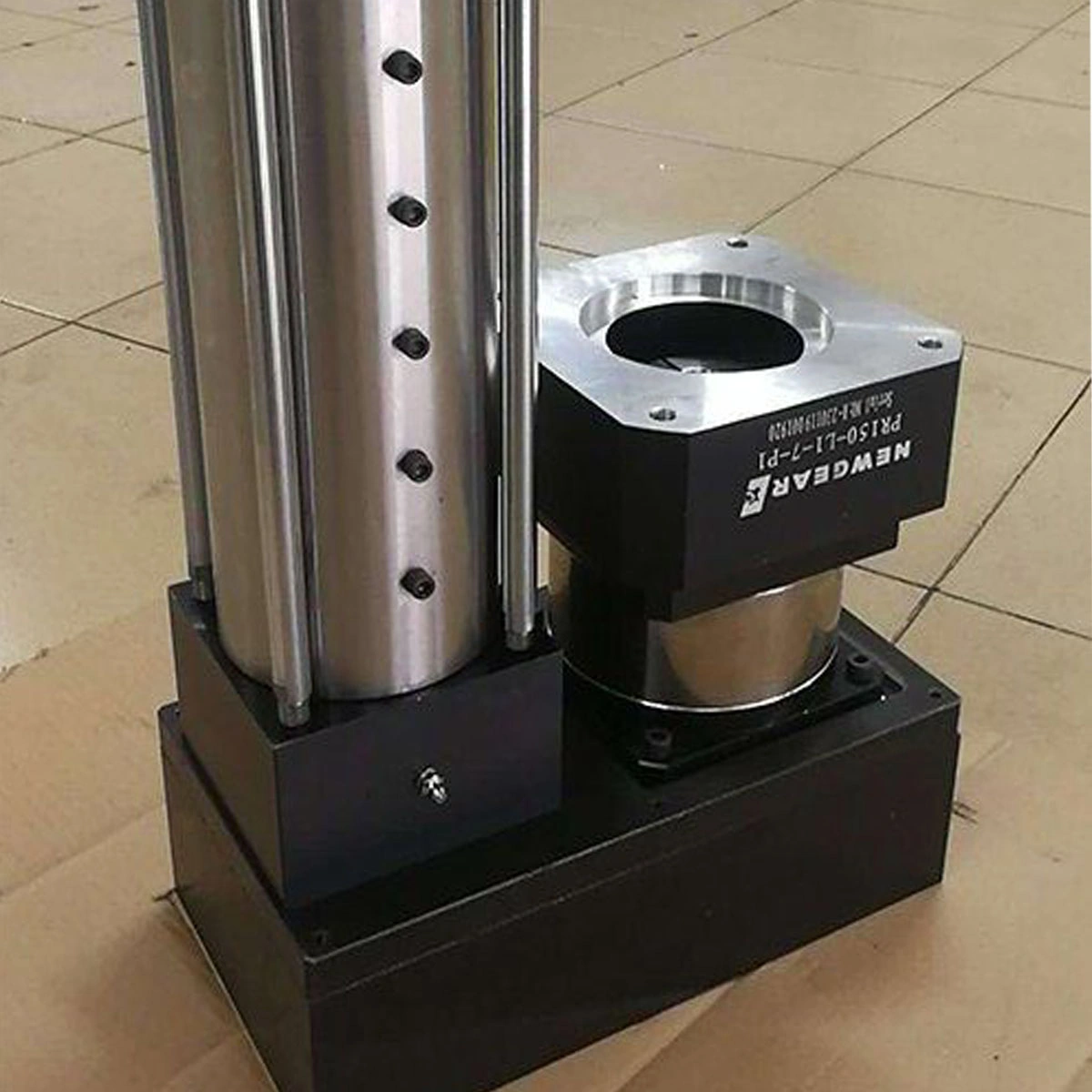
Trace the architecture from motor to linear output.
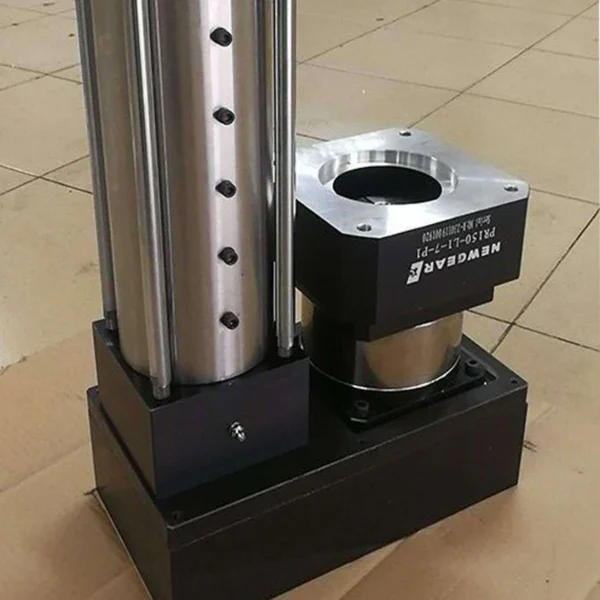
The defined drivetrain includes a 7.5 kW Megmeet servo, 1:3 planetary reduction and a 10 mm ball-screw lead. Those values define architecture; they do not by themselves publish the loaded-speed or force-speed envelope.
DG220 selection needs the complete motion profile, not the 80 kN number alone.
Because several operating boundaries remain project-specific, put the required operating point, installation and approval evidence into the RFQ.
| Input | What to provide / confirm |
|---|---|
| Working load | Normal and peak force, push/pull direction, holding requirement and safety factor. |
| Loaded speed | Required speed at the real working load; request the applicable force-speed envelope. |
| Stroke | Required travel plus rod-end, collision and end-clearance requirements. |
| Cycle profile | Move time, dwell, starts per hour, continuous periods and expected operating hours. |
| Motion profile | Acceleration, deceleration and positioning sequence. |
| Mounting & guidance | Front-flange orientation, rod-end connection, rails/guides and structural stiffness. |
| Servo system | Drive/controller, supply, feedback, communication, braking and fault response. |
| Environment | Temperature, dust, moisture, contamination, vibration, corrosion and cleaning exposure. |
| Accuracy / lifecycle | Repeatability, positioning acceptance criteria, target life and maintenance expectations. |
| Quantity | Prototype, pilot and production volume. |
| Documentation | Controlled 2D/3D files, wiring, inspection/test records and release criteria. |
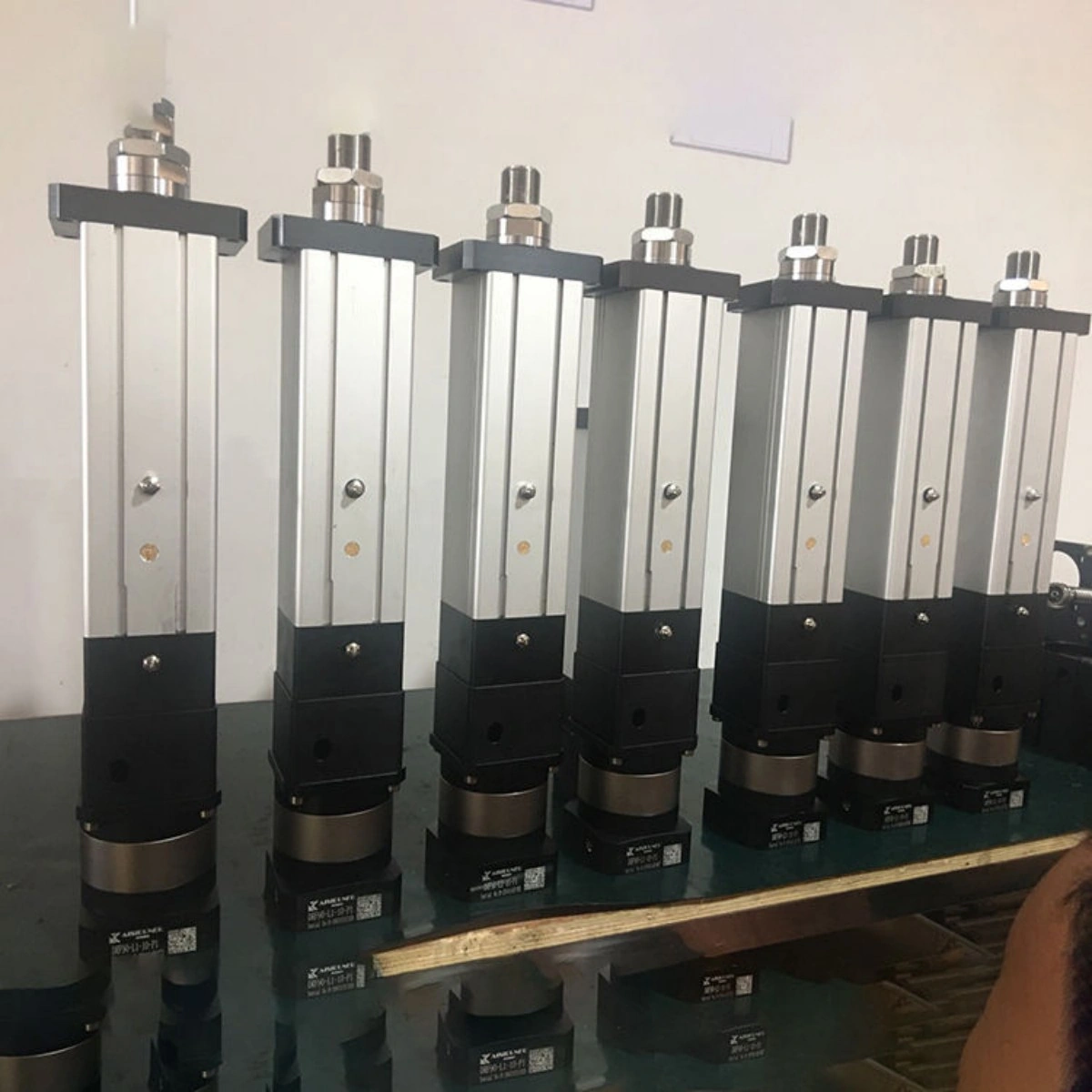
Long-stroke hardware needs repeatable interfaces, not just a strong prototype.
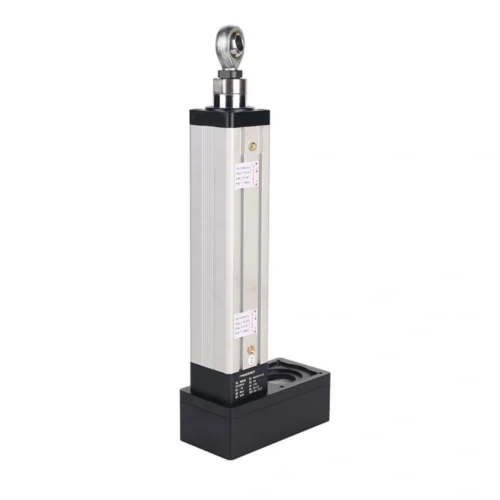
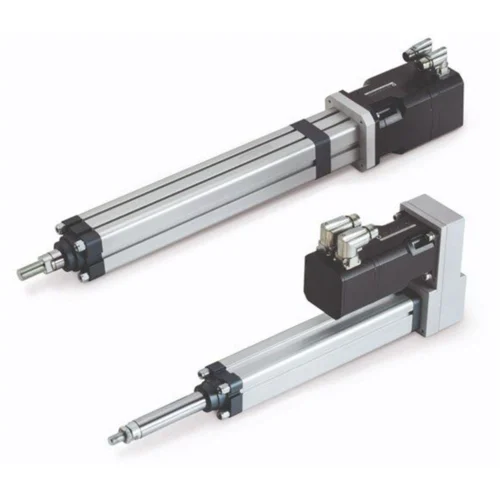
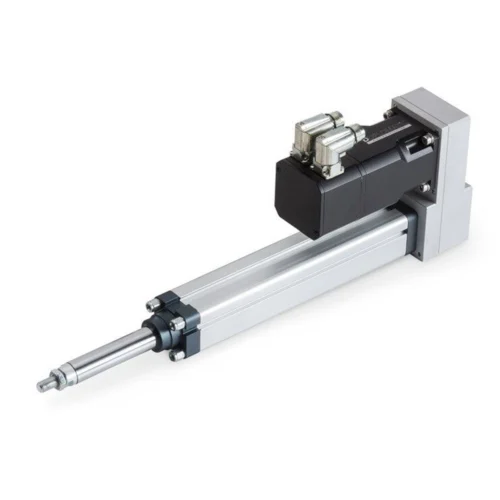
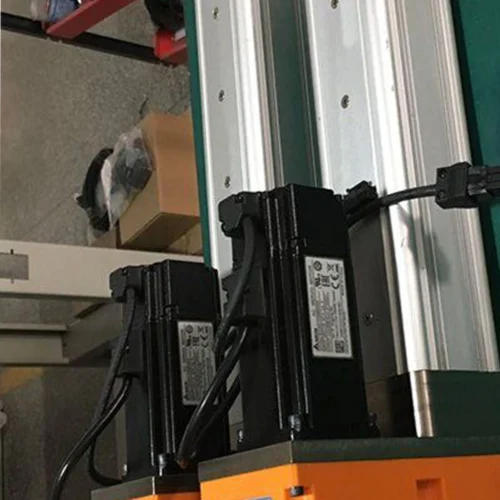
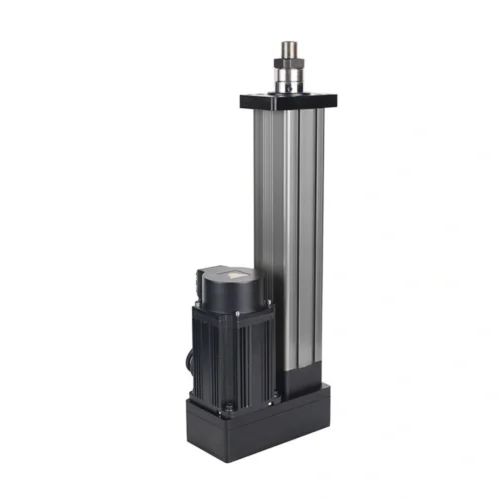
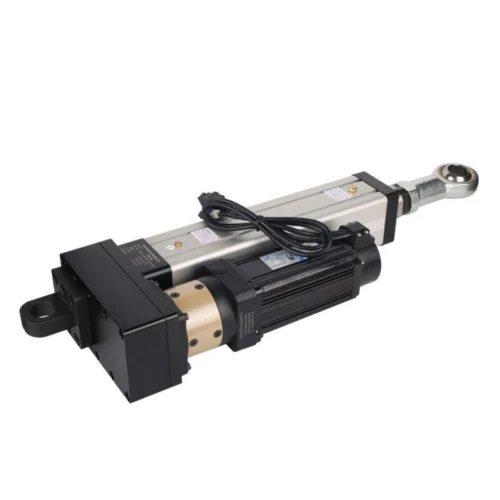
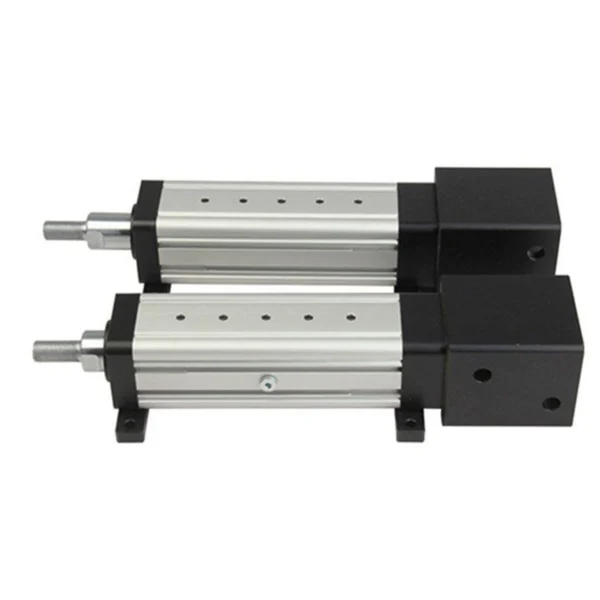
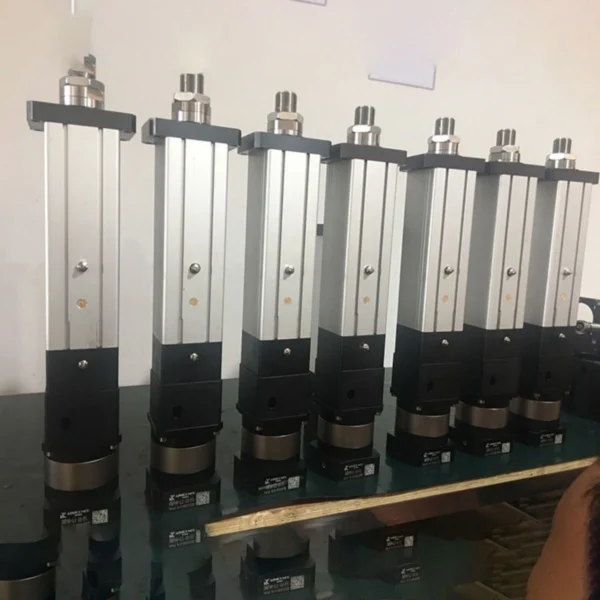
The lineup image shows first-party product context for this cylinder format. It does not replace controlled drawings, inspection scope, traceability or project-specific acceptance evidence.
For production release, keep the mechanical envelope, drive architecture, control interfaces and required documents tied to the exact ordered configuration.
Close the unknowns before you freeze the DG220 configuration.
Confirm working and peak force, 350 mm travel, loaded speed, force-speed envelope, cycle/duty, 7.5 kW servo architecture, mounting and external guidance, environment, accuracy/repeatability, lifecycle, quantity, controlled drawings and required validation evidence.
Confirmed configuration data first. Operating assumptions second.
DG220-8T-350-10S is a documented 80 kN, 350 mm-stroke servo electric cylinder configuration with a parallel 7.5 kW drive architecture.
What is the DG220 rated thrust?
The local DG220 record specifies 80 kN / 8 T rated thrust for this configuration.
What stroke is defined for this model?
The specified effective stroke is 350 mm.
What motor and drivetrain are recorded?
The local record identifies a Megmeet SVM-160L servo motor rated at 7.5 kW, a 10 mm ball-screw lead, 1:3 planetary reduction, SPS4T15 drive reference and parallel motor arrangement.
Can 80 kN be assumed at any requested speed?
No. The current record does not include a complete force-speed curve or a released loaded-speed value. Working force and required loaded speed should be reviewed together for the actual cycle.
What mechanical dimensions matter most?
Key recorded references include the Ø220 main barrel, Ø125 piston rod, Ø160 rod-end pilot, Ø31.75 pin hole, 100 mm front interface extension and the Type A front-flange geometry. Verify critical interfaces on the current drawing.
What should I send for a DG220 configuration review?
Send working and peak load, loaded speed, stroke, cycle profile, mounting and guidance, machine envelope, control method, environment, accuracy/lifecycle targets, quantity and required engineering documents.