
Electric vs Pneumatic vs Hydraulic Actuators: How to Choose
Compare electric, pneumatic and hydraulic actuators by control, force, speed, infrastructure, energy, maintenance, safety and application fit.

Electric, pneumatic, and hydraulic actuators can all produce useful industrial motion, but they solve different problems well. Electric actuation is usually the strongest starting point for programmable positions, motion profiles, diagnostics, and clean machine integration. Pneumatics remains highly practical for simple, fast, repetitive end-to-end motion when compressed air is already available. Hydraulics remains difficult to replace when very high force or power density, shock tolerance, or heavy-duty load handling dominates the design.
There is no universal winner. The right technology depends on the complete motion requirement: peak and continuous force, speed, stroke, acceleration, duty cycle, holding time, positioning needs, available utilities, environment, safety behavior, maintenance capability, and total installed cost.
Table of Contents
Quick Comparison: Electric vs Pneumatic vs Hydraulic Actuators
| Decision factor | Electric | Pneumatic | Hydraulic |
|---|---|---|---|
| Primary energy path | Electrical power drives a motor or direct linear element | Compressed air acts on a piston or rotary element | Pressurized liquid acts on a piston or rotary element |
| Programmable positioning | Usually the most direct fit for multiple positions and motion profiles | Basic cylinders favor end positions; servo-pneumatics can add intermediate control | Closed-loop positioning is possible with proportional or servo controls |
| Force / power density | Broad range; mechanical transmission, motor, thermal limits, and duty must be checked together | Good compact force for many automation tasks, but normally below hydraulic force density | Usually strongest when very high force or power must fit a compact actuator envelope |
| Fast repetitive cycling | Strong when the motor, transmission, and thermal design support the profile | Often excellent for simple point-to-point cycling | Strong high-power motion is possible; flow, valve sizing, inertia, and heat matter |
| Utility infrastructure | Electrical supply, drive/controller, wiring, feedback, and safety hardware | Compressor, receiver, air treatment, valves, tubing, and exhaust | Pump or HPU, reservoir, filtration, valves, piping or hoses, and often thermal management |
| Energy behavior | Often favorable for variable-position and intermittent motion, but holding and duty can change the result | Compressed-air generation, pressure drop, leaks, and exhaust losses must be included | Pumping, throttling, standby operation, leakage, and cooling can create losses; modern architectures can reduce them |
| Cleanliness | No process fluid at the actuator, but lubrication and sealing still matter | No hydraulic oil spill, but water, oil, particles, and exhaust quality still matter | Fluid leakage and contamination control can be significant design constraints |
| Maintenance focus | Transmission, guides, bearings, lubrication, seals, brakes, motor/drive, cables | Leaks, filters, dryers, drains, tubing, valves, seals, cushioning | Fluid condition, filters, seals, hoses, fittings, pumps, valves, temperature, leakage |
| Holding / power-loss behavior | Depends on backdrivability, brake, gearbox, counterbalance, or mechanical lock | Depends on valve state, trapped pressure, spring return, rod lock, and load | Depends on valves, leakage, accumulators, load-holding devices, and mechanical support |
| Typical starting point | Programmable, connected, variable-position machine motion | Simple A/B motion, clamping, ejecting, gripping, indexing | Pressing, lifting, forming, mobile machinery, shock-heavy high-force work |
These are selection tendencies, not technology limits. A sophisticated servo-pneumatic or electro-hydraulic system can outperform a poorly designed electric axis in the task it was engineered for. Likewise, an electric actuator can be the wrong choice if the required force-speed-duty envelope exceeds a practical electromechanical design.
Start With the Motion Requirement, Not the Actuator Type
A useful comparison begins before selecting any hardware. Define what the machine must actually do.
For a new axis or a pneumatic/hydraulic-to-electric conversion review, record at least:
- Peak and continuous force: include gravity, process force, friction, acceleration, and shock loads.
- Stroke and installed length: required travel alone does not define whether the actuator fits the machine.
- Speed and acceleration: include move time, reversals, approach speed, and deceleration.
- Duty cycle: how long the axis moves, holds, dwells, and repeats.
- Positioning requirement: two endpoints, several indexed positions, continuous path, synchronized axes, or force-controlled motion.
- Holding requirement: what happens during dwell, emergency stop, or power loss.
- Environment: dust, washdown, temperature, contamination limits, noise restrictions, vibration, and service access.
- Controls and data: basic I/O, feedback, PLC integration, recipes, diagnostics, traceability, or force-displacement records.
- Available utilities: electrical power, compressed air, hydraulic power, cooling, and maintenance capability.
- Failure-state behavior: how the load must stop, remain supported, vent, brake, or move to a safe state.
If these inputs are still undefined, use the actuator sizing resource to organize force, stroke, speed, duty, and operating assumptions before choosing a technology.
How Electric, Pneumatic, and Hydraulic Actuation Differ
Electric actuation
An electric linear actuator converts electrical energy into mechanical motion. Common architectures use a motor with a screw, belt, rack, gearbox, or another transmission, while direct linear motors generate motion without a rotary-to-linear screw stage.
The advantage is not simply that the system is electric. The motor drive can command position, velocity, acceleration, and torque, while feedback closes the loop around some part of the mechanism. That makes programmable motion, recipes, synchronized axes, diagnostics, and machine-control integration comparatively direct.
The mechanical transmission still matters. Screw lead, gearbox ratio, bearing arrangement, lubrication, guidance, backdrivability, and thermal capacity shape the real force-speed-duty envelope.
Pneumatic actuation
A pneumatic actuator uses compressed air to create motion. In a linear cylinder, pressure acts across a piston area. A first-order force relationship is:
Force ≈ pressure × effective piston area
Actual force is lower than the ideal calculation because of seal friction, back pressure, pressure drop, acceleration, and other system losses.
A single-acting cylinder is powered in one direction and returned by a spring, gravity, or another load. A double-acting cylinder uses air pressure for both directions. Directional valves route air to the appropriate chamber, while flow controls influence speed.
The cylinder itself may be simple, but the machine depends on the air system: compressor, receiver, dryer or water management, filtration, regulation, valves, tubing, fittings, exhaust, and leak control.
Hydraulic actuation
A hydraulic actuator uses pressurized liquid, commonly hydraulic oil, to create motion. For a linear cylinder, the same first-order pressure-area relationship applies:
Force ≈ pressure × effective piston area
Because hydraulic systems commonly operate at much higher pressure than pneumatic systems, they can develop very high force in a relatively compact cylinder.
The complete hydraulic circuit may include a pump or hydraulic power unit, reservoir, filtration, directional and pressure-control valves, manifolds, hoses or piping, cooling, load-holding devices, and accumulators. Pressure creates available force; flow is a major determinant of actuator speed.
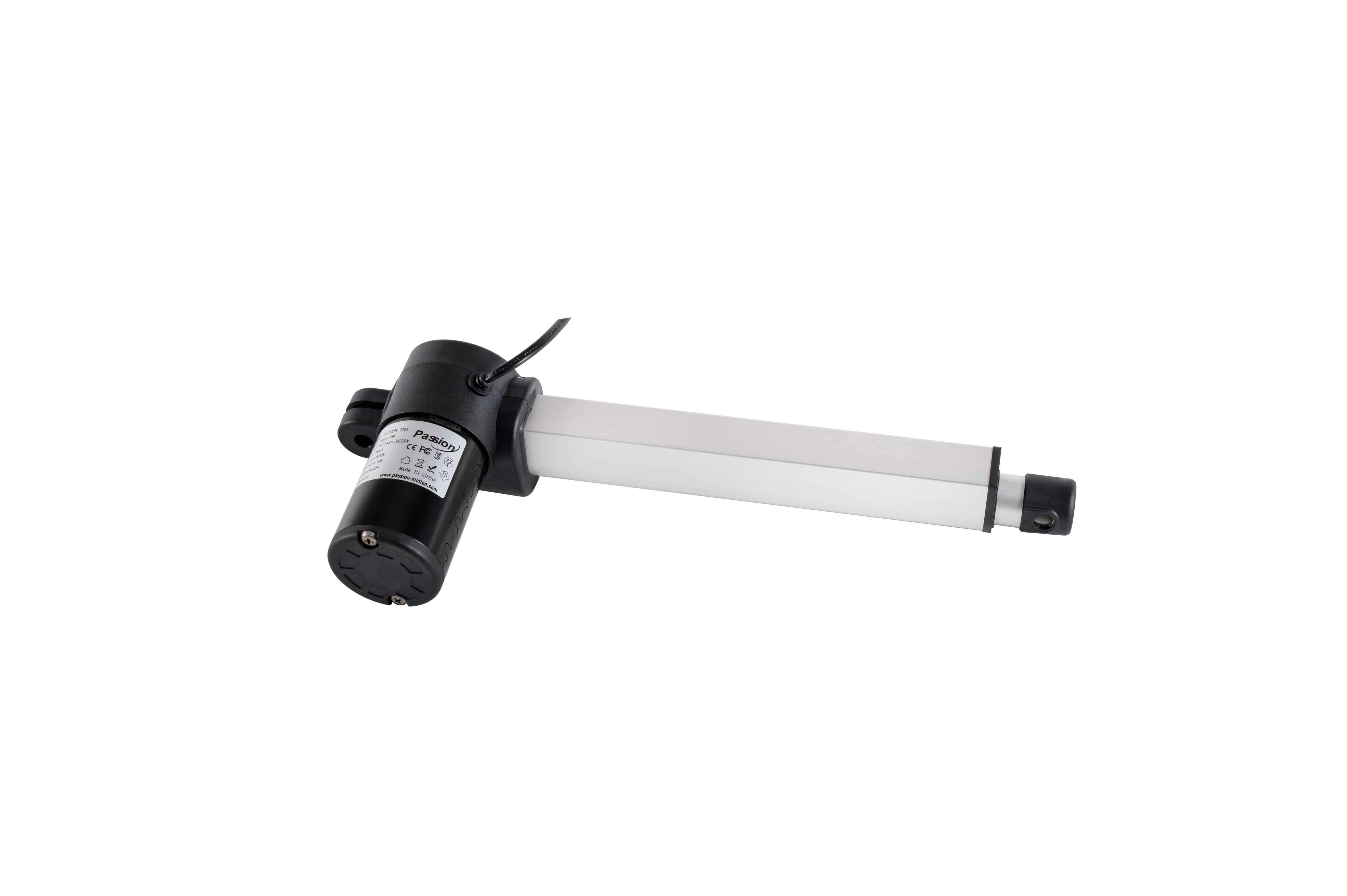
An electric cylinder packages motor-driven linear motion into a self-contained axis; final sizing still depends on the application load profile.
Control and Positioning: Where Architecture Matters Most
For many automation axes, the strongest case for electric actuation is not raw force but programmable motion .
A feedback-controlled electric axis can move to many commanded positions, change acceleration and velocity by recipe, synchronize with other axes, and report position or drive status to the machine controller. Depending on the architecture, force or torque can also be part of the controlled process.
That does not make every electric system highly accurate. Positioning performance still depends on:
- feedback type and location;
- screw or belt accuracy;
- backlash and compliance;
- guide stiffness;
- thermal expansion;
- control-loop tuning;
- load variation;
- structural deflection.
A motor encoder can confirm motor position while mechanical error remains downstream. Load-side feedback can observe more of the real machine motion, but it adds integration requirements.
Pneumatic positioning is not limited to two states—but basic cylinders favor them
Conventional pneumatic cylinders are naturally well suited to fully extended and fully retracted positions, mechanical stops, clamps, gates, ejectors, and other simple movements. Air compressibility, seal friction, supply-pressure variation, and load change make stable arbitrary mid-stroke positioning harder than with a typical closed-loop electric axis.
Intermediate pneumatic positioning is still possible. Proportional valves, displacement feedback, pressure sensors, and servo-pneumatic control can regulate position, speed, or force. The tradeoff is that the system gives up some of the simplicity that makes basic pneumatics attractive.
Hydraulic control can be sophisticated
Hydraulics should not be dismissed as inherently inaccurate. Proportional valves, servo valves, pressure transducers, position sensors, and electronic controllers can provide closed-loop position, velocity, pressure, or force control.
The engineering challenge is different. Fluid temperature, viscosity, leakage, valve deadband, hysteresis, hose expansion, friction, and compliance can influence response. High-performance electro-hydraulic control is therefore a system-design problem, not just a cylinder selection.
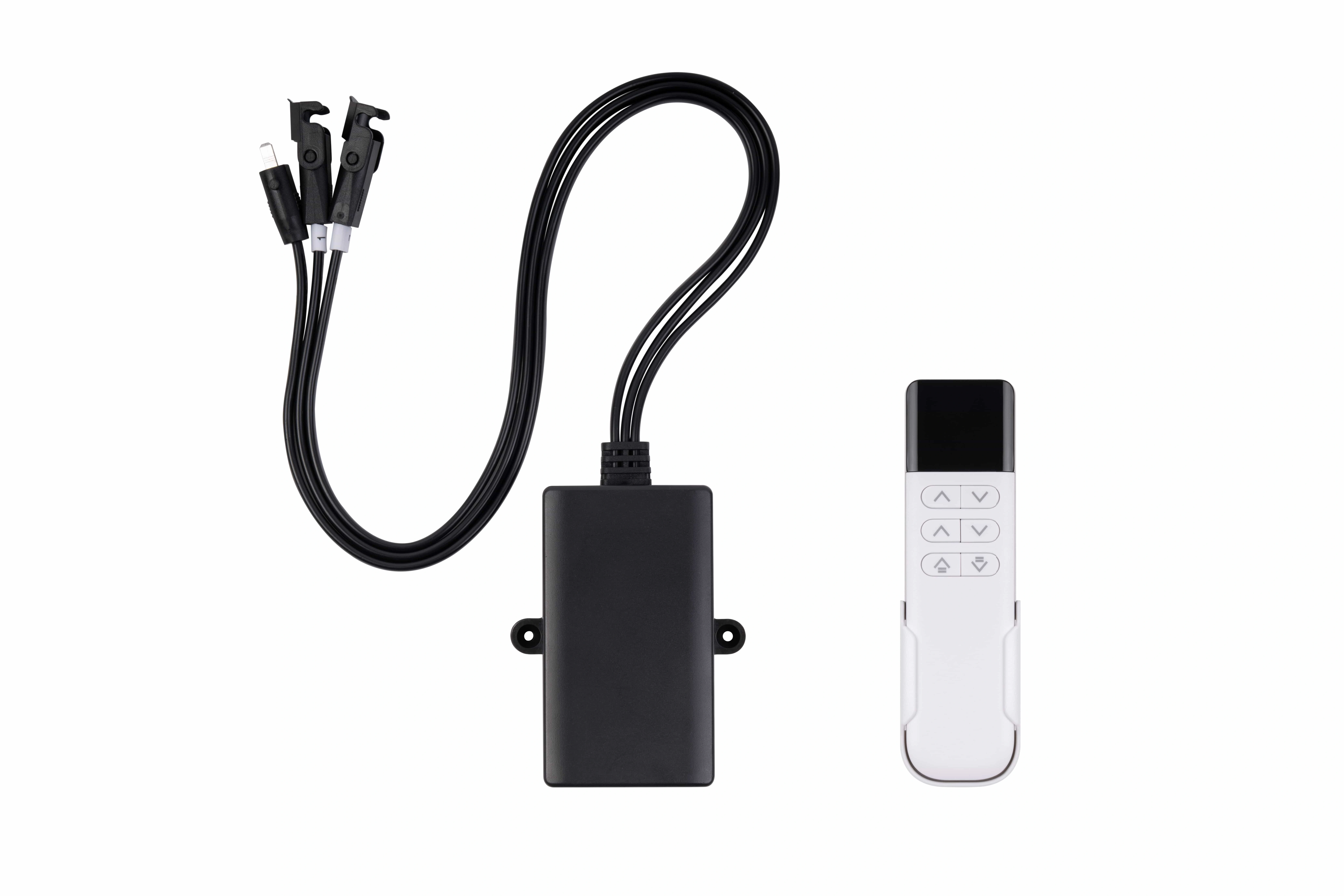
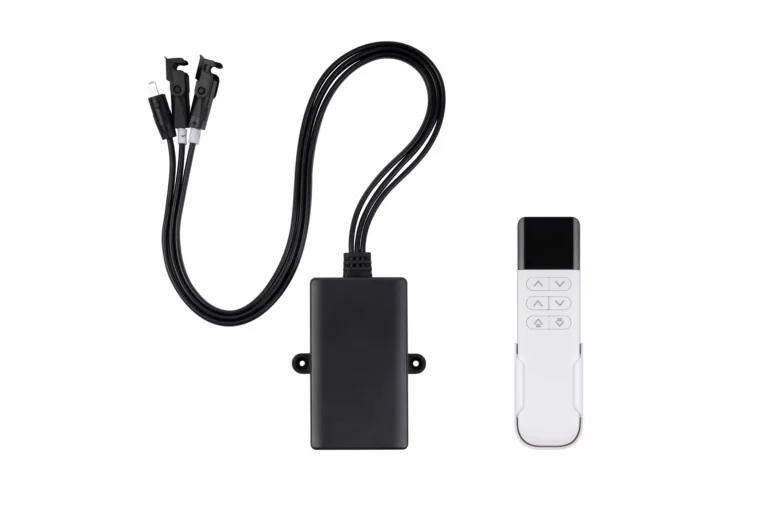
Programmable electric motion depends on the complete control architecture; controller and actuator compatibility must be verified for the actual system.
For an automation machine whose value depends on programmable positions, changeovers, synchronized axes, or direct digital diagnostics, an electric linear actuator family is usually a more natural commercial path after the motion requirements have been defined.
Force, Power Density, and the Real Load Profile
Hydraulics is often the strongest starting point when very high force or power density dominates.
High fluid pressure acting over a piston area allows a hydraulic cylinder to generate substantial force in a compact mechanical envelope. That is why hydraulic systems remain common in heavy pressing, forming, lifting, construction equipment, mobile machinery, and other applications where shock loads or very high force are normal.
Pneumatics can also generate strong linear force for factory automation, especially when the stroke is short and the motion is simple. Increasing cylinder bore increases force, but it also increases air volume demand. Increasing supply pressure raises theoretical force only within the ratings of the cylinder, valves, fittings, and distribution system.
Electric systems cover a wide force range, but the complete force-speed-duty relationship must be checked. A screw-driven axis that can produce a high peak force may not be able to produce that force continuously at the required speed. Motor heating, drive limits, screw life, bearing loads, gearbox thermal capacity, and lubrication can become limiting factors.
For electric selection, do not ask only:
“Can the actuator produce the peak force?”
Also ask:
- At what linear speed?
- For how many seconds per cycle?
- How many cycles per hour?
- Is the load compressive, tensile, or reversing?
- Is there impact or shock?
- Does the axis dwell under load?
- What is the ambient temperature?
- What life target is required?
This is one reason a heavy hydraulic axis should not be converted to electric by matching cylinder bore force to a single actuator thrust number.
Speed, Cycling, and Holding Are Separate Questions
“Which technology is fastest?” is usually the wrong question.
Pneumatics can be excellent for rapid A/B cycling
A pneumatic cylinder can be very effective for repetitive motion between defined endpoints. Actual cycle time depends on bore, stroke, load, air pressure, valve flow, tubing volume, exhaust restrictions, acceleration, and cushioning.
This makes pneumatics a strong fit for tasks such as:
- part ejection;
- conveyor stops;
- clamping;
- gripping;
- sorting;
- simple transfer;
- indexing;
- gates and diverters.
The same architecture becomes less attractive when the machine needs many positions, controlled trajectory changes, continuous position data, or synchronized motion.
Electric motion is strong when speed must be programmable
Electric systems can combine high speed with controlled acceleration and deceleration, but the motor and transmission must remain inside their dynamic and thermal envelope. A faster screw lead, for example, changes the torque-speed requirement and can affect force capability.
Hydraulics combines high force with strong power delivery
Hydraulic systems can produce high force at useful speed, but pump flow, valve sizing, pressure losses, load inertia, heat generation, and cooling all affect the result.
Holding is not the same as moving
A vertical axis may move easily and still be unsafe to hold after power loss.
For an electric axis, a ball screw or roller screw can be backdrivable. A brake, gearbox, counterbalance, or separate mechanical lock may be required.
For pneumatics, trapped air is compressible and can move when pressure changes or leakage occurs. A spring-return design, rod lock, mechanical restraint, or specific valve circuit may be needed.
For hydraulics, pilot-operated checks, counterbalance valves, load-holding valves, accumulators, leakage behavior, and mechanical support all influence the safe state.
Never infer safe holding from actuator technology alone.
Infrastructure, Energy, and Total Cost of Ownership
A fair cost comparison uses the complete installed system , not the purchase price of one cylinder.
Pneumatic system boundary
A pneumatic axis may require only a compact cylinder at the machine, but the facility may also need:
- compressor capacity;
- receiver storage;
- dryers and condensate management;
- filters and regulators;
- valves and manifolds;
- distribution piping and local tubing;
- leak detection and repair;
- exhaust silencing.
Compressed-air leakage and pressure drop directly affect both performance and operating cost. The Compressed Air and Gas Institute emphasizes system pressure, flow, air quality, leakage, and distribution losses as part of compressed-air performance.
If a plant already has well-maintained compressed air with spare capacity, the incremental cost of one more simple cylinder may be very low. If a new machine requires additional compressor capacity or higher plant pressure, the economics can change substantially.
Hydraulic system boundary
A hydraulic axis may require:
- a hydraulic power unit or shared pump;
- reservoir;
- filters and breathers;
- valves and manifolds;
- hoses or piping;
- pressure relief;
- load-holding devices;
- fluid management;
- cooling when heat rejection requires it.
Fixed-speed pumping and throttling can create substantial losses in some circuits. Variable-speed, load-sensing, pump-controlled, and other modern electro-hydraulic architectures can reduce these penalties, so a single generic hydraulic-efficiency number is not useful.
Electric system boundary
Electric actuation removes compressed-air and hydraulic-fluid utilities from the motion axis, but it is not infrastructure-free. The system still includes:
- power supply or drive;
- motor wiring;
- feedback wiring;
- controller or PLC interface;
- braking or holding hardware where required;
- overcurrent and electrical protection;
- safety circuits;
- compatible connectors and cables.
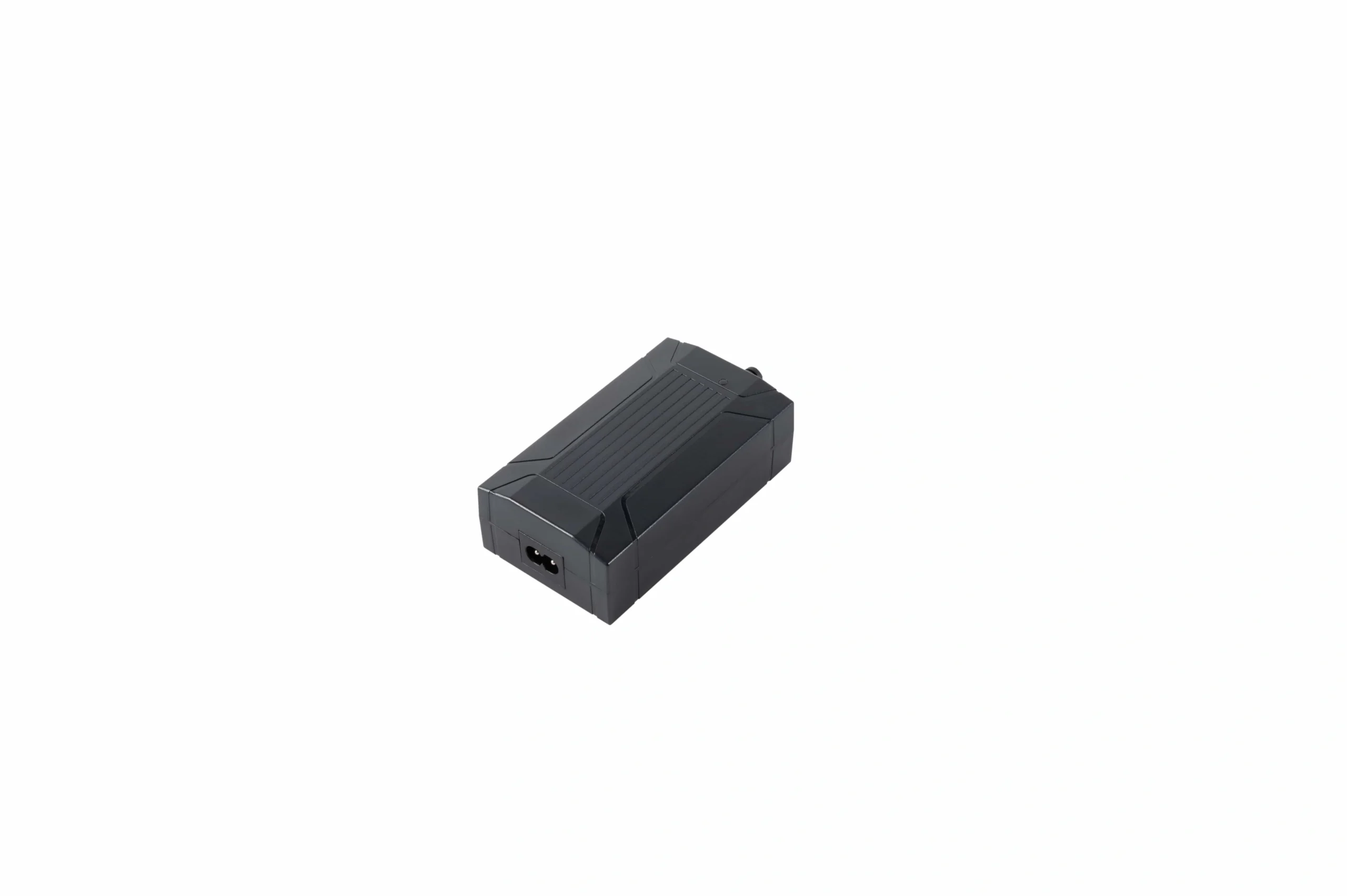
Electric systems avoid compressed-air and hydraulic utilities, but power, controls, wiring, protection, and compatibility still belong in the installed-system comparison.
For machine builders, this is why total cost should include energy, utilities, commissioning, maintenance labor, downtime, spare parts, contamination consequences, changeover time, and diagnostics—not only the actuator quote.
A peer-reviewed comparison published in Scientific Reports likewise found that the result depends on the defined system and operating task rather than a technology label alone. See the peer-reviewed hydraulic, pneumatic, and electric linear actuation comparison listed in the references.
Cleanliness, Noise, Maintenance, and Safety
Electric
Electric actuators do not require compressed air or hydraulic working fluid at the motion axis. That can simplify clean machine integration, but electromechanical systems may still contain grease, oil, seals, bearings, and gearboxes. Dust protection, washdown design, lubricant selection, and cable routing remain application-specific.
Maintenance can include screw or guide lubrication, bearing inspection, brake checks, seal wear, cable inspection, drive cooling, and verification of feedback and safety devices.
Pneumatic
Pneumatics avoids hydraulic-oil spill risk, but compressed air is not automatically clean. Moisture, particles, compressor carryover, downstream pipe contamination, and exhaust quality can matter.
Filters, dryers, drains, valves, fittings, tubing, seals, and mufflers all become maintenance points. Leaks may be too small to hear yet still waste air. Exhaust noise can also be significant in high-cycle machines unless it is controlled.
Hydraulic
Hydraulic systems place more emphasis on fluid condition. External leakage creates housekeeping and environmental concerns, while internal leakage can reduce efficiency and generate heat without visible fluid loss.
Contamination control affects pump, valve, seal, and actuator life. Filters, breathers, fluid transfer practices, hose condition, temperature, and periodic inspection are therefore reliability issues, not optional housekeeping.
Safety
All three technologies store or transmit hazardous energy.
- Electric axes can move unexpectedly, regenerate energy, hold gravity loads, or remain energized through drives and capacitors.
- Pneumatic systems can retain compressed air after the supply is isolated.
- Hydraulic circuits can retain high pressure in lines, cylinders, or accumulators and can support suspended loads even after a pump is stopped.
Safe servicing requires the complete machine's hazardous-energy procedure. OSHA's hydraulic lockout guidance is a useful reminder that stored or residual energy must be relieved, restrained, disconnected, or otherwise rendered safe.
When Electric Actuation Is the Better Fit
Start with electric motion when the machine needs several of these characteristics:
- multiple programmable positions;
- frequent recipe changes;
- controlled acceleration and deceleration;
- synchronized axes;
- closed-loop position feedback;
- force or torque monitoring;
- machine diagnostics and traceability;
- direct PLC or network integration;
- low dependence on plant utilities;
- clean equipment design without compressed-air exhaust or hydraulic fluid;
- efficient operation in a variable motion profile;
- easier software-driven changeover.
Electric becomes particularly attractive when a pneumatic system has accumulated stops, proportional valves, sensors, regulators, and logic mainly to create motion flexibility that an electric axis can command more directly.
It can also be a strong alternative to hydraulics where the required force-speed-duty envelope is practical for an electromechanical cylinder and the machine benefits from programmable motion, lower fluid-maintenance burden, or process data.
ServoCylMotion's electric cylinder family provides commercial context for screw-driven electric motion after the application requirements are defined.
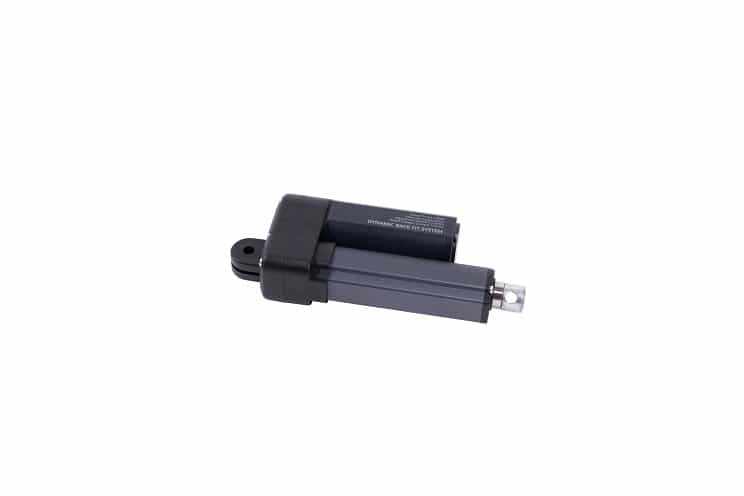
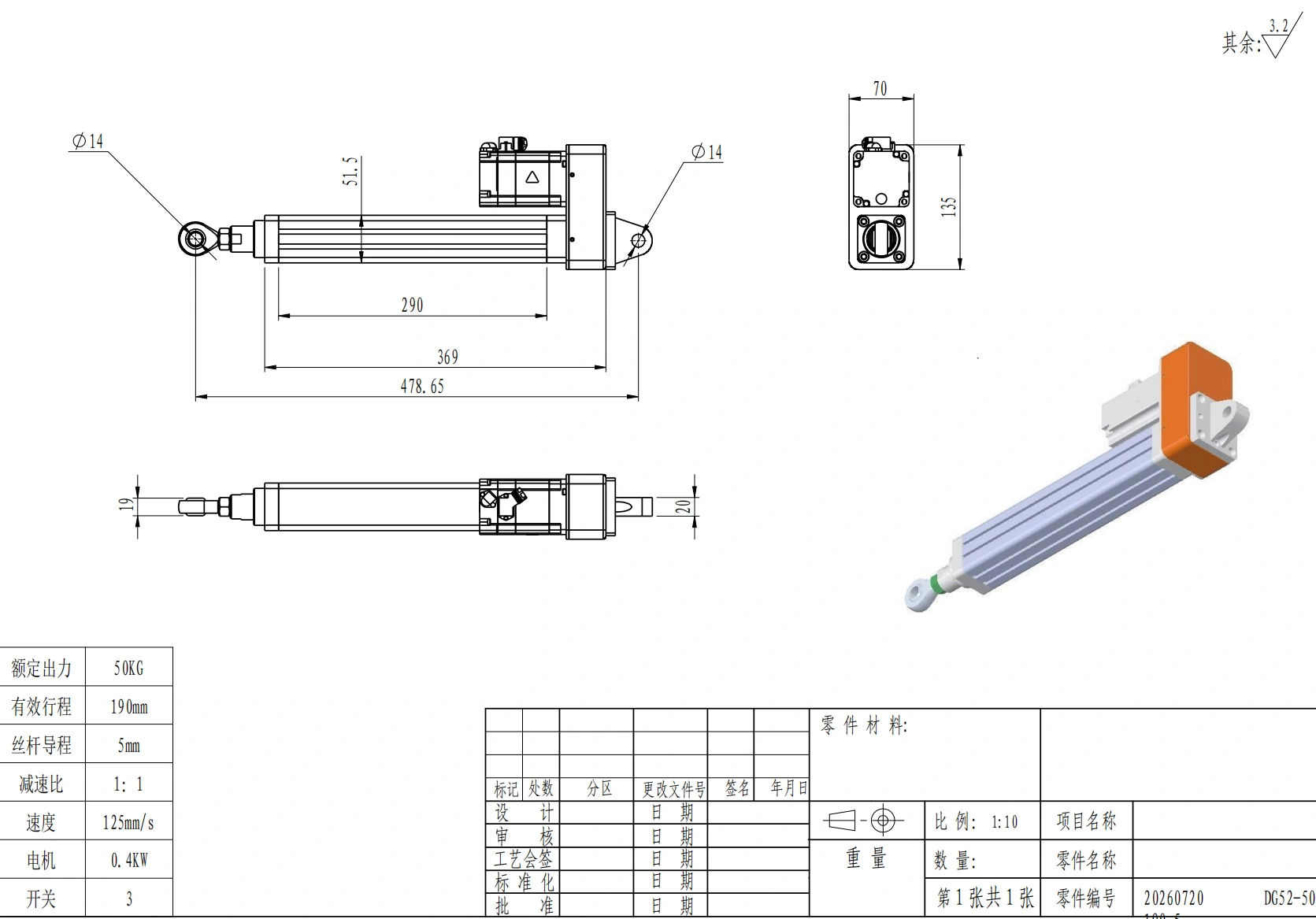
Electric linear actuators are available in different mechanical envelopes, so stroke, load, speed, mounting, and duty requirements should be checked together.
Electric is not automatically the correct conversion. A machine with extreme shock loading, very high continuous force, a mature shared hydraulic system, or simple high-cycle pneumatic tooling may be better left on its existing technology.
When Pneumatics Still Makes Sense
Pneumatics remains a rational engineering choice when most of the following are true:
- the motion is mainly between two defined positions;
- cycle rate matters more than arbitrary positioning;
- the plant already has reliable compressed air;
- the cylinder must be compact and mechanically simple;
- compliance is useful;
- the process is clamping, ejecting, gripping, indexing, gating, or simple transfer;
- holding behavior can be managed with the circuit or mechanical design;
- energy use at the complete-system level remains acceptable;
- air quality and exhaust can be controlled for the environment.
A simple pneumatic cylinder on an existing, well-maintained air network can be difficult to beat for a repetitive two-position task. Converting it to electric without a clear control, energy, maintenance, or process benefit can add cost and complexity without adding machine value.
When Hydraulics Still Makes Sense
Hydraulics remains a strong choice when the job is dominated by:
- very high force or torque;
- compact actuator envelope;
- high power demand;
- shock or impact loading;
- heavy mobile machinery;
- pressing, forming, shearing, or lifting;
- long periods of high load;
- existing hydraulic infrastructure;
- harsh environments where a rugged fluid-power architecture is already proven.
A well-designed hydraulic system can also provide sophisticated closed-loop motion. The question is whether the machine benefits enough from an electric alternative to justify changes in actuator size, mechanics, controls, holding strategy, electrical power, and thermal design.
For broader machine-level context, see the ServoCylMotion industrial automation application page .
Pneumatic or Hydraulic to Electric Conversion Checklist
Before asking whether an electric actuator can replace a pneumatic or hydraulic cylinder, collect the following information.
| Input | What to document |
|---|---|
| Load | Peak force, continuous force, gravity, friction, shock, process force |
| Motion | Stroke, speed, acceleration, deceleration, cycle time |
| Duty | Moves per hour, dwell time, holding time, continuous operation |
| Positioning | Endpoints, number of positions, accuracy, repeatability, synchronization |
| Force control | Whether force is simply applied or must be measured and controlled |
| Mounting | Clevis, trunnion, flange, side load, alignment, installed envelope |
| Holding | Safe state during dwell, stop, emergency stop, and power loss |
| Environment | Temperature, dust, water, contamination limits, vibration, noise |
| Utilities | Available voltage/power, compressed air, hydraulic plant, cooling |
| Controls | I/O, PLC, fieldbus, feedback, diagnostics, recipes |
| Safety | Guarding, brakes, locks, residual energy, gravity loads, service procedure |
| Lifecycle | Required cycles, maintenance access, downtime cost, spare-parts strategy |
Do not size an electric replacement from pneumatic bore or hydraulic cylinder diameter alone. The new axis must be checked against the actual force-speed-duty profile and failure-state requirements.
For a specific project, send these inputs through the electric cylinder customization and conversion review . The goal is to determine whether electric motion fits the application—not to force a conversion where pneumatic or hydraulic actuation remains the better engineering choice.
Frequently Asked Questions
Which actuator type is best for programmable positioning?
Electric actuation is usually the most direct starting point because motor drives and feedback naturally support multiple positions, motion profiles, synchronization, and diagnostics. Servo-pneumatic and electro-hydraulic systems can also provide closed-loop positioning, but with different infrastructure and control complexity.
When is a pneumatic actuator better than electric?
A pneumatic actuator can be the better choice for simple, rapid, repetitive end-to-end motion when compressed air already exists, arbitrary intermediate positioning is unnecessary, and the full air-system operating cost is acceptable.
When is a hydraulic actuator better than electric?
Hydraulics remains compelling when very high force or power density, shock tolerance, compact cylinder size, or an existing hydraulic machine architecture dominates the design.
Are electric actuators always more energy efficient?
No. Electric systems often avoid compressed-air generation and hydraulic throttling or standby losses, but the correct comparison depends on the complete cycle, load, holding time, motor/drive sizing, mechanical efficiency, and the utilities already available.
Which actuator technology is fastest?
There is no universal fastest technology. Pneumatics can be excellent for rapid two-position cycling. Electric systems can deliver high programmable speed. Hydraulics can combine high force with strong speed. The actual result depends on load, stroke, flow or transmission, acceleration, control profile, and thermal limits.
Is pneumatic actuation cleaner than hydraulic actuation?
Pneumatics avoids hydraulic-oil leakage, which can be important in contamination-sensitive equipment. However, compressed air can contain moisture, particles, or oil, and exhaust may need treatment. Cleanliness must be specified at the point of use.
Can hydraulic actuators be precise?
Yes. Proportional or servo valves, position sensors, pressure sensors, and closed-loop controls can provide precise hydraulic motion. Performance still depends on valve behavior, fluid condition, temperature, leakage, stiffness, and control tuning.
Can a pneumatic linear actuator stop at intermediate positions?
Yes, but a basic cylinder is naturally best suited to end positions. Intermediate positioning can use mechanical stops, proportional valves, displacement feedback, or servo-pneumatic control, adding complexity.
Does an electric actuator hold a vertical load when power is removed?
Not automatically. Some screw and gearbox combinations resist backdriving, while others do not. A brake, counterbalance, or mechanical lock may be required. Power-off holding must be verified as a separate safety requirement.
What is needed for a pneumatic or hydraulic to electric conversion review?
At minimum: peak and continuous force, stroke, speed, acceleration, duty cycle, holding behavior, mounting geometry, environment, controls, available electrical power, required life, and failure-state requirements.
References
- Scientific Reports — Comparison of hydraulic, pneumatic and electric linear actuation systems
- Tolomatic — Electric actuators vs pneumatic cylinders and total cost of ownership
- Festo — Pneumatics or electrics technology comparison white paper
- Compressed Air and Gas Institute — Working With Compressed Air
- OSHA — Lockout/tagout considerations for hydraulic systems